The internet is still buzzing over the viral story of the employee whose $1,800 Herman Miller Aeron chair kept “disappearing” at work—until his colleague was arrested for refusing to give it back. Beyond the office drama and the headlines, there’s a deeper design truth hiding in plain sight: luxury seating has quietly become one of the most powerful, and most underestimated, design moves in the modern home.
As remote and hybrid work continue to redefine how we live, pieces once reserved for corporate headquarters—think Herman Miller, Steelcase, Haworth—are migrating into domestic spaces. The Aeron saga didn’t just showcase workplace entitlement; it underscored how a single, meticulously engineered chair can embody comfort, performance, and prestige in a way that mass-market décor simply cannot.
Below, we explore how this real-world moment signals a broader shift in design trends—and how discerning homeowners can harness it to elevate upcoming renovations with purpose, tactility, and long-term value.
From Cubicle to Living Room: Executive Seating Enters the Home
The Herman Miller Aeron has long been a fixture in high-end offices and start-up boardrooms, but its cameo in a workplace dispute has thrust it into mainstream conversation. What was once recognized primarily by designers, tech founders, and ergonomics enthusiasts is now a cultural reference point, symbolizing both status and serious comfort.
In parallel, residential clients are increasingly requesting “office-grade” seating for home libraries, dens, and media rooms—not just for home offices. The logic is simple: if you can work for eight hours in a chair without fatigue, imagine watching a three-hour director’s cut or hosting a wine-fueled strategy session in it. Renovations are now integrating task chairs at dining tables, conference-style layouts in open-plan lofts, and mixed-use corners where an Aeron or Embody sits beside a velvet lounge chair and artisan side table. The trend is less about copying the office, and more about borrowing its best ergonomics, then enveloping them in residential warmth.
For social sharing, this convergence photographs beautifully: iconic silhouettes, sculpted mesh, and precision engineering juxtaposed against limestone floors, wool rugs, and softly lit art. It’s the new visual shorthand for “I take both my time and my body seriously.”
The New Luxury: Ergonomics as an Architectural Decision
The viral chair incident highlights something most renovation plans still treat as an afterthought: how the human body actually lives, sits, works, and rests in a space. In high-end design, ergonomics is no longer just about adjustable arms and lumbar support; it has become an architectural principle.
Forward-looking renovations now map out “posture zones” the way we once mapped traffic flow. Where will you lean back with a laptop? Where will you host long dinners? Where do your children read, sketch, or game? Instead of specifying a generic chair per seat count, designers are specifying posture per activity, then curating seating accordingly—office-grade task chairs for focus, subtly supportive dining chairs with generous seat pan depth for conversation, and deep, low-slung seating for cinematic immersion.
This mindset shift also reframes budget priorities. The Aeron arrest story made headlines because of its price tag; but for homeowners, that cost translates into a simple calculus: amortized over a decade of daily use, a $1,800 chair can be one of the most rational “luxury” investments in the home. Thoughtful clients are now treating key seating in the same category as premium appliances or stone—foundational, not decorative.
Mesh, Metal, and Wool: Blending Corporate Iconography with Residential Warmth
One reason the Aeron looks “stolen” in many traditional homes is that its aesthetic—technical mesh, polished mechanisms, industrial casters—was designed for corporate carpets and glass partitions. The current design movement is about not hiding that language, but framing it.
High-end renovations are layering these technical chairs into environments that soften and contextualize them: textured plaster walls, hand-knotted rugs, smoked oak paneling, boucle upholstery, and burnished brass lighting. Instead of trying to disguise an Aeron, savvy designers are staging it as an intentional counterpoint—much like a stainless restaurant-grade range in a classic kitchen with stone counters and inset cabinetry.
Material pairing is critical. Mesh reads beautifully against natural fibers: wool, sisal, cashmere throws, and heavy linen drapery. Matte black or graphite finishes on the chair’s frame harmonize with bronze hardware and dark window mullions. In lighter schemes, mineral-toned chairs—think light grey or mineral white frames from brands like Herman Miller or Steelcase’s lighter palettes—sit gracefully alongside pale oak and travertine.
For homeowners planning renovations now, this is the moment to specify both the architectural finishes and the performance seating in concert, rather than treating the chair as a late-stage office accessory. The result is a space that photographs as coherently as it feels, ready-made for social media and real-life comfort.
Quiet Power: Signaling Status Through Design Literacy, Not Logos
What made the office chair story fascinating online wasn’t just the entitlement—it was that so many people instantly recognized the Aeron as “the expensive one.” In a crowded design landscape, certain pieces carry a quiet, almost coded prestige: an Eames Lounge in a reading nook, a Florence Knoll credenza under a gallery wall, or a well-specified Aeron at a writing desk.
In premium homes, the new status symbol is not overt branding but design literacy. Choosing a Herman Miller Aeron, Steelcase Leap, or Haworth Fern for your study telegraphs that you understand the lineage of design and are investing in innovation, not novelty. This resonates particularly with younger, high-earning professionals who came of age in tech offices furnished by these brands, and now bring that visual language home.
Renovations that embrace this coded prestige might pair an iconic ergonomic chair with custom millwork tailored to its dimensions, integrating a cable-managed sit-stand desk with built-in storage, concealed task lighting, and a vignette-worthy background for video calls. The chair becomes one note in a composed environment—subtle in photos, instantly legible to those who know. On social platforms like Instagram and LinkedIn, these details don’t need explanation; a single frame communicates taste, discipline, and seriousness of purpose.
Designing for Hybrid Lives: The Multi-Modal Room as the New Benchmark
The Aeron incident underscored a reality: our professional and personal lives now overlap physically as much as they do digitally. The most sophisticated renovations are responding with multi-modal rooms—spaces that transition seamlessly from work to leisure without compromising either.
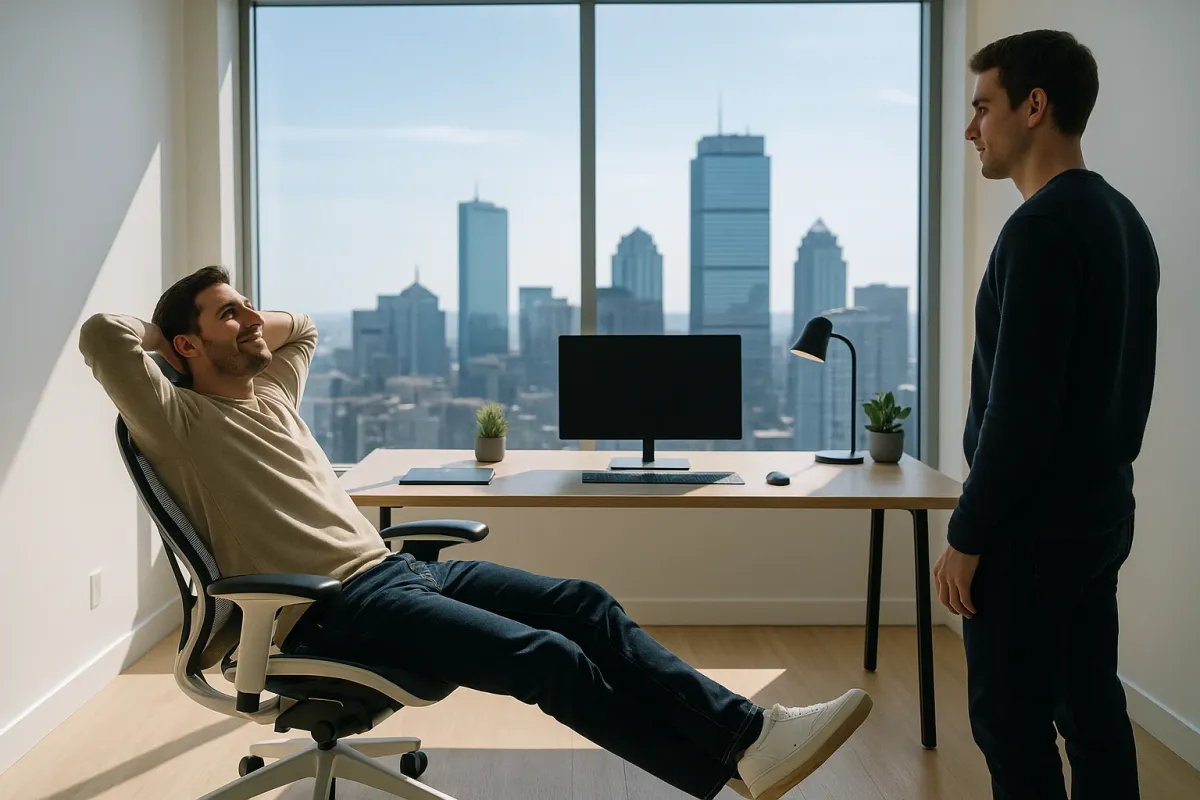
In these rooms, the “office chair” is no longer confined to a desk in a spare bedroom. Instead, you might find a Herman Miller Aeron or Embody sliding up to a marble-topped dining table for an afternoon work session, then pivoting back to a compact writing station concealed behind fluted doors. Media rooms might feature a row of ergonomically advanced task chairs at a raised counter behind a plush sofa, giving guests options for long screenings or gaming sessions.
Acoustics, lighting, and power access are the quiet heroes here. Thoughtful lighting plans combine architectural downlights, statement pendants, and focused task lamps that flatter both your skin on a video call and your art at night. Power is tucked into table edges, floor boxes, and built-ins, so your premium chair never awkwardly floats with a snarled cord. The result is a room that feels at once like a studio, salon, and sanctuary—photogenic, highly functional, and prepared for the way we really live now.
Conclusion
The story of the confiscated $1,800 Aeron was more than click-worthy office drama; it was a cultural moment that distilled how much value, identity, and aspiration we now project onto the objects we sit in every day. For homeowners planning refined renovations, it’s a timely reminder: seating is no longer a peripheral decision. It is a core expression of how you work, host, think, and rest.
By integrating office-grade ergonomics into residential spaces, harmonizing technical forms with tactile finishes, and designing rooms for hybrid lives, you can create a home that feels both exquisitely composed and deeply humane. The true luxury is not just owning the coveted chair that sparked a viral arrest—it’s orchestrating a space where every seat has been chosen with the same level of intention.
Key Takeaway
The most important thing to remember from this article is that this information can change how you think about Design Trends.