Renovation, at its highest expression, is less about spectacle and more about calibration—of light, proportion, material, and rhythm. The most compelling homes emerging today are not shouting for attention; they are composed, layered, and quietly assured. For homeowners planning a renovation, the real luxury lies in decisions that age gracefully, perform intelligently, and feel exquisitely personal without appearing contrived.
Below are five exclusive insights that go beyond broad trend lists—each one a strategic lens to refine your renovation decisions and create a home that feels both of-the-moment and enduring.
1. The Soft Tech Interior: Integrating Intelligence Without Visual Noise
Smart homes are no longer defined by visible gadgets and blinking hubs. The emerging benchmark is soft tech: high performance, near-invisible integration.
Forward-thinking homeowners are asking not, “What can I add?” but, “What can I conceal?” Wiring for integrated speakers in ceiling coves, motion-responsive accent lighting tucked into millwork, and climate controls discreetly embedded into wall panels allow your space to remain visually calm while functioning at an elevated level.
The key is to design for the infrastructure of intelligence rather than the devices themselves. Plan recessed conduits for future wiring, unify switch plates and outlet finishes with wall colors, and specify low-profile sensors aligned with architectural lines.
A premium renovation now assumes a tech backbone that can evolve. The elegance lies in pairing robust systems (lighting scenes, zoning, acoustic control) with a near absence of visual clutter. The result: rooms that feel refined and timeless, despite carrying an advanced digital core.
2. Monochrome, Reimagined: Depth Through Tone, Not Color Chaos
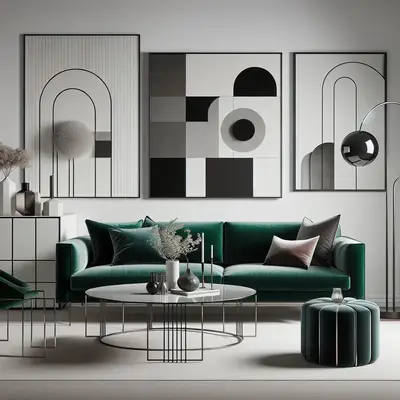
The new luxury palette is not about maximal variety; it is about maximum nuance. Rather than contrasting colors, sophisticated interiors are exploring extended tonal families—six, eight, even ten variations of the same hue.
Think of a kitchen composed of layered warm greiges: stone with a subtle fossil pattern, cabinets in a slightly cooler taupe, hardware in brushed nickel, and textiles in a soft mushroom tone. This creates depth through micro-contrasts instead of bold shifts, allowing the eye to rest while still perceiving richness.
Where color appears, it often enters as a controlled saturation moment rather than a full-room statement—an oxblood banquette in an otherwise linen-hued dining room, a deep petrol-blue library off a quieter hall. These calibrated injections of color feel intentional, not impulsive.
For renovation planning, this translates into specifying finishes by undertone as much as by color name. Evaluate paint, stone, and fabrics together under both natural and artificial light. The objective is to orchestrate a chromatic whisper that reads as cohesive and quietly expensive.
3. Material Editing: Fewer Surfaces, More Narrative
Material opulence is no longer about using more—it is about using less, but better. The most sophisticated renovations are embracing material editing: curating a short, disciplined list of surfaces and repeating them with intention.
Instead of pairing four or five different stones, a space might rely on a single marble interpreted in multiple ways: honed for countertops, fluted for a vanity front, and bookmatched for a feature wall. Wood species are similarly restrained—one primary tone (e.g., rift-sawn white oak) repeated across floors, doors, and joinery, with a single accent species for punctuation.
This repetition not only feels calm and architectural; it also conveys a sense of custom continuity, as though the home was conceived as a single, coherent idea. It can also be surprisingly cost-intelligent: ordering larger quantities of fewer materials often yields better pricing and reduces wastage.
In practice, consider defining a core palette of 4–6 surfaces for your entire renovation: a primary wood, a main stone, a complementary tile, a metal finish family, and one distinctive accent. Everything else should be in conversation with these anchors, not competing with them.
4. Transitional Thresholds: Designing the “In‑Between” Moments
Most renovations focus on signature rooms—the kitchen, the primary suite, the living area. Yet the emerging hallmark of a refined home is the way it handles thresholds: hallways, landings, entries, and passage zones.
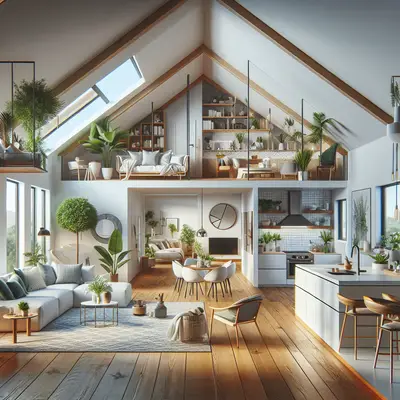
These spaces are no longer mere connectors; they are choreographed experiences. A softly arched opening that frames a view, a change in floor pattern to signal a new zone, a shallow niche that transitions from art display to concealed storage—these are the small moves that make a home feel intentionally designed from end to end.
Consider integrating subtle architectural gestures at these junctions:
- Slightly deeper door jambs with refined shadow gaps
- Overhead lighting that shifts from task-oriented in functional zones to ambient or linear washes in corridors
- A consistent plinth or baseboard detail that ties rooms together while allowing wall treatments to vary
When planning a renovation, ask not only, “What will this room look like?” but also, “What does it feel like to arrive here?” The emotional memory of a home is often encoded not in the main spaces, but in how gracefully one space yields to the next.
5. Purposeful Imperfection: Crafted Details That Avoid Sterility
Ultra-polished spaces risk feeling like showrooms rather than homes. The current evolution of luxury design introduces purposeful imperfection—elements that reveal the hand of the maker and prevent a space from feeling overly manufactured.
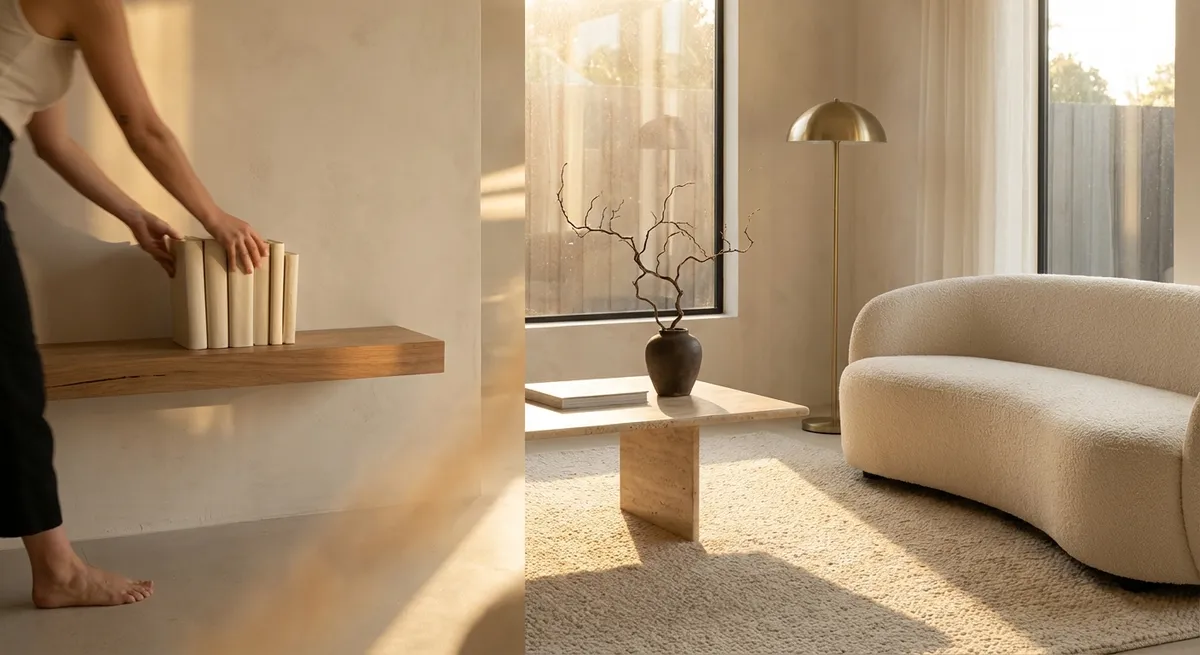
This may be a plaster finish where subtle trowel marks catch the light, hand-sawn edges on stone thresholds, or a custom cabinet door with a slightly radiused profile instead of dead-sharp corners. These nuances temper perfection with humanity, making spaces more tactile and emotionally accessible.
In joinery, consider integrating one or two visibly crafted moments: a dovetailed drawer in a primary vanity, hand-turned knobs, or a bespoke vent grille integrated into paneling. In surfaces, allow for materials that patinate elegantly—unlacquered brass, oiled wood, or honed stone that acquires a gentle history over time.
The strategic insight is this: long-term luxury is not the absence of change, but the quality of change. Materials and details chosen for how beautifully they age will carry your renovation beyond trend cycles, developing character rather than obsolescence.
Conclusion
The most compelling design trends for today’s renovations are less about visual novelty and more about refined orchestration. Invisible yet powerful technology, disciplined color and material strategies, intentionally designed transitions, and crafted imperfection together create homes that feel composed, intelligent, and intimately livable.
For homeowners planning their next transformation, the opportunity is to think beyond individual features and instead cultivate a cohesive narrative—one where every choice, from wiring routes to wall finishes, contributes to an atmosphere of quiet, enduring sophistication. In this new era of design, the true measure of luxury is not how loudly a space announces itself, but how effortlessly it supports the life unfolding within it.
Sources
- American Institute of Architects – Home Design Trends Survey - Insight into evolving residential design priorities from practicing architects
- Harvard Joint Center for Housing Studies – Improving America’s Housing - Data and analysis on renovation patterns and homeowner preferences
- U.S. Department of Energy – Energy Saver: Smart Home Technologies - Overview of smart systems and integration considerations for efficient homes
- MIT School of Architecture + Planning – Materials and Design Research - Research perspectives on materials, performance, and architectural expression
- The Royal Institute of British Architects (RIBA) – Trends in Residential Architecture - Professional commentary on current and emerging design directions in housing
Key Takeaway
The most important thing to remember from this article is that this information can change how you think about Design Trends.