There is a reason images of century-old homes are dominating feeds right now. Viral collections of “beautiful old houses that show how craftsmanship has stood the test of time” are cutting through the usual chaos of the internet—and they’re doing more than indulging nostalgia. They’re signaling a decisive shift in what sophisticated homeowners now consider truly luxurious: not more, but better. Not newer, but more enduring. As people share ornate staircases, hand-carved moldings, and sunlight washing across original hardwood floors, one message is clear—heritage-level craftsmanship is back at the center of the design conversation.
For those planning a renovation in 2026, this isn’t just an aesthetic mood board; it’s a strategic blueprint. The renewed cultural fascination with old houses is reshaping expectations around quality, permanence, and character in high-end residential design. The most interesting projects we’re seeing don’t mimic “old house” style—they translate its principles into homes that function flawlessly for modern life. Below, we distill this movement into five exclusive, actionable insights for homeowners who want their next renovation to age as gracefully as the houses currently going viral.
1. From “New Build Shiny” to “Collected Over Generations”
The homes captivating audiences online rarely feel freshly finished, even when they’re impeccably maintained. Instead, they read as layered—spaces that have absorbed decades of life. Luxury buyers are taking note and rejecting the hyper-polished, “just staged” look in favor of interiors that feel as though they could have existed 20 years ago and will still feel right 20 years from now.
For your renovation, this means resisting the urge to over-coordinate. Instead of one single tile selection throughout a primary suite, consider a nuanced mix: honed stone in the bath, narrow-plank timber in the dressing room, and a subtly patterned wool runner in the hallway, unified by tone rather than by an exact material match. Work with your designer to introduce deliberate “soft imperfections”—hand-troweled plaster, oiled wood that will develop a patina, unlacquered brass that quietly tarnishes at the edges. The goal is not faux-aging, but building in materials that welcome time rather than fight it. A home that looks slightly “too perfect” on day one tends to date faster than one with built-in depth.
2. Architectural Detail Is the New Status Symbol
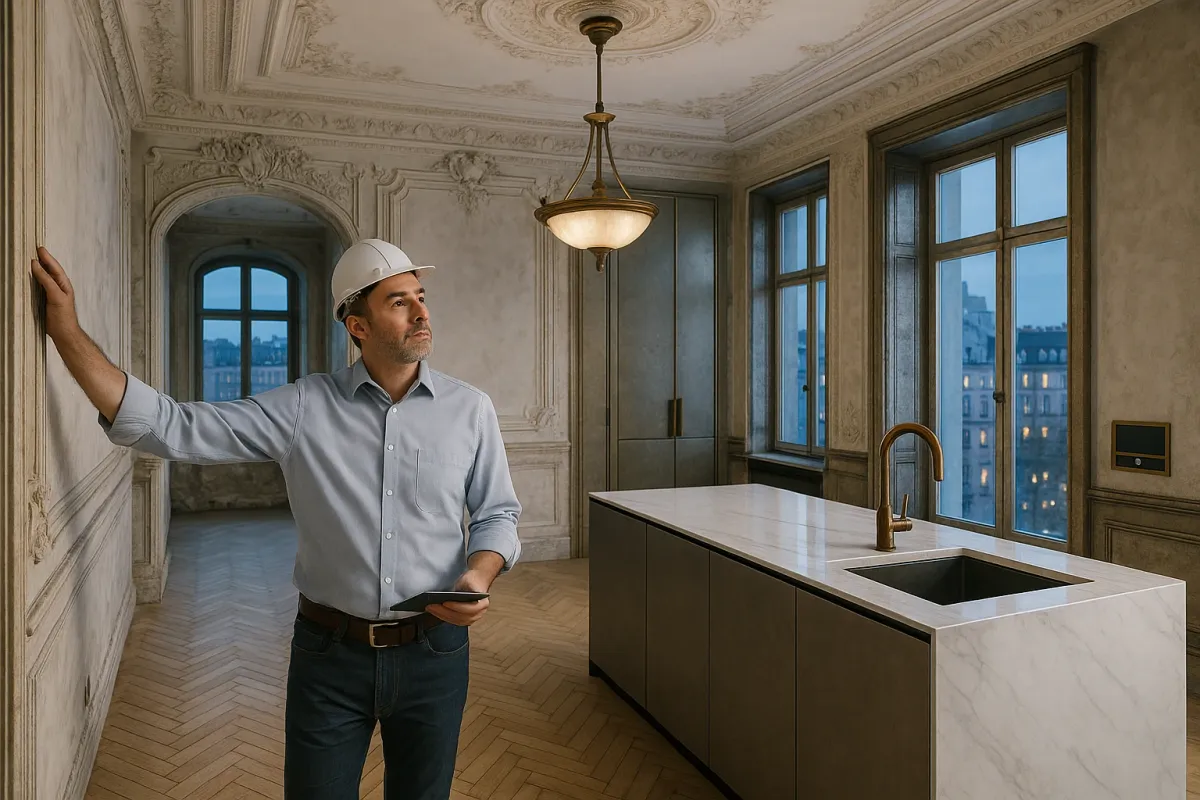
As images of intricate cornices, curved staircases, and paneled libraries circulate widely, they are resetting the collective eye. The true luxury in these properties is not the square footage, but the investment in detail per square foot. In an era when mass-market construction has normalized flat drywall and minimal trim, the presence of well-detailed architecture reads as unmistakably premium.
When planning a renovation, this is where you should consider spending disproportionally—on elements that become part of the architectural envelope, not the movable décor. Think: deeply profiled baseboards, properly scaled crown molding, arched cased openings, coffered or paneled ceilings, bespoke window seats, and stair balustrades that feel sculptural rather than purely functional. Brief your architect or designer to develop a “language of details” specific to your home, rather than importing generic traditional trim packages. The most elegant projects now borrow from the spirit of those historic houses—intentional proportion, shadow, and materiality—while simplifying where necessary for a modern lifestyle. Done correctly, these details become the quiet luxury that guests notice without quite knowing why the house feels so resolved.
3. Authentic Materials Over Instagram Finishes
Many of the old houses attracting attention online share one quality: the materials look better with age, not worse. Solid timber floors, real stone, and plastered walls stand in stark contrast to the short-lifecycle finishes that dominated renovations for years—high-gloss laminates, thin veneers, and hyper-printed surfaces chosen primarily for their immediate visual punch on social media.
For a renovation with lasting gravitas, the hierarchy should flip. Prioritize authentic, substantial materials even if that means dialing back surface-level “wow.” Specify solid hardwood over engineered lookalikes where possible, full-depth natural stone in key areas instead of paper-thin cladding, limewash or plaster in signature rooms instead of flat builder’s paint. Use newer, performance-driven materials strategically—porcelain or sintered stone in heavy-use kitchens, for instance—but pair them with tactile companions: natural wood, textured textiles, and metal finishes that are designed to evolve. The design conversation at the upper end of the market has shifted from “What looks expensive now?” to “What will feel quietly correct in a decade?” Your materials list should answer to the latter.
4. Spaces Designed to Be Lived In, Not Performed In
Another reason images of historic homes resonate is emotional: they look deeply lived in. Sunlight on worn floorboards, a reading chair by a window, a dining room that feels ready for a long dinner rather than a photo shoot. In contrast, many contemporary renovations have yielded rooms optimized for content—dramatic, but chilly; impressive, but underused.
The next wave of premium design is correcting for this. As you plan your renovation, interrogate each space not just for how it will photograph, but for how it will be inhabited on an ordinary Tuesday. Design a kitchen that can host three simultaneous activities—cooking, working, and conversation—without feeling crowded. Create a library or snug that is unapologetically intimate, with lower ceilings, enveloping color, and acoustically soft finishes. Consider a larger, more gracious landing or upstairs hall that accommodates a bench and bookcase, turning a circulation zone into a genuine destination. These decisions echo the planning logic of older homes, where rooms were sized for specific rituals rather than open-plan generalities. The result is a house that earns its footprint not by its spectacle, but by how completely it supports daily life.
5. Heritage-Inspired Sustainability: Building to Be Kept, Not Flipped
The renewed fascination with enduring old houses is also, quietly, a sustainability story. The greenest building is often the one that doesn’t get demolished. When people share an 1890s townhouse that still feels relevant and beautiful in 2025, they’re also celebrating the idea that a well-built home should pass through generations with only thoughtful interventions along the way.
For renovators, this perspective reframes sustainability from a checklist of fixtures to a design philosophy. Yes, specify high-efficiency systems, advanced glazing, and insulated envelopes—but pair them with layouts and finishes that reduce the urge for major renovation every 8–10 years. Design kitchens and baths with flexible cabinetry configurations that can be updated by swapping doors and counters rather than ripping out entire runs. Use neutral, timeless stones and woods for fixed elements, and reserve bolder gestures for easily replaceable layers like paint, textiles, and hardware. Wherever possible, retain and restore existing elements of quality—from original floors to staircases—then integrate them into a modern scheme. The most sophisticated projects now broadcast a simple subtext: this home is meant to be kept, not flipped.
Conclusion
The viral fascination with beautifully preserved old houses is more than a passing internet trend; it’s a cultural recalibration of what constitutes true luxury in the home. In an environment saturated with fast renovations and disposable finishes, the calm authority of a well-crafted, time-honored interior feels radical. For homeowners embarking on significant projects, the lesson is clear: invest where time can collaborate with your design, not fight against it.
Designing with an eye toward heritage doesn’t mean re-creating the past. It means borrowing its discipline—its respect for proportion, material, and longevity—and applying it to a life lived very much in the present. If your renovation can look quietly at home in today’s feeds and still feel relevant when those feeds have long moved on, you will have achieved what the finest old houses now remind us is the ultimate luxury: a space that never has to chase the trend cycle, because it has already transcended it.
Key Takeaway
The most important thing to remember from this article is that this information can change how you think about Design Trends.