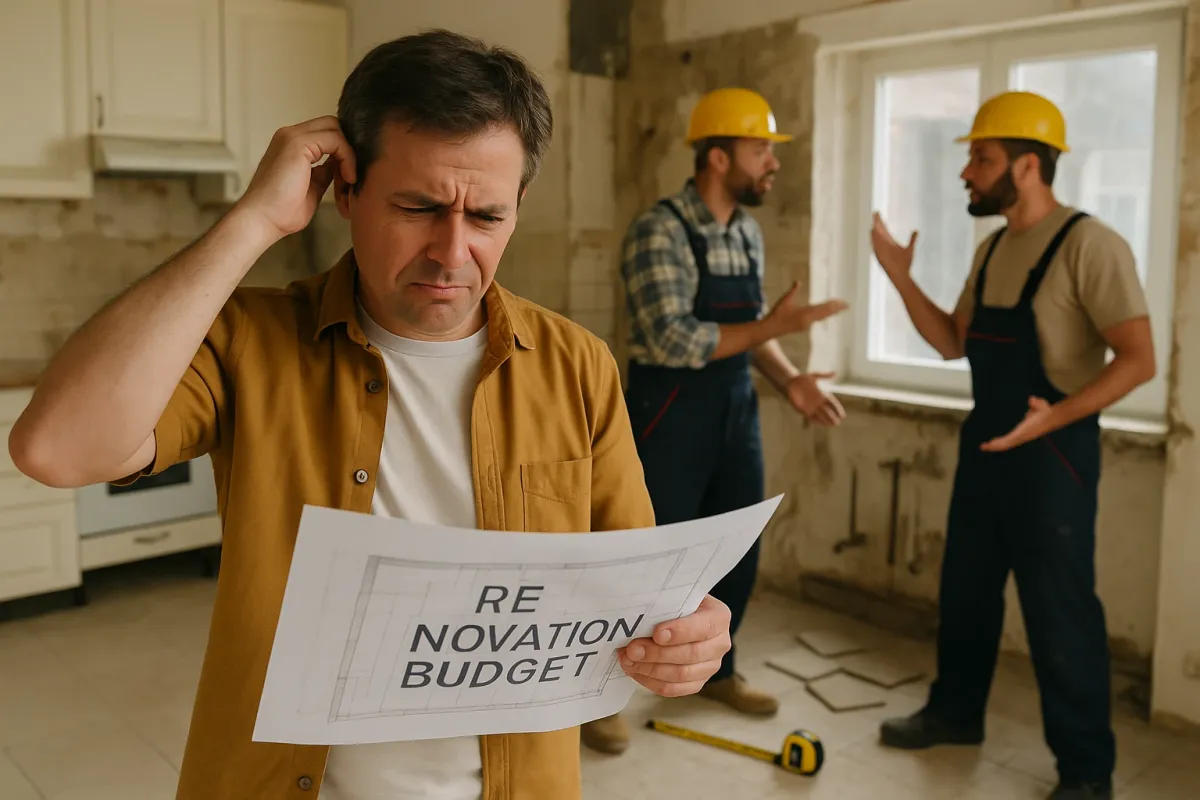
In design, a single misplaced space can distort an entire message. The same is true of your renovation budget: one poorly placed line item can quietly, almost elegantly, undermine the financial integrity of your project. As the internet laughs at viral “cursed” spacing errors and Bored Panda’s latest roundup of kerning disasters trends across feeds, there’s a timely parallel for homeowners planning high‑end renovations: precision in the small things is not optional—it is the whole game.
Word spacing and kerning are having a cultural moment because they reveal how tiny, invisible decisions either elevate or embarrass the final result. Your renovation budget operates on the same principle. In a market of rising material costs, elongated lead times, and increasingly bespoke expectations, the winners are not those who spend the most—they are those who allocate with couture‑level accuracy.
Below are five exclusive, precision‑focused insights for homeowners who want their renovation budgets to read less like a messy draft and more like a perfectly typeset luxury publication.
1. Treat Your Budget Like Typography: Adjust the “Spacing” Between Line Items
When designers adjust kerning, they are not changing the letters, only the relationships between them. Your renovation budget deserves the same nuance. Many homeowners obsess over the total number but rarely interrogate the spacing between categories: how tightly labor and contingency are packed, whether finishes are crowding out infrastructure, or how overly generous “miscellaneous” has become.
Begin by rewriting your budget as if it were a layout. Group related line items into “visual clusters”: structural, systems (HVAC, electrical, plumbing), finishes, furnishings, and soft costs (design fees, permits, insurance). Then, refine the proportions. In a premium renovation, structural and systems typically deserve more space than they’re initially given; finishes and furnishings, often over‑funded early, can be rebalanced without compromising visual impact. The result is not austerity, but elegance—like a page where every element breathes, and nothing shouts. This disciplined spacing is what protects you when costs inevitably shift; it gives you room to adjust without tearing the entire design apart.
2. Introduce “Micro‑Contingencies” Instead of a Single, Blunt Safety Buffer
Most renovation budgets now reflexively include a 10–20% contingency—an admitted necessity in a climate of unpredictable supply chains and fluctuating material prices. However, just as a designer would never fix all spacing with one blanket setting, a single, monolithic contingency can conceal rather than control risk.
Instead, introduce micro‑contingencies calibrated to volatility. Allocate separate, smaller buffers to high‑risk categories: custom millwork, imported stone, bespoke metalwork, and specialty lighting. Each of these trades is currently more exposed to price swings and lead‑time delays than mass‑market materials. By earmarking distinct cushions—say, 5–7% on stable categories and 15–25% on custom, long‑lead items—you create an honest map of where surprises are likely to emerge. When something runs over, you know precisely which “pocket” absorbs the shock, rather than silently cannibalizing quality elsewhere. This is contingency as curation, not chaos.
3. Budget for Decision Velocity: The Hidden Cost No One Puts on Paper
The design world is increasingly aware that delayed approvals and indecision destroy timelines; social media is full of horror stories about projects stalled not by contractors but by clients who cannot choose. Yet almost no homeowner explicitly budgets for decision velocity—the financial cost of slow choices.
In today’s environment, a two‑week delay on approving tile or hardware can mean higher prices when you finally order, plus knock‑on effects in scheduling trades. To manage this, assign a tangible value to your own time and build a “decision calendar” directly into the budget. Coordinate selection deadlines with quoted validity periods from suppliers (e.g., many quotes are now firm only for 15–30 days). The budget becomes not just a ledger but a tempo map: when decisions must be made to lock in today’s pricing and prevent paying tomorrow’s premium. Homeowners who treat decisions as fiscal events, not mere preferences, routinely preserve both elegance and economy.
4. Separate “Instagram Luxury” from Enduring Luxury in Your Allocation Strategy
As design trends ricochet across platforms, it’s easy to overfund what photographs well and underfund what lives well. Viral décor, dramatic stone veining, and statement lighting capture attention online, while insulation, soundproofing, and wiring quietly endure in the background. The current wave of social content celebrating visual “wow” has only intensified this imbalance.
A sophisticated budget consciously resists this pull. Create two parallel columns in your planning: one for perceived luxury (elements that make the space instantly photogenic) and one for enduring luxury (elements that improve acoustics, comfort, longevity, and future resale). Then, rebalance. High‑end homeowners often discover that shifting even 5–10% of funds from purely aesthetic novelties into under‑glamourized infrastructure—like silent ventilation, underfloor heating, or future‑proof electrical capacity for EV charging and smart home systems—makes the home feel more luxurious every single day. The goal is not to deny beauty, but to ensure that what dazzles the camera does not starve what sustains your life.
5. Design Exit Strategies Into Your Budget: How to Spend Now Without Cornering Future You
One of the more nuanced learnings from today’s luxury real estate listings—where poorly planned “statement” renovations can actually reduce buyer interest—is that a renovation should never trap the next owner, even if that next owner is you in five years. Budgets that allocate aggressively to hyper‑specific, non‑reversible features can feel thrilling in the moment and regrettable on appraisal.
Introduce an “exit lens” to each major expenditure. For every high‑ticket decision, ask: Can this be updated without surgical demolition? Does this choice narrow or expand the future buyer pool? Does it align with the broader trajectory of your neighborhood’s value and taste profile? In budget terms, this means prioritizing timeless base layers (flooring, windows, core fixtures) and channeling experimental impulses into elements with easier replacement cycles—wall finishes, lighting shades, hardware. The premium renovation of now should feel like a limited edition, not a locked‑in tattoo. A budget that bakes in reversibility quietly protects both your enjoyment and your equity.
Conclusion
The internet’s fascination with bad spacing and botched kerning is more than a passing amusement; it’s a reminder that refinement is rarely about big gestures. It is about the micro‑decisions: where you add space, where you tighten, where you allow elements to breathe. Your renovation budget deserves the same level of scrutiny.
By treating your budget as a meticulously typeset document—careful in its spacing, calibrated in its risk, honest about its time costs, and discerning about what truly constitutes luxury—you transform it from a nervous spreadsheet into a strategic design instrument. In a world where small errors go viral overnight, the most sophisticated move you can make is mastering the quiet art of financial detail, long before the first wall comes down.
Key Takeaway
The most important thing to remember from this article is that this information can change how you think about Budget Management.