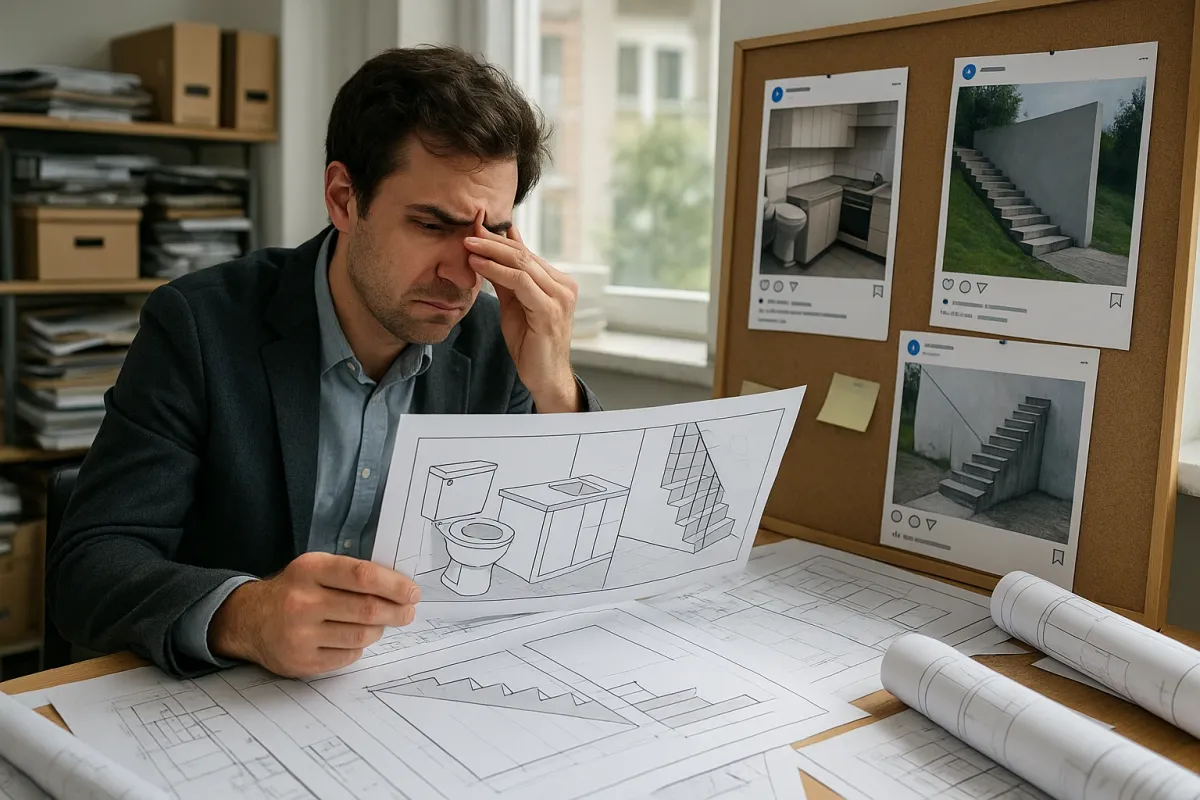
The internet is having another collective gasp at architecture gone wrong. A viral roundup of “real estate listings from hell” is circulating again—cramped bathrooms carved into stairwells, kitchens wrapped around load‑bearing columns, inexplicable toilets in the middle of living rooms, and windowless additions that feel more bunker than home. It’s entertaining in a morbid way, but for discerning homeowners planning a renovation, it’s also a masterclass in what happens when there is no coherent project plan.
Behind every disastrous listing sits a series of micro‑decisions made without strategy, oversight, or respect for proportion. In an era where online property photos can make or break a sale within seconds, planning is no longer just about getting the construction done; it’s about preserving long‑term value, liveability, and visual integrity. The latest wave of viral “what were they thinking?” floor plans is a timely reminder: elevated outcomes begin long before the first wall is opened.
Below are five exclusive, planning‑first insights to ensure your renovation never becomes the next cautionary meme.
1. Begin With a “Flow Audit,” Not a Mood Board
Those infamous listings share one common flaw: circulation was an afterthought. Doors open onto obstacles, sightlines terminate in awkward corners, and rooms feel like after‑the‑fact appendages rather than part of a coherent whole.
Before you select a single finish, commission what we call a “flow audit.” This is a structured review of:
- How you enter, move through, and exit each space
- Natural light paths throughout the day
- Lines of sight from key positions (sofas, beds, the main entry, kitchen island)
- Pinch points where people or furniture constantly collide
Walk the home at different times of day, and record friction moments: that corner you always bump into, the view that feels unsettling, the hallway that makes guests hesitate. An architect or interior designer can translate these observations into circulation diagrams and test multiple layout options before a single wall is touched.
The properties currently being mocked online often reveal hurried “add‑ons”: extra bathrooms wedged into corners, bedrooms created by slicing existing rooms in half, kitchens awkwardly relocated without rethinking the floor plan as a whole. A flow audit forces every change to serve a bigger narrative—one where rooms relate to each other with intention, and moving through your home feels effortless, not improvised.
2. Treat Space as a Luxury Asset, Not an Infinite Canvas
Some of the most shared “listings from hell” feature an obvious pattern: every square inch has been “used,” but none of it feels luxurious. Oversized corner tubs strangling a small bathroom, “open concept” spaces with nowhere logical to place furniture, or narrow kitchens lined with too many cabinets just because the wall existed.
In high‑end project planning, the most sophisticated move is often restraint. Space—negative space, breathing room, the ability to stand back from a piece of art or walk around an island—is a luxury asset on par with stone and millwork.
When planning your renovation:
- Define protected voids: zones that will remain intentionally open (a generous entry moment, clear space around a dining table, an uncluttered passage to the garden).
- Cap your storage: instead of “as much as possible,” specify how much you truly need, then design elegantly around that limit.
- Model furniture to scale: have your designer place real dimensions for your sofa, bed, dining table, and chairs in the proposed plans long before construction begins.
Many of the viral layout failures stem from a belief that adding more elements—more fixtures, more built‑ins, more “rooms”—automatically creates more value. The opposite is true. In the premium segment, the true marker of thoughtful planning is what you intentionally refuse to cram into the plan.
3. Elevate Code Compliance Into Design Intelligence
The funniest (and most horrifying) listings tend to flirt with building codes: staircases that seem dangerously steep, bathrooms without proper ventilation, cramped “bedrooms” with no legal egress. They may technically have been “done,” but they were never truly designed.
Sophisticated project planning doesn’t see building regulations as a hurdle; it treats them as a design language. When integrated early, code constraints can sharpen, rather than dull, the final outcome.
For example:
- Staircases: Instead of squeezing in the steepest stair the inspector will tolerate, use code‑driven dimensions (riser height, tread depth, headroom) to create a gracious stair that becomes a sculptural moment.
- Egress and windows: Minimum sizes for bedroom windows and exit routes can drive beautiful glazing strategies, framing views and balancing natural light with privacy.
- Clearances around fixtures: The mandated spacing around toilets, showers, and counters is a baseline; aim to exceed it for true comfort and accessibility.
Ask your design team for a code‑informed plan review early in the conceptual phase. This is not a cursory “we’ll make it pass inspection” exercise, but a dedicated workshop to align safety, function, and aesthetics. The listings currently mocked online often reveal the absence of this step—spaces where regulations were merely “dealt with” instead of thoughtfully integrated.
4. Design for the Camera as Much as for Daily Life
In a world where homes are discovered first on screens, the camera has become an unspoken stakeholder in your renovation. Those “real estate listings from hell” go viral precisely because a single photograph can capture their dysfunction in an instant. Conversely, considered spaces photograph with dignity from almost any angle.
While your primary goal is liveability, it’s wise to plan your project with eventual photography in mind, even if you have no intention of selling soon. This is not about creating a staged, artificial home; it’s about ensuring the proportions, focal points, and sightlines hold up when flattened into an image.
During the planning phase:
- Ask your designer to produce perspective views from key angles: from the main entry, across the living area, into the kitchen, from the bed looking toward the window.
- Identify natural focal points in each room—a fireplace, a perfectly centered window, a delicately lit piece of joinery—and align furniture and lighting to emphasize them.
- Avoid visual tangles: the sink directly facing the WC, a door that opens onto the side of a fridge, or a structural column sitting awkwardly in the middle of a view.
The homes we laugh at online often lack visual hierarchy: your eye doesn’t know where to rest, so it fixates on the strangest detail. Elegant project planning engineers the opposite experience—your gaze is guided, gently, from one intentional moment to the next, in person and in photographs.
5. Impose a Narrative, Not Just a Scope
Behind many of those chaotic listings is a familiar story: a “series of small works” accumulated over time—an extra bathroom here, a quick partition there, a budget kitchen update when a tenant moved out. No one ever paused to ask what story the home should ultimately tell.
Planning at a premium level means defining a narrative brief before you finalize your scope of work. This narrative is not poetic fluff; it is a decision‑making tool.
Your narrative might sound like:
- “A city townhouse that feels quietly hotel‑like—ordered, serene, and discreet.”
- “A family home where the kitchen behaves like a social salon, not a service zone.”
- “A pied‑à‑terre that reveals itself gradually—entry restrained, back of house expansive and luminous.”
Once articulated, this narrative informs every planning choice:
- Does this proposed en‑suite support a hotel‑like sense of calm, or does it clutter the façade with random windows?
- Does this open‑plan kitchen truly behave as a social salon, or does it expose every appliance and cereal box to the living room?
- Does this new extension contribute to a gradual reveal, or give everything away at once?
The properties being ridiculed on social media feel chaotic because they lack narrative coherence. A disciplined story allows you to say “no” to features that might impress in isolation but dilute the overall experience—preventing your home from becoming a collage of ideas instead of a considered whole.
Conclusion
The latest wave of “real estate listings from hell” is more than entertainment; it is a public archive of what happens when planning is reduced to piecemeal fixes and impulsive decisions. Every misaligned door, claustrophobic bathroom, and bewildering floor plan once started as a “small change” that seemed harmless at the time.
For the refined homeowner, the lesson is clear: exceptional renovation outcomes are secured long before materials are ordered or trades are booked. By auditing flow, treating space as a luxury asset, elevating code into design intelligence, planning for the camera as well as daily life, and anchoring every choice in a strong narrative, you safeguard your home—visually, functionally, and financially.
Your renovation should never be something the internet laughs at. With disciplined, sophisticated planning, it becomes something the next owner, the camera, and most importantly, you, will quietly admire for years to come.
Key Takeaway
The most important thing to remember from this article is that this information can change how you think about Project Planning.