Renovation at its highest level is no longer a pursuit of novelty; it is a pursuit of subtlety. The most compelling homes today feel composed rather than decorated, measured rather than maximal, and deeply attuned to how their owners actually live. For the homeowner planning a significant renovation, design trends worth following are not loud or fleeting—they are quiet evolutions that elevate daily rituals, refine material choices, and future‑proof the home with grace.
Below are five exclusive, detail‑driven insights shaping sophisticated renovations now—each one less about “what’s in” and more about “what endures beautifully.”
1. The Soft Tech Interior: Integrating Innovation Without Visual Noise
Smart homes used to announce themselves through visible gadgets and black screens. In elevated renovations, technology now recedes into the architecture, supporting life seamlessly rather than dominating it.
This begins with strategic concealment: wall-integrated speakers finished in the same tone as plaster, motorized shades hidden within ceiling recesses, and lighting controls that sit flush with millwork rather than puncturing it. Consider wiring for future upgrades—dedicated low-voltage conduits, reinforced AV walls, and discreet access panels—so the home can evolve technologically without invasive construction later.
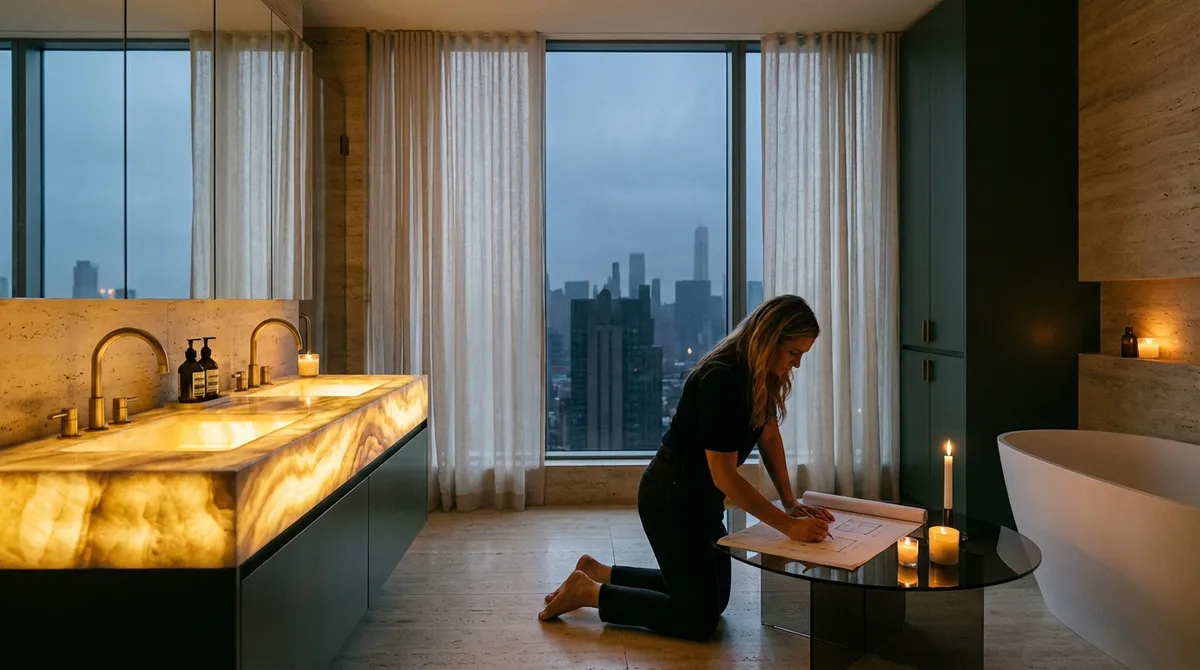
Lighting design is a particular focus. Tunable white lighting that shifts color temperature through the day can support circadian rhythms, while layered schemes—ambient, task, and accent—are planned early in the architectural phase, not added at the end. The visual impression is one of calm surfaces and intentional shadow, backed by highly capable systems the eye barely perceives.
For homeowners, the guiding question is no longer, “What smart features can we add?” but “How can we make the intelligence invisible and the experience effortless?”
2. Monochrome with Micro-Contrast: A New Language of Calm
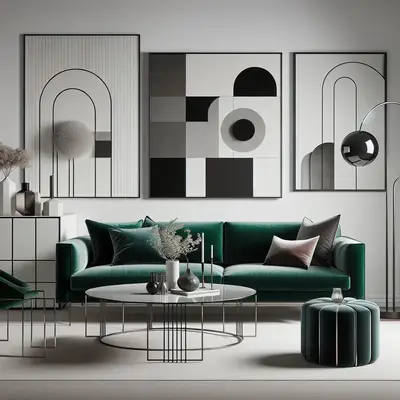
The most sophisticated interiors have pivoted away from aggressive contrasts toward what could be called “micro-contrast”—a restrained palette where differences are felt more than seen.
Instead of dramatic black-and-white opposition, think gentle gradations of tone: warm stone paired with slightly darker limewash walls, pale oak floors meeting mid-tone cabinetry, textiles that echo the same hue in different textures. The power lies in layering tactility—bouclé, brushed wool, honed stone, matte metal—within a narrow color family. The result is tranquil yet far from bland.
In kitchens and baths, this translates into counters and backsplashes from the same stone but with varied finishes (honed on the counter, fluted or bush-hammered as a feature). In living spaces, consider a single color “envelope”—walls, trim, and ceilings coated in one meticulously chosen shade with different sheen levels to modulate depth.
Monochrome does not mean minimal personality. A single disruptive element—a patinated bronze light fixture, a deeply veined marble table, or a richly colored artwork—can become the focal point against this hushed backdrop, making it feel intentional rather than chaotic.
3. The Architectural Kitchen: From “Showpiece” to Silent Workhorse
Kitchens have long been the visual anchor of renovation projects. The current evolution refines that role: the most elevated kitchens now aspire to architectural clarity and functional serenity rather than ostentatious showmanship.
Appliance integration is handled with rigor—full-height cabinet fronts, hardware aligned in strict grids, and a restrained material palette that lets proportion do the storytelling. Island volumes are conceived more like monolithic furniture pieces than storage blocks, with waterfall stone, recessed toe kicks to create lightness, and integrated seating that feels more like a salon than a bar.
Behind the calm façade lies a hidden layer of performance: secondary prep zones, butler’s pantries, or utility sculleries absorb the visual mess of cooking and entertaining. This “front stage/back stage” concept allows the primary kitchen to remain visually composed while still functioning as a serious culinary environment.
If you are renovating, consider designing the kitchen as a suite of spaces rather than a single room: a formal face for social interaction, and a discreet engine room for real work. The luxury is not only in materials—it is in the ability to entertain generously without exposing the underlying mechanics.
4. Quiet Zones and Thresholds: Designing the Art of Transition
Sophisticated homes increasingly prioritize not just “rooms” but the spaces in between them—the thresholds, corridors, and transitional niches that modulate pace and mood. In a world of open plans, there is renewed appreciation for controlled separation.
Renovators are carving out micro-sanctuaries: a reading alcove at the turn of a staircase, a window seat with tailored cushions in a circulation zone, or a pocket office hidden behind full-height doors that blend with wall paneling. These quiet zones encourage single-purpose use: a place for focus, reflection, or a phone call away from the main living volume.
Equally important are the thresholds themselves. Sophisticated projects amplify the sense of arrival—an entry hall with edited furnishings and deliberate lighting, a subtle level change between public and private realms, or a shift in material (stone to timber, smooth plaster to textured finish) signaling new territory.
As you plan a renovation, think beyond square footage and ask: Where will I pause? Where will I decompress between the public and private parts of the home? Designing these transitions is one of the most understated yet transformative moves in contemporary residential architecture.
5. Sustainable Materiality as a Design Signature, Not a Compromise
Sustainability has matured from an ethical add-on to a core aesthetic driver in high-end renovations. The most compelling homes now showcase environmental responsibility as part of their visual identity, not something hidden in the specification notes.
This is evident in the rising favor of natural, renewable, and responsibly sourced materials: FSC-certified wood with visible grain, clay plasters, recycled stone aggregates, and wool or linen textiles free from aggressive chemical treatments. Rather than chasing a flawless, “factory new” look, designers embrace materials that age gracefully—metals that patinate, woods that develop character, stones that tell their use over time.
Ventilation, insulation, and window performance have also become design conversations. Generous, well-insulated glazing is positioned not just for views but for passive solar gain, with shading strategies integrated into the architecture. Mechanical systems are selected with both acoustics and efficiency in mind—quiet performance is as important as low energy consumption in elevated homes.
For renovators, the critical shift is to view sustainable decisions as opportunities to refine the aesthetic: fewer synthetic finishes, more honest materials; fewer disposable trends, more enduring craftsmanship. The result is a home that feels grounded, authentic, and future-conscious.
Conclusion
Refined renovation today is defined less by spectacle and more by discernment. The most resonant homes are those where technology disappears into quiet surfaces, color is whispered through nuanced tones, kitchens behave like composed architecture, circulation becomes an experience, and sustainability is woven into every choice with intention.
For homeowners planning a renovation, following “trends” is no longer about adopting a visual style for a season. It is about recognizing subtle shifts in how space, light, and materials can be orchestrated to support a life well lived—now and for years to come.
Sources
- American Institute of Architects (AIA) – Residential Design Trends Survey – Industry insights into evolving residential priorities, including kitchens, sustainability, and technology integration
- U.S. Department of Energy – Energy Saver: Passive Solar Home Design – Technical guidance on positioning windows, materials, and shading for energy-efficient, comfortable interiors
- Harvard Joint Center for Housing Studies – Improving America’s Housing Reports – Research on renovation patterns, homeowner preferences, and long-term investment in the housing stock
- Rocky Mountain Institute – Efficient and Comfortable Buildings – Best practices and case studies on integrating efficiency, comfort, and design quality in residential projects
- National Kitchen & Bath Association (NKBA) – Design Trends Research – Data-backed observations on how kitchens and baths are evolving in functionality, aesthetics, and technology
Key Takeaway
The most important thing to remember from this article is that this information can change how you think about Design Trends.