Renovation at the upper end of the market is no longer about visual volume; it is about discernment. The most sophisticated homes now privilege proportion over spectacle, craftsmanship over branding, and atmosphere over accumulation. For homeowners preparing to renovate, the opportunity is not merely to update, but to recalibrate—aligning architecture, materiality, technology, and daily ritual into a quietly confident narrative. What follows are five exclusive, forward-leaning insights shaping how discerning renovators are reimagining their spaces for the decade ahead.
1. From Open Plan to Composed Sequences
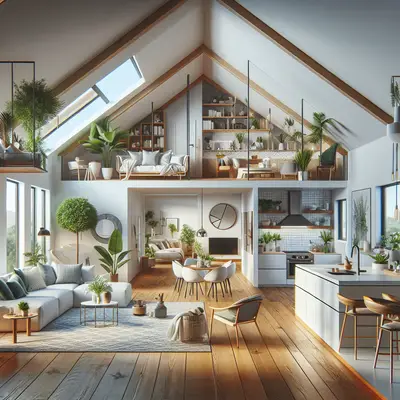
The once-aspirational “one-room living” is giving way to a more considered choreography of space. Rather than erasing walls indiscriminately, elevated renovations are now creating sequences—subtly distinct zones that maintain visual connection while restoring a sense of privacy and purpose.
This does not mean a return to cramped, compartmentalized layouts. Instead, think of thresholds: slender steel-framed glass partitions that define a study without severing light; wide cased openings that frame a dining area like a proscenium; pocket doors that disappear during gatherings yet can subtly reappear when acoustics and focus matter. Sophisticated projects increasingly explore varied ceiling heights, layered lighting, and changes in flooring pattern or texture to delineate zones. The result is interiors that feel both expansive and intelligible—spaces that know how to host a large gathering yet still feel composed when you are home alone.
2. The Rise of Material Intelligence Over Logo-Driven Luxury
In refined renovations, visible logos are being replaced by an almost scholarly focus on material provenance and performance. Homeowners are learning to ask different questions: not “What brand is the fixture?” but “How will this stone patinate?” and “What story does this wood tell over time?”
Material intelligence means understanding that not all marble is equal, and that a honed finish will age with more grace than a high gloss in a heavily used kitchen. It means weighing the quiet dignity of unlacquered brass that develops a living patina against the clinical perfection of polished chrome. It may involve specifying engineered wood with a thick wear layer for radiant heat systems, or selecting large-format porcelain with subtle veining to evoke stone in high-humidity baths. The most successful renovations treat materials as long-term collaborators—not surface-level adornments—so every countertop scratch, softened edge, and evolving finish is anticipated rather than feared.
3. Technology That Disappears Into the Architecture
The most compelling smart homes are shedding the impulse to display technology as status. Instead, they integrate it so gracefully that the architecture appears to act with quiet intuition. The aim is orchestration, not gadgetry.
In practice, this might look like HVAC diffusers concealed within architectural shadow lines, rather than standard ceiling grilles. It may involve in-wall speakers that preserve plaster, motorized shades recessing completely into ceiling pockets, or flush, trimless switches that visually recede. Lighting scenes are pre-programmed not simply for “bright” and “dim,” but for psychological states—dinner, late work, early winter mornings—each calibrated in color temperature and intensity. Sophisticated renovators are also using discreet sensors to regulate indoor air quality, humidity, and energy use behind the scenes. The true luxury is a home that anticipates needs without announcing its circuitry.
4. Sanctuary Rooms: Highly Specific Spaces for Daily Ritual
Beyond the kitchen and primary suite, a new class of deeply intentional “sanctuary rooms” is emerging in premium renovations. These are purpose-built spaces devoted to a singular, often restorative activity, designed with the same rigor typically reserved for showpiece areas.
Consider the reading room with built-in banquettes, acoustically treated walls, and indirect lighting tuned for eye comfort; or a bathing suite with a deep soaking tub, a ledge for books and tea, and a window perfectly placed for morning light and absolute privacy. Some homes incorporate a listening room for high-fidelity audio, a climate-stable collection room, or a compact but exquisitely appointed meditation alcove hidden behind a pivoting panel. These spaces rarely dominate square footage but are meticulously resolved. Their value lies in the signal they send: that the renovation is curated around how you genuinely live, not just around what photographs well.
5. Chromatic Restraint, Textural Boldness
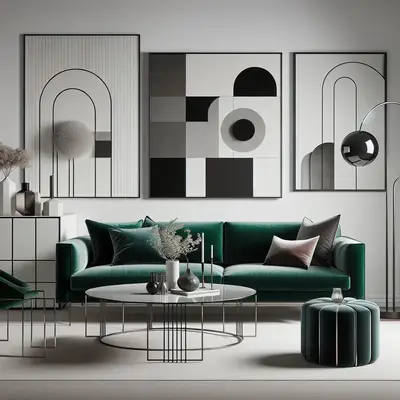
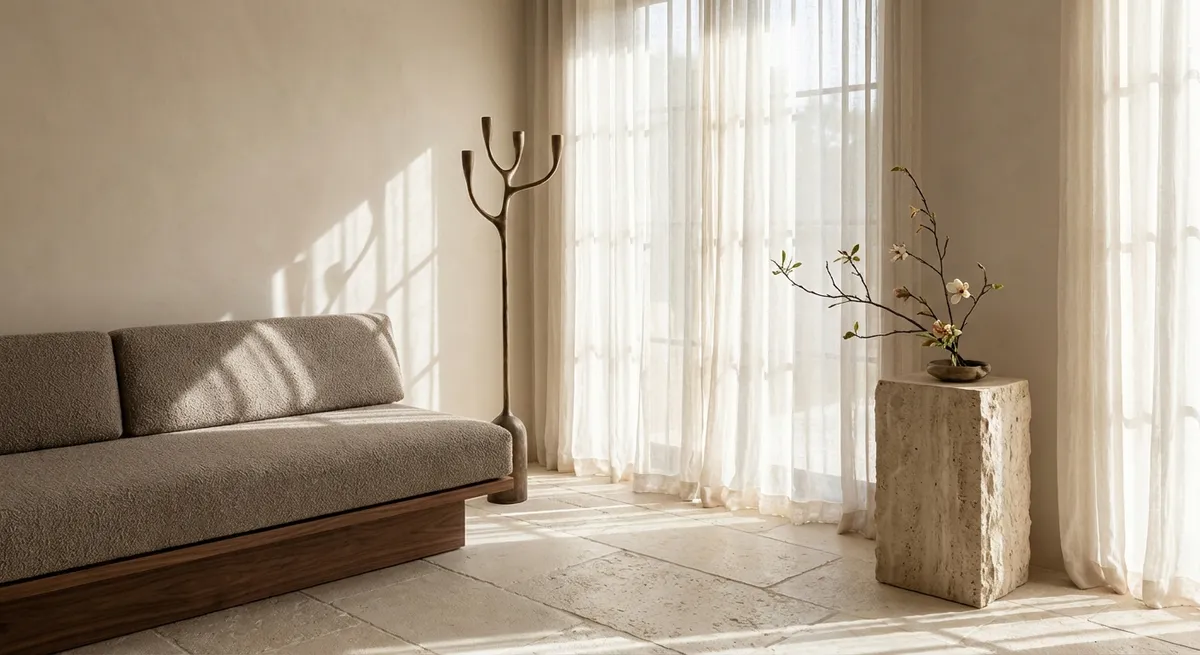
Color in elevated interiors is evolving toward deliberate restraint—yet this quiet palette is anything but bland. Sophisticated renovations are pairing softened neutrals and nuanced off-whites with an almost couture-level attention to texture and depth, creating spaces that feel rich without shouting.
Walls might move away from stark white toward limewash or mineral paints that introduce subtle movement and shadow play. Ceilings become an opportunity for depth, rendered in a slightly warmer or cooler tone than the walls to modulate atmosphere. Rather than loud accent walls, designers are introducing character through textural contrasts: coarse bouclé against smooth leather, open-grain oak beside polished plaster, brushed stone adjacent to ultra-matte cabinetry. Strategic injections of saturated color—a deep oxblood in a powder room, inky blue on inner cabinet faces, a muted green on interior doors—are used sparingly, like punctuation, to create memory points within a largely hushed scheme.
Conclusion
For homeowners preparing to renovate, the emerging design currents are less about keeping pace with trends and more about refining an enduring point of view. Composed spatial sequences, intelligent material choices, invisible technology, ritual-driven sanctuary rooms, and restrained yet tactile palettes all share a common ambition: to create homes that are quieter, more attuned, and profoundly personal. In a market saturated with visual noise, the truly exceptional renovation is the one that feels inevitable—calmly contemporary, deeply functional, and poised to age with dignity rather than urgency.
Sources
- American Institute of Architects – Home Design Trends Survey – Insight into shifting architectural preferences and residential design priorities
- Harvard Joint Center for Housing Studies – Improving America’s Housing – Research on renovation patterns, homeowner behaviors, and investment trends
- U.S. Department of Energy – Energy Saver: Smart Home and Energy-Efficient Technologies – Overview of integrated home technologies and efficiency considerations
- GSA – Sustainable Facilities Tool: Materials – Guidance on material selection, performance, and sustainability in built environments
- MIT School of Architecture + Planning – Research & Publications – Explorations into architecture, technology integration, and evolving design paradigms
Key Takeaway
The most important thing to remember from this article is that this information can change how you think about Design Trends.