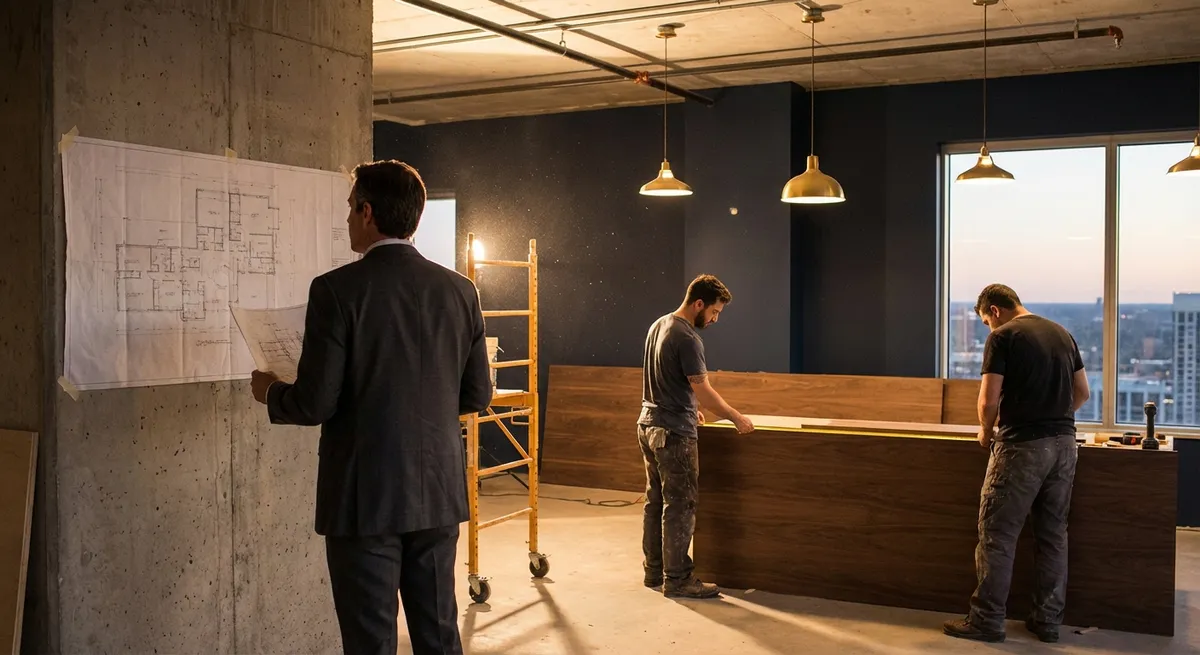
Renovation projects unravel quickly when they are guided only by inspiration and not by intention. The most successful homeowners approach a renovation the way a seasoned curator approaches a museum wing: with clear purpose, disciplined sequencing, and an insistence on harmony between every element. Project planning, at this level, is less about checklists and more about choreography—ensuring each decision, trade, and timeline aligns with a coherent vision of how you want to live.
What follows is a refined framework for planning your renovation with quiet authority, anchored by five exclusive insights that sophisticated homeowners use to stay ahead of problems long before they appear.
Designing from the Life You Want, Not the House You Have
Most renovations are planned around existing walls, current furniture, or what a prior owner thought was “functional.” Elevated planning begins somewhere else entirely: with an honest study of your daily rhythms and aspirational lifestyle.
Start by mapping “use zones” rather than rooms: where do you actually work, decompress, gather, and recharge? A kitchen that hosts frequent late-night conversations requires a different layout, lighting strategy, and acoustic treatment than one used primarily for quick weekday meals. A primary suite that doubles as an evening retreat demands more from its circulation, lighting control, and privacy strategy than a standard bedroom.
Document your days in time blocks—weekday mornings, evenings, weekends, and entertaining scenarios. For each block, list what should feel effortless: coffee preparation, remote calls, children’s homework, guests arriving, laundry circulation. Then translate those experiences into requirements: clear work surfaces, concealed charging, layered lighting, well-positioned outlets, noise buffers, and intuitive storage.
By allowing your life patterns to drive decisions, your project plan stops being a reaction to an inherited floor plan and becomes a deliberate architecture of daily ease.
Insight 1: Establish a “Non-Negotiables Dossier” Before Any Design Work
Sophisticated project planning begins not with floor plans, but with constraints—decided calmly, in advance. Create a written “Non-Negotiables Dossier” that captures the standards you are unwilling to compromise as the project evolves. This document becomes your private executive brief.
Include three categories:
- Performance standards – acoustic comfort, indoor air quality, energy efficiency targets, storage minimums, or durability expectations. For example, specifying minimum sound transmission ratings for bedroom walls or committing to low-VOC paints throughout.
- Aesthetic boundaries – materials you will not use, finishes that feel too transient, or design moves that undermine the architectural character of the home. This protects the project from impulsive, trend-driven deviations.
- Process principles – decisions about how you will handle change orders, how often you want progress reviews, and your tolerance for living through construction vs. temporary relocation.
This dossier is not a mood board; it is a governance tool. When pricing pressure or time stress emerge—as they inevitably do—this document prevents hasty trades of long-term quality for short-term convenience. It also orients your architect, designer, or contractor around what truly matters, sparing everyone from misaligned assumptions down the line.
Insight 2: Sequence Design Decisions by Irreversibility
Most renovation stress comes from making decisions in the wrong order—choosing paint before lighting, hardware before door profiles, tile before understanding how water actually moves in the space. The elegant approach is to sequence decisions based on irreversibility and impact.
At the top of the hierarchy sit structural moves, mechanical and electrical layouts, and window/door placements. These determine comfort, light, and flow; they are costly and disruptive to revise later. Next come wet-area planning, cabinetry design, and built-ins, which lock in dimensions, clearances, and service access. Only after these are secured should you finalize fixtures, surfaces, and then finally, color and styling.
As you plan your project timeline, align your design milestones with the actual construction sequence. For example, lighting design should be complete well before rough-in electrical work, and tile layout decisions should precede any waterproofing and substrate work. This approach shrinks the number of “last-minute” decisions and protects you from the aesthetic compromises that happen when trades are waiting on-site and you are forced to decide under pressure.
The result is a project that unfolds with a sense of calm inevitability rather than a series of reactive scrambles.
Insight 3: Treat Time as a Design Constraint, Not a Scheduling Line Item
Most homeowners treat time as something handled by the contractor’s schedule, not as a design variable. Yet project timelines, when treated thoughtfully, can significantly elevate the finished result.
First, distinguish between calendar time and decision time. Calendar time is the total project duration. Decision time is the mental bandwidth and calendar space you allocate to make thoughtful choices. Sophisticated planning ensures decision time is front-loaded and protected, rather than squeezed between site walkthroughs and material lead times.
Second, build in deliberate pauses at key checkpoints: after demolition (to confirm what conditions actually exist), after rough-in (to walk the site and refine outlet, switching, and fixture locations based on real-world sightlines), and before final finishes (to test sample boards in actual light across different times of day). These short, intentional pauses prevent costly rework and subtle misalignments that erode the final experience.
Finally, recognize that quality trades and specialized materials often carry longer lead times. Instead of fighting this reality, use it strategically: align longer lead items (custom millwork, specialty stone, bespoke metalwork) with earlier ordering windows and let more readily available elements flex around them. In this way, your schedule becomes an ally, not an adversary, in achieving a refined outcome.
Insight 4: Curate a “Working Mock-Up” Strategy for Invisible Comfort
Elevated renovations differentiate themselves not through the obvious gestures but through the invisible comforts—those details that rarely appear on a mood board but define daily contentment. Planning for these requires a deliberate mock-up strategy, even in residential projects.
For lighting, create simple on-site trials with temporary fixtures or portable lamps to test color temperature, beam spread, and switching logic before committing to a full specification. For acoustics, pay attention to how sound carries after demolition and rough framing; consider adding insulation, resilient channels, or soft treatments where echoes or transmission feel intrusive.
In kitchens and baths, ask for dry-fit mock-ups of critical junctions—tile transitions, niche dimensions, countertop overhangs, and edge profiles. Stand at the sink, simulate food prep and cleanup, or step into the shower with tape indicating glass edges and controls. You are not simply checking measurements; you are testing choreography.
This kind of micro-prototyping may feel painstaking, but it is how professionals refine user experience in commercial and hospitality environments. Bringing that discipline into your home renovation planning yields spaces that feel intuitively right from day one, rather than requiring “living with it” adjustments later.
Insight 5: Build a Governance Framework, Not Just a Contract
A contract establishes legal obligations. A governance framework establishes how decisions, communication, and accountability will work day-to-day. Elegant project planning acknowledges that even the most carefully drawn plans evolve; what matters is how that evolution is managed.
Before construction begins, define a few core governance elements:
- Decision cadence – recurring, structured meetings (weekly or biweekly) with clear agendas: open decisions, cost implications, coordination issues, and upcoming milestones.
- Design authority – who has final say on design deviations when field conditions demand adaptation? Is it you, your designer, or a jointly agreed hierarchy depending on the issue?
- Change protocol – how are changes documented, priced, and approved? Require written change orders with both cost and schedule impacts clearly outlined before work proceeds.
- Information flow – establish where drawings, revisions, site photos, and approvals live (shared digital folder, project management platform, etc.) and who maintains it.
When this framework is defined early and taken seriously, it transforms the project from a series of ad hoc negotiations into a disciplined collaboration. It also reduces emotional fatigue; instead of reacting to problems, you are following pre-agreed rules for how problems will be evaluated and resolved.
Translating Strategy into a Composed Renovation Experience
Exceptional renovations do not arise from a single bold idea; they emerge from a series of intelligent, quietly confident decisions made in the correct order. By starting from how you want to live, establishing non-negotiables, sequencing design by irreversibility, treating time as a design material, prototyping invisible comforts, and elevating governance beyond the contract, you move from “managing a project” to orchestrating an experience.
The result is a home that feels settled on day one: spaces that support your routines without friction, details that reveal their thoughtfulness over time, and a project journey that, while never entirely effortless, feels consistently under your direction rather than at the mercy of circumstance. That is the hallmark of refined project planning—and the quiet luxury that endures long after the last trade has left the site.
Sources
- National Association of Home Builders – The Remodeling Process - Overview of typical remodeling steps and professional roles
- U.S. Department of Energy – Energy Saver: Home Remodeling - Guidance on integrating efficiency, systems, and performance into renovation planning
- American Institute of Architects – Working with an Architect - Explains how to structure decision-making, scope, and communication with design professionals
- Harvard Joint Center for Housing Studies – Improving America’s Housing - Research insights into renovation trends, spending, and homeowner priorities
- U.S. Consumer Product Safety Commission – Home Safety Guides - Useful reference for integrating safety and code considerations into renovation planning
Key Takeaway
The most important thing to remember from this article is that this information can change how you think about Project Planning.