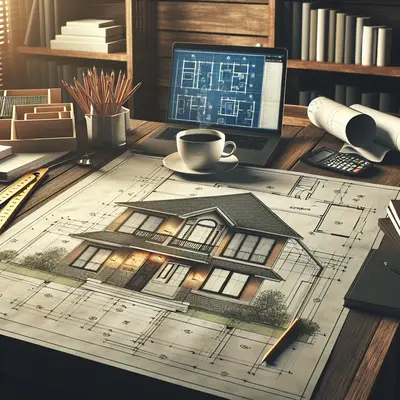
Renovation projects that feel effortless are never accidental. Behind every serene construction site, every on-time reveal, and every detail that looks “meant to be,” there is a rigorously conceived plan—one that balances design, budget, timing, and human behavior with quiet precision.
At Renovate Quotient, we view project planning as a strategic discipline, not a checklist. It is the difference between a home that merely looks updated and one that feels composed, coherent, and deeply personal. The following approach is designed for homeowners who expect their renovation to perform as beautifully as it appears—and who understand that elegance is the result of deliberate decisions made early, not heroic fixes made late.
Designing the Master Scenario: Planning for How Your Life Will Actually Unfold
Most renovation plans are drawn around walls and fixtures. Exceptional renovations are planned around movement, rituals, and seasons. Before any scope document is written, the most important exercise is not, “What do we want to build?” but, “How will we live here—hour by hour, month by month?”
Imagine a typical weekday in granular detail: where phones land when you walk in; where bags and briefcases are dropped; how you circulate while cooking, working, entertaining, or putting children to bed. Then imagine a winter weekend, a summer gathering, an overnight guest, or a quiet evening alone. These “scenarios” form a narrative that your renovation must support.
This narrative becomes a strategic brief for your architect, designer, and contractor. Instead of vague desires (“open concept,” “more storage”), you can articulate specific performance goals: a place to hide mail and devices near the entry, a sightline from kitchen to homework station, a primary suite that allows one partner to wake early without disturbing the other. A well-articulated life pattern brief is the most powerful planning document you will create—because it keeps every later decision tethered to how you actually live, not to impulse or trend.
Curating Constraints: Using Limits as a Design Advantage
Highly effective renovation planning does not begin with unlimited possibility; it begins with clearly defined, intelligently chosen constraints. When acknowledged early, constraints become design allies, not adversaries.
These constraints fall into several categories: structural (load-bearing walls, existing plumbing stacks), regulatory (setbacks, egress, local codes), financial (your true all-in budget including contingencies and furnishings), and temporal (hard deadlines such as school terms, lease terminations, or major life events). Rather than treating these as obstacles, sophisticated planning reframes them as the framework within which exceptional solutions emerge.
For instance, retaining a key structural wall might lead to a more nuanced sequence of rooms, creating intimacy and acoustic privacy where a full “open plan” would feel exposed and noisy. Adhering strictly to a realistic budget might push you toward fewer but more elevated interventions—reworking circulation, light, and storage—rather than scattering resources across superficial cosmetic changes. When you own your constraints, you can evaluate each design move with precision: “Does this decision respect our framework and meaningfully elevate how we live?”
Building an Integrated Decision Roadmap Instead of a Linear To-Do List
Conventional project plans often look linear: finalize design, get bids, sign contracts, order materials, build. In reality, renovation decisions are interconnected, with many of the most influential choices occurring earlier than homeowners realize. Planning excellence requires a decision roadmap, not a simple timeline.
An integrated decision roadmap sequences choices according to their impact on structure, layout, systems, and budget—then flows down to finishes, fixtures, and furnishings. For example, decisions affecting electrical load, HVAC routing, or plumbing locations must be locked in before framing and rough-ins. Yet those decisions depend on apparent “aesthetic” questions: Will you be using induction cooking? Do you want integrated panel-ready appliances? Are you planning statement fixtures that require specific junction boxes or dimming systems?
By mapping these relationships explicitly, you avoid the all-too-common scenario where a late design flourish demands expensive rework. The roadmap should highlight critical “no-turning-back” moments—points at which certain options will close off if not decided. This gives you permission to be exploratory early and decisively focused later. It also sets up more sophisticated collaboration with your design and build team, who can then bring the right expertise into the room at the right time.
Exclusive Insight #1: Treat every early-mechanical and layout decision as a design decision in disguise. They shape what will be possible aesthetically, acoustically, and functionally months down the line.
Orchestrating the Project Team as a Cohesive Ensemble
Planning a refined renovation is as much about orchestrating people as it is about orchestrating plans. The way you structure your project team—architect or designer, contractor, specialty trades, and possibly an owner’s representative—will directly influence quality, cost control, and your own peace of mind.
A sophisticated approach is to define, in writing, three elements before any contract is signed: decision authority, communication cadence, and escalation pathways. Decision authority clarifies who has the final say on design details, field changes, and budget reallocations—and under what thresholds (for example, the contractor can approve on-site substitutions up to a certain dollar amount, while anything beyond that requires written owner approval). Communication cadence spells out how often you will receive progress updates, what they will contain (cost status, schedule status, open decisions, risks), and who must attend review meetings. Escalation pathways describe precisely how potential issues—such as supply delays, structural discoveries, or cost overruns—will be surfaced and resolved.
This structure does not stifle creativity; it creates the trust and clarity that allow it to flourish. When each professional understands the project’s core intent, constraints, and your personal priorities, they can advocate for better solutions on your behalf. Instead of micromanaging, you are curating an ensemble whose expertise is aligned with your standards.
Exclusive Insight #2: Ask every key professional, in the interview phase, “Describe the last project where something went wrong—and how you handled it.” Their answer will reveal more about their planning discipline than any portfolio image.
Designing for Tolerance: Silent Buffers Against the Unexpected
The most elegant renovations are not those in which nothing goes wrong—they are those in which the inevitable surprises are quietly absorbed. This is the art of planning for tolerance: building in financial, temporal, and design buffers so that the project can flex without losing its balance.
Financial tolerance is more than a generic contingency line. It is a deliberately allocated reserve, informed by the age and condition of your home, the invasiveness of the work, and the degree of structural or systems intervention. Older or previously renovated houses often conceal legacy wiring, unpermitted work, or structural compromises; these should prompt a higher built-in reserve. Temporal tolerance means not scheduling your move-in on the same week as your certificate of occupancy; instead, you anticipate punch lists, inspections, and final adjustments.
Design tolerance is subtler. It means planning layouts and joinery with an understanding of construction realities: walls that may be slightly out of plumb, tile lots that can vary, lead times that may slip. Your designer and contractor can propose details that are forgiving—reveals and shadow gaps that disguise minor shifts, modular tile patterns that can accommodate cuts gracefully, cabinetry plans that don’t hinge on a single, late-arriving appliance dimension. When planning acknowledges imperfection, the finished space reads as calm and precise.
Exclusive Insight #3: Ask your team explicitly, “Where are we relying on perfect conditions—and how can we design a margin of error into those points?” This question often prevents the most avoidable headaches.
Future-Proofing the Invisible: Planning for Technology, Adaptability, and Resale
The most transformative planning decisions are often the least visible once the renovation is complete. Wiring, insulation, infrastructure for smart systems, and adaptable layouts all contribute to a home that serves you well over time—and maintains its appeal to future buyers.
Rather than retrofitting technology later, plan for a structured low-voltage backbone now: strategically placed conduits and junctions for networking, security, audio, and automation. This does not require that you commit to every device or system today; it requires that you provide the pathways and capacity for them tomorrow. Similarly, consider adaptability—can a home office later become a guest suite, a playroom become a teen lounge, a lower level evolve into a caregiving suite? Thoughtful door locations, access to plumbing, and subtle reinforcement for future grab bars or built-in storage can make these shifts simple rather than invasive.
From a resale perspective, planning for future appeal does not mean diluting your tastes. It means being intentional about where you make highly personal design statements and where you opt for enduring, flexible infrastructure and layouts. Buyers may change paint colors and lighting; they are less likely to redo mechanical systems, window placements, or major spatial configurations. When planning is executed at this level, your renovation not only elevates your own daily experience but also becomes an asset with enduring market resonance.
Exclusive Insight #4: During planning, identify three “future levers”—places where inexpensive planning decisions now (extra conduit, slightly larger panel, flexible plumbing chase) could unlock substantial options later.
Codifying the Vision: A Living Project Dossier
One of the most underused tools in residential renovations is a well-maintained project dossier: a curated, single source of truth that evolves from planning through completion. This is more than a mood board; it is a distilled record of intent, decisions, and specifications.
Your dossier might include: the narrative life-pattern brief, a one-page project mission, the constraints and priorities hierarchy, the integrated decision roadmap, finalized floor plans and elevations, finish and fixture schedules, and a summary of key technical standards (for example, target sound insulation for bedroom walls, minimum lighting levels, preferred hardware finishes). As the project proceeds, it also becomes the repository for substitutions, field changes, and as-built documentation.
The power of this dossier is twofold. First, it protects coherence; when fatigue sets in and dozens of micro-choices demand attention, you can return to the original mission and priorities to make aligned decisions. Second, it enhances long-term ownership; long after the dust has settled, you will have a clear record of what lies behind your walls, what was installed where, and how systems were configured. This transforms future maintenance, upgrades, or partial renovations from guesswork into precise operations.
Exclusive Insight #5: Insist on receiving updated drawings and documentation that reflect what was actually built—not just initial plans. Treat this as a core deliverable, not an optional courtesy.
Conclusion
Renovation planning at a truly elevated level is not about obsessing over every tile, nor is it about surrendering control to professionals and hoping for the best. It is about making a series of early, intelligent choices that harmonize how you live, what you value, and how your home will perform over time.
By crafting a narrative of daily life, embracing constraints as creative fuel, mapping interdependent decisions, orchestrating your project team with clarity, designing tolerances into the plan, future-proofing the invisible, and codifying the entire vision in a living dossier, you transform the project from a stressful undertaking into a disciplined, artful process.
When planning is approached as a craft in its own right, your renovation ceases to be a mere construction project. It becomes a composed evolution of your home—and an enduring expression of how you choose to live.
Sources
- U.S. Department of Energy – Home Renovations and Energy Efficiency – Guidance on planning upgrades that integrate building systems, insulation, and efficient equipment
- American Institute of Architects (AIA) – Working with an Architect – Explains roles, contracts, and collaboration structures that inform sophisticated project planning
- National Association of Home Builders (NAHB) – Steps to Remodeling – Outlines the phases of remodeling projects and key planning considerations
- Harvard Joint Center for Housing Studies – Improving America’s Housing – Research on renovation trends, spending, and long-term value, useful for framing budget and future-proofing decisions
- National Association of Realtors – 2022 Remodeling Impact Report – Data on owner satisfaction and resale value impacts of various renovation projects
Key Takeaway
The most important thing to remember from this article is that this information can change how you think about Project Planning.