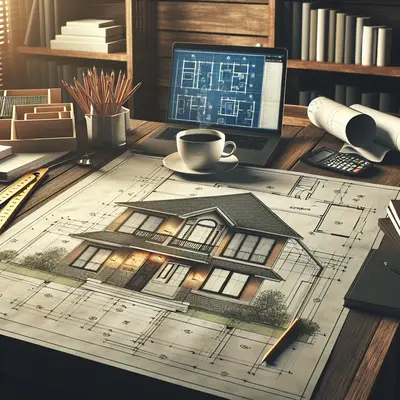
Renovation at a refined level is never improvised; it is orchestrated. For homeowners who view their residence as both sanctuary and long-term asset, project planning becomes less about “getting it done” and more about composing a deliberate transformation. This is where timing, strategy, and nuance matter as much as the finishes you ultimately select.
What follows is a sophisticated approach to project planning, with five exclusive insights designed for homeowners who expect more than standard advice. These are the levers that quietly separate an ordinary renovation from an enduring, elevated one.
Planning as Portfolio Management, Not Just a Project
Treating your renovation as a portfolio rather than a single project helps you make decisions with greater clarity and discipline. Instead of thinking room-by-room, think in terms of “asset classes” within your home: structural integrity, mechanical systems, spatial flow, and experiential finishes.
Begin by commissioning a comprehensive evaluation of the home—structural, mechanical (HVAC, plumbing, electrical), and envelope (roof, windows, insulation). This is your equivalent of a portfolio risk assessment. With that intelligence, you can align interventions to three horizons:
- Defensive moves: issues that, if neglected, can undermine value (e.g., water intrusion, outdated wiring).
- Core growth moves: upgrades that elevate livability and long-term desirability (kitchen, baths, light, storage).
- Discretionary enhancements: design flourishes and lifestyle upgrades that refine the experience (custom millwork, integrated lighting design, acoustic treatments).
When your plan acknowledges all three, you avoid the common trap of investing heavily in visible surfaces while deferring the quiet systems that safeguard both comfort and value.
Designing for Sequences, Not Just Spaces
Exceptional project planning considers the sequence in which spaces are experienced, not just their individual aesthetics. This mindset moves you beyond “upgrading a kitchen” to choreographing how one moves, sees, and feels from entry to the most private corners of the home.
Map the daily rituals of the household: how mornings unfold, how guests are received, how work and rest are balanced. Then plan work in sequences that enhance those journeys:
- Refine arrival and transition zones (entries, mudrooms, corridors) early, as they anchor every movement through the home.
- Align adjacent spaces in phases, so interventions in one room anticipate and support the eventual design of the next—shared sightlines, material continuity, and light paths.
- Coordinate infrastructure before aesthetics: ensure electrical, HVAC, and data runs anticipate future phases so you’re not reopening finished walls later.
By planning the order in which your contractor touches each zone, you minimize rework, preserve design integrity, and move closer to a coherent narrative rather than a patchwork of “improved rooms.”
The Calendar as a Design Tool
For the discerning renovator, the calendar is not just a logistical reality; it is a design tool that influences quality, comfort, and even cost. Strategic timing can determine the caliber of trades available, the speed of delivery, and the predictability of the experience.
A refined plan aligns scope with seasonal and market rhythms:
- Seasonal advantage: Exterior envelope work (roofing, windows, masonry) is scheduled during optimal weather windows, while interior finishing and millwork can be prioritized in less favorable months.
- Lead time intelligence: High-end fixtures, custom cabinetry, and specialty stone carry long lead times. Lock in these selections early, then structure preliminary work around confirmed delivery dates to keep momentum fluid.
- Household calendar: Overlay the construction schedule with your personal calendar—travel, school terms, key life events. Coordinating major disruptive phases (e.g., demolition, mechanical rough-ins) with periods when you can relocate temporarily often yields a calmer, more controlled experience.
This is planning as choreography: a calendar that is shaped, not suffered, in pursuit of a more seamless and less stressful renovation.
Building a Decision Architecture That Protects Design Integrity
In sophisticated renovations, the greatest risk is not poor taste, but decision fatigue. Under pressure, even well-intentioned clients accept compromises that quietly dilute the original vision. A thoughtful “decision architecture” prevents this.
Before work begins, request a structured schedule of decisions from your design and build team, grouped by milestone: concept, schematic, design development, and pre-construction. Within each group, clarify:
- Which choices are foundational (affecting structure, systems, or layout).
- Which are coordinating (impacting alignment of materials, fixtures, and built-ins).
- Which are aesthetic refinements (colors, hardware finishes, decorative lighting).
Insist on early resolution of foundational and coordinating decisions, documenting them in a tightly curated project book or digital binder: floor plans, elevations, finish schedules, and specification sheets. This gives the contractor a firm reference point, reducing on-site improvisation and “field changes” that erode design coherence.
The exclusive insight here is that sophistication lies in pre-committing to a hierarchy of choices, ensuring that when inevitable adjustments arise, they do not derail the core narrative of the home.
The Private Contingency: A Quiet Advantage
Most clients allow their contingency to be an open secret in the project budget, visible to both builder and design team. A more strategic approach is to maintain a private contingency—separate from the formal contract allowance—that exists solely to protect standards and opportunities, not to plug planning oversights.
Use this private reserve for three specific purposes:
- Uncompromised substitutions: When lead times or availability threaten a key specification, you can pivot to an equal-or-better alternative without value-engineering the result downward.
- Latent conditions: Hidden issues (subfloor damage, outdated wiring, structural surprises) can be resolved properly instead of patched minimally to stay on paper budgets.
- Revealed opportunities: During demolition, unexpected architectural qualities—exposed beams, original brick, unusual ceiling height—may surface. A private contingency allows you to refine, highlight, or integrate them gracefully.
This approach changes the dynamic from reactive cost-cutting to intentional value protection, preserving the level of finish and integrity you originally envisioned.
Five Exclusive Insights for the Sophisticated Renovator
- Plan the unseen with the same rigor as the visible. Mechanical rooms, service corridors, storage, and access panels should be designed with elegance and longevity in mind; they’re where daily friction is either amplified or erased.
- Specify “experience standards,” not just materials. Instead of only choosing products, define performance expectations—acoustic targets, lighting levels, thermal comfort, ease of maintenance—and let these standards guide technical and design decisions.
- Invest early in a unified lighting and power strategy. Engaging lighting design—even at a conceptual level—before finalizing layouts ensures art, millwork, and furnishings are lit properly and that outlets, data, and charging are quietly integrated where they are truly needed.
- Prototype key details before full execution. For critical elements (stair rail profiles, cabinet reveals, shower thresholds), request mock-ups or sample installations. Small-scale refinement prevents costly rework and preserves the precise, tailored look you expect.
- Curate future flexibility into the plan. Discreet blocking in walls, extra conduit runs, and a slightly oversized electrical panel or mechanical capacity allow you to adapt to evolving technologies and lifestyle needs—without disrupting finished spaces later.
Conclusion
A refined renovation is not defined solely by the beauty of its finishes, but by the intelligence of its planning. When you treat your home as an integrated portfolio, choreograph spaces in sequence, use the calendar as a strategic asset, safeguard decisions through structure, and protect your standards with a private contingency, you are no longer merely “renovating.” You are composing a long-term residential strategy.
For the discerning homeowner, project planning is the quiet discipline that ensures the final result feels inevitable—calm, coherent, and thoroughly considered—rather than the product of compromise and circumstance. It is in this invisible architecture of planning that truly elevated homes are made.
Sources
- U.S. Department of Energy – Home Renovations and Energy Efficiency – Guidance on upgrading building systems and envelopes, useful for planning structural and mechanical phases.
- Harvard Joint Center for Housing Studies – Remodeling Futures Program – Research-based insight into renovation trends, expenditures, and strategic planning considerations.
- American Institute of Architects (AIA) – Residential Design Resources – Professional perspectives on sequencing, design integrity, and client-architect collaboration.
- National Association of Home Builders (NAHB) – Remodeling Resources – Industry guidance on project scoping, contingencies, and working with contractors.
- The New York Times Real Estate – Renovation Planning Coverage – Articles and case studies illustrating real-world renovation planning, timing, and decision-making dynamics.
Key Takeaway
The most important thing to remember from this article is that this information can change how you think about Project Planning.