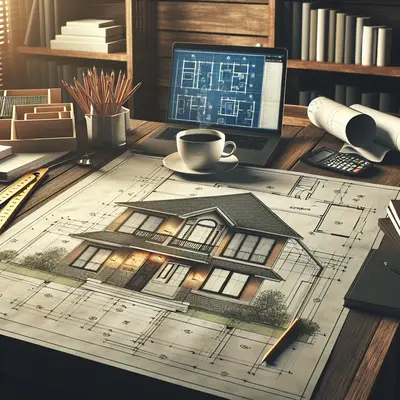
A well-planned renovation is less a construction project and more a design opera—every element choreographed, every decision deliberate. Before a single wall is opened or a finish is ordered, the true work begins: shaping a project plan that aligns budget, architecture, and lifestyle with quiet precision. For homeowners who expect more than “good enough,” project planning is where refinement is either secured—or surrendered.
Below, we explore a more cultivated approach to renovation planning, with five exclusive insights that move beyond generic checklists and into the realm of strategic, high-caliber transformation.
Designing From the Inside Out: The Lifestyle Dossier
Sophisticated project planning begins long before drawings, with a meticulous understanding of how you live now—and how you intend to live in ten years.
Instead of starting with square footage or style, start with patterns. How many surfaces need to withstand daily breakfast preparation? Where do you naturally drop your keys and mail? Do you entertain frequently, or is your home a private retreat? Document a full week of living: where clutter accumulates, how sound travels, which rooms are chronically underused.
Transform these observations into a “Lifestyle Dossier”—a concise document that outlines your non-negotiables (acoustic privacy for bedrooms, a defined drop-zone for everyday objects, seamless indoor–outdoor flow) and your aspirational shifts (a dedicated reading corner, a better morning routine, a quiet office with natural light).
Sharing this dossier with your architect, designer, and contractor gives each professional a richer, more nuanced brief. Instead of generic “open concept” requests, you’re now guiding the team with precise, behavior-driven objectives. Good projects respond to a floor plan; exceptional ones respond to a life.
Exclusive Insight #1: Treat your daily habits as design data. A refined plan uses measured observation, not vague preference, as its foundation.
The Master Sequence: Crafting a Renovation Order of Operations
Luxurious results often come down to something deeply unglamorous: sequence. The order in which a project unfolds can either protect your budget and finishes—or quietly erode both.
Start with what cannot be easily revisited: structural changes, mechanical upgrades, and envelope improvements (roofing, windows, insulation). These decisions influence everything that follows, from ceiling height and lighting runs to furniture layout and acoustic quality. Only then should you move into space planning, lighting design, and finally finishes and furnishings.
Create a written “Master Sequence” document that outlines your project in phases, not just by calendar dates but by decision dependencies:
- Which choices must be finalized before framing begins (window sizes, door swings, plumbing locations)?
- At what stage do lighting plans need to be locked to avoid costly rewiring?
- Which finishes require long lead times that must be ordered before demolition?
This is not a simple Gantt chart; it’s a strategic hierarchy of decisions. Shared early with your team, it becomes a reference point that keeps the project moving logically—not reactively.
Exclusive Insight #2: Elevate your schedule into a decision roadmap. You’re not just tracking dates; you’re safeguarding the logical order of smart choices.
Financial Architecture: Building a Tiered Investment Strategy
Instead of treating the budget as a single, monolithic number, sophisticated renovation planning dissects it into tiers of intent: foundational investment, visible refinement, and future-flexible upgrades.
- Foundational investment includes structure, mechanicals, windows, and insulation—the quiet backbone of comfort and durability.
- Visible refinement encompasses what you see and touch daily: flooring, fixtures, cabinetry, hardware, lighting.
- Future-flexible upgrades cover items that can be layered in later without significant disruption: bespoke built-ins, advanced home automation, specialty furnishings.
Begin by deliberately over-allocating to foundational elements. A properly insulated envelope, efficient HVAC, and quality windows will define the home’s feel more meaningfully than any trending surface treatment. Only once these are fully funded should you refine visible layers.
Next, assign each major line item a “flex status”: fixed, adjustable, or optional. Fixed items are mission-critical. Adjustable items have a permissible quality or cost range (like choosing between two reputable fixture lines). Optional items are those you can delay without undermining the integrity of the project.
This financial architecture turns budget conversations from defensive to strategic. When unforeseen conditions arise—as they almost always do—you’ll know exactly where you can adjust without compromising the essence of the design.
Exclusive Insight #3: Architect your budget by intent, not just category. It becomes a design instrument rather than a simple list of costs.
Curated Complexity: Assembling a High-Performance Project Team
The caliber of your renovation is determined as much by who implements the plan as by the plan itself. A refined project team is not simply a collection of talented individuals; it’s a deliberately curated collaboration with clearly defined roles and overlapping strengths.
Begin by clarifying your preferred decision-making model. Do you want a single point of contact (design-build), or do you prefer the checks and balances of a separate architect/designer and contractor? Both can yield exquisite results, but each demands a different approach to communication and oversight.
Vet professionals not only on portfolio but on process. Ask:
- How do you handle change orders and unexpected site conditions?
- What is your protocol for finish approvals and mock-ups?
- How do you document decisions and protect the original design intent?
Insist on a clearly articulated communication rhythm—standing weekly site meetings, written recaps, and a central repository for drawings, specifications, and revisions. In refined projects, ambiguity is the most expensive line item.
Most importantly, ensure there is a shared definition of success that goes beyond “on-time, on-budget.” Perhaps it includes acoustic serenity, long-term adaptability, or preserving original architectural character. When every professional is aligned with that elevated brief, you move from coordination to orchestration.
Exclusive Insight #4: Treat your project team as an ensemble, not a lineup. The goal isn’t just individual talent—it’s collective fluency around your vision.
Time as a Design Material: Planning for Patina, Aging, and Future Change
The most sophisticated renovations are not optimized for the day of completion; they are designed to age with grace. True luxury in planning acknowledges that your needs, technology, and taste will evolve.
Start by identifying zones of permanence and zones of adaptability:
- Zones of permanence: structural walls, window placements, major plumbing stacks, primary flooring transitions.
- Zones of adaptability: lighting controls, storage solutions, soft furnishings, even some interior partitions.
In zones of permanence, invest in timeless forms, high-quality materials, and considered proportions—elements that won’t feel dated in five years. In adaptive zones, embrace systems that can evolve: modular shelving, track lighting, plug-and-play smart devices, pre-wired walls for future tech.
Consider “future pathways” in your planning: discreet chases for potential solar connections, extra capacity in electrical panels, or framing that anticipates a future loft, office, or secondary suite. These decisions are barely visible on day one—but radically influential on day 3,650.
Finally, be intentional about patina. Some materials—solid wood, unlacquered brass, natural stone—grow more beautiful with time. Others age poorly and require premature replacement. Plan your material palette with aging as a feature, not an afterthought.
Exclusive Insight #5: Plan not just for today’s lifestyle, but for the next chapter. Time is one of your most powerful design collaborators when you respect it from the outset.
Conclusion
Exceptional renovation planning is neither hurried nor improvised. It is the deliberate act of aligning lifestyle, sequence, investment, team, and time into a cohesive, enduring vision. When approached with this level of refinement, the renovation ceases to be a disruptive event and becomes a carefully scripted transition—from how you live now to how you aspire to live next.
For homeowners who value nuance over noise, the planning phase isn’t a hurdle to clear; it is the quiet, strategic heart of the entire endeavor.
Sources
- U.S. Department of Energy – Home Energy Upgrades – Guidance on prioritizing structural and mechanical improvements for comfort and efficiency
- National Association of Home Builders (NAHB) – Remodeling Resources – Insights on working with remodelers, project planning, and scope definition
- American Institute of Architects – Working with an Architect – Explains roles, process, and how to structure a high-functioning project team
- Harvard Joint Center for Housing Studies – Improving America’s Housing – Research on renovation trends, investment patterns, and long-term planning considerations
- This Old House – Home Renovation Planning Guide – Practical examples of sequencing, budgeting, and decision-making in residential renovations
Key Takeaway
The most important thing to remember from this article is that this information can change how you think about Project Planning.