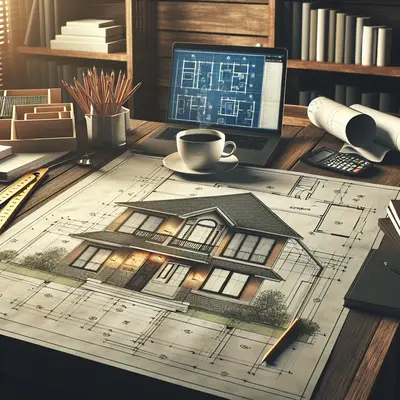
Every remarkable renovation begins long before walls are opened or finishes are selected. The most successful projects are not simply well designed; they are exquisitely orchestrated. Behind the calm confidence of a renovation that finishes on time, on budget, and without chaos is a quiet architecture of planning—deliberate choices, structured decisions, and refined discipline. For homeowners who expect more than adequacy and aspire to an elevated result, project planning is not an administrative task; it is the first act of design.
Below, we explore a sophisticated approach to project planning for the discerning homeowner—anchored by five exclusive insights that transform a renovation from a stressful disruption into a curated, expertly managed experience.
Designing the Project Before Designing the Space
A refined renovation does not begin with tile samples or paint swatches; it begins by designing the project itself. This means treating the planning phase as a distinct, intentional stage rather than a brief prelude to construction.
Start by defining the project’s “non‑negotiables” with the same clarity you would bring to an architectural brief. These may include a firm completion date (for example, before a major life event), a maximum acceptable disruption to daily routines, or a precise performance upgrade target such as energy efficiency or acoustic comfort. These constraints become the framework within which all design and execution decisions are made.
Equally important is articulating how you want the project to feel as it unfolds—controlled, discreet, minimally intrusive. This philosophical stance influences everything from contractor selection to site rules (noise windows, worker access, cleanliness standards). When you design the project experience first, the renovation ceases to be something that “happens to you” and instead becomes something meticulously curated by you.
Insight 1: Treat Time as a Primary Design Material
Most homeowners treat time as a deadline. Sophisticated renovators treat time as a material—shaped, allocated, and safeguarded like stone, wood, or glass.
Begin by building a “time elevation” of your project, much like an architect draws an elevation of a façade. Map not only key milestones—design completion, approvals, ordering, demolition, installation—but also the critical lead times and decision points that feed them. For example, cabinetry, custom metalwork, and specialty lighting often require long lead times; delaying these decisions can quietly derail an otherwise well-structured project.
A refined schedule also allows for what might be called “grace periods”: intentional cushions that absorb inevitable small delays without triggering a cascade of compromises. This might mean adding a buffer between inspections and finish work, or scheduling a deliberate pause after rough-ins to verify that infrastructure matches the design intent before closing walls.
By treating time with this level of intention, you not only reduce stress; you preserve the integrity of your design choices, avoiding last-minute substitutions driven by schedule panic.
Insight 2: Build a Decision Hierarchy, Not a Decision List
Renovations fail when decisions are made reactively and in isolation. A premium approach to project planning replaces the familiar endless “to‑decide” list with a decision hierarchy—an ordered, interdependent structure that guides the sequence and depth of every choice.
At the top of this hierarchy are structural and systems decisions: spatial layout, load‑bearing modifications, mechanical, electrical, and plumbing strategy. These choices govern feasibility and cost more profoundly than any single material selection. Once they are resolved, the second tier can follow: built‑ins, millwork, and fixed elements that define the room’s architecture.
The third tier comprises surfaces and finishes: flooring, wall treatments, cabinetry fronts, stone, and hardware. Only then, at the fourth tier, do you finalize decorative lighting, soft furnishings, and styling.
Creating this hierarchy with your design and build team has a subtle but powerful effect. It prevents emotionally charged but lower-order decisions (for example, a particular stone slab) from distorting higher-order choices (such as optimal natural light or ergonomics). It also makes the planning process more serene: you always know which decision genuinely matters in the present moment, and which can wait without consequence.
Insight 3: Specify How the Home Should Perform, Not Just How It Should Look
Truly elevated project planning moves beyond aesthetics and square footage into performance. The most rewarding renovations are designed to behave beautifully—quiet, thermally comfortable, effortlessly functional—long after the reveal photos are taken.
In the planning phase, define performance criteria with the same precision as you would an interior palette. Examples include:
- Acoustic comfort: target levels of sound isolation between rooms or from the exterior
- Thermal performance: reduced drafts, more even temperatures, improved insulation
- Light quality: layered lighting plans, daylight optimization, minimized glare
- Circulation: intuitive movement patterns, unobstructed flow, no “collision points” in kitchens or bathrooms
- Operational efficiency: concealed storage for daily-use items, integrated charging, logical placement of switches and outlets
By articulating these goals early and explicitly, you guide your architect, designer, and contractor toward solutions that might not be visually obvious during planning—upgraded insulation, acoustic underlay, optimized window placement, or refined door swings. Performance becomes a design driver, not an afterthought, resulting in a home that feels quietly exceptional every day.
Insight 4: Construct a Financial Framework That Protects Design Integrity
The truly sophisticated approach to budgeting is not simply about avoiding overspend; it is about protecting design intent from erosion as the project encounters reality. In planning, this means moving beyond a single top-line number into a nuanced financial framework.
Allocate funds intentionally into three distinct zones:
- Core infrastructure – structure, systems, waterproofing, insulation, and any work that would be costly or disruptive to revisit. This is where you protect long‑term value.
- Signature elements – the key features that define the project’s identity and emotional impact: a meticulously detailed staircase, remarkable stonework, or custom millwork.
- Flexible layer – finishes and items that can be value‑engineered or adjusted without compromising the project’s soul: secondary tile, less-visible hardware, or easily replaceable fixtures.
During planning, pre‑decide where you are willing to compromise—and where you are not. When unforeseen conditions arise (and they will), this structure helps the entire team pivot elegantly. Instead of indiscriminate cuts, you make calm, strategic adjustments that preserve the architectural and experiential essence of the renovation.
Insight 5: Curate Communication With the Same Precision as Design
Poor communication can sabotage even the most beautiful design. In a premium renovation, communication itself is designed—clear, efficient, and calm.
Establish in the planning phase how information will move through the project:
- Who is the single point of contact for you, and for the on‑site team?
- How will decisions be documented—email, shared folder, project management platform?
- What is the expected response time for queries at different stages of the project?
- When will you have standing check‑ins (weekly site walks, design reviews, financial summaries)?
Equally valuable is a visual communication strategy. For complex areas (kitchens, bathrooms, custom joinery), insist on detailed drawings and, where appropriate, 3D views. Use markups and annotated visuals rather than relying solely on verbal explanations. This significantly reduces misinterpretation on site and protects the finely calibrated details that distinguish a refined renovation from a merely competent one.
By curating communication, you create a project environment defined by clarity rather than friction—where questions are anticipated, not feared, and where your team can focus on excellence rather than damage control.
Aligning Your Team With a High‑Standard Plan
A sophisticated plan is only as strong as the people executing it. Your planning phase should therefore include a deliberate alignment process with your architect, designer, contractor, and any specialist consultants.
Invite each professional into the planning architecture you’ve created: the time elevation, decision hierarchy, performance criteria, financial framework, and communication standards. Ask them to stress‑test it from their perspective. What do they see as potential risk points? Where do they anticipate delays, conflicts, or constraints? This collaborative refinement not only strengthens the plan; it reveals how each party thinks and whether they are aligned with the level of rigor you expect.
The result is a project team that operates from a shared blueprint—not just for the physical outcome, but for how the renovation is to be conducted. This is the difference between a contractor executing a set of drawings and a group of experts collectively stewarding a vision.
Conclusion
A renovation that feels composed rather than chaotic is never an accident. It is the product of a planning process treated with the same aesthetic and intellectual seriousness as the design itself. By treating time as a design material, building a decision hierarchy, specifying performance, constructing a protective financial framework, and curating communication, you create a project environment where refinement is not aspirational—it is operational.
For homeowners who demand more than a new kitchen or bath—who seek a quietly transformed way of living—this is the true luxury: a renovation that feels as thoughtfully orchestrated as it looks.
Sources
- U.S. Department of Energy – Home Energy Upgrades – Guidance on improving home performance, including insulation, HVAC, and envelope upgrades that inform performance‑driven planning.
- American Institute of Architects – Residential Design Resources – Professional insights and resources on residential project processes, coordination, and standards.
- Harvard Joint Center for Housing Studies – Improving America’s Housing – Research on renovation spending, priorities, and long‑term value that supports strategic financial planning.
- National Association of Home Builders – Remodeling Consumer Resources – Practical perspective on working with remodelers, timelines, and expectations for homeowners.
- US General Services Administration – Project Planning & Scheduling – High‑level best practices on project planning and scheduling used in sophisticated building projects.
Key Takeaway
The most important thing to remember from this article is that this information can change how you think about Project Planning.