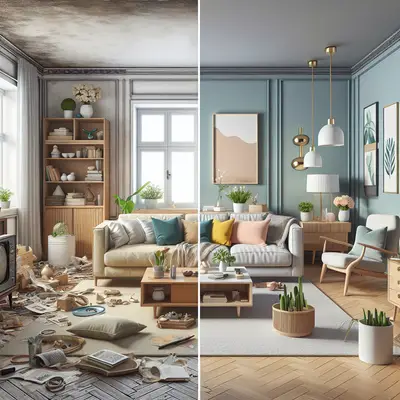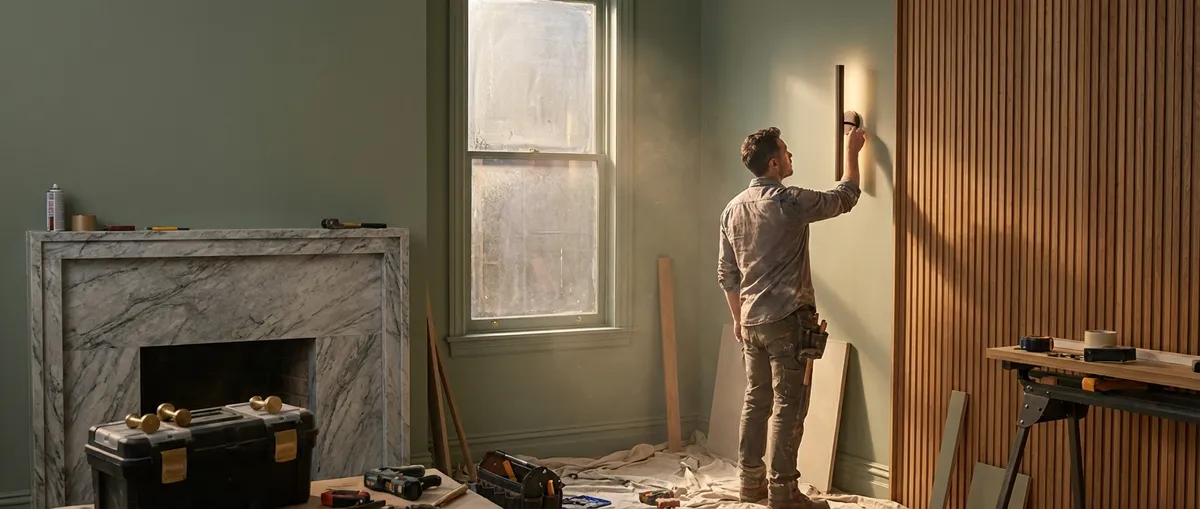
Renovations that truly elevate a home rarely hinge on a single dramatic gesture. Instead, they arise from a series of quiet, intelligent decisions that compound into something undeniably refined. For homeowners planning a renovation, the distinction between a merely updated property and a profoundly reimagined one is often found in details that are easy to overlook—but impossible to ignore once experienced.
Below are five exclusive, often under-discussed insights that help convert renovation spend into lasting, livable sophistication.
1. Designing for the “Invisible Pathways” of Daily Life
The most elegant homes feel intuitive long before you notice the finishes. That effect is created by anticipating movement—what might be called the “invisible pathways” of daily life.
Rather than beginning with cabinetry, tile, or color palettes, start by mapping how you actually live: where you drop your bag when you enter, where your morning coffee journey begins and ends, how you entertain, and what parts of the house you retreat to when you need quiet. Use a simple floor plan and sketch, by time of day, how you move through the space.
This exercise often reveals friction points: a laundry room that forces you to carry baskets through a high-traffic hallway, a primary suite that requires crossing public zones at night, or a kitchen where the trash, dishwasher, and fridge collide at peak usage.
Resolving these bottlenecks early—by adjusting door swings, widening certain passages, reorienting kitchen zones, or relocating storage—creates a home that feels relaxed and unforced. The premium impression does not come from a single luxe material, but from the absence of irritation over thousands of small, daily interactions.
2. Layering Light as a Design Strategy, Not an Afterthought
Most renovation plans treat lighting as a checklist: recessed cans, pendants, under-cabinet strips. Sophisticated spaces, by contrast, treat light as an architectural material—shaping mood, emphasizing texture, and modulating how the home performs from morning to midnight.
Begin with natural light: identify where it enters, how it shifts seasonally, and which rooms deserve priority. Consider enlarging or reconfiguring openings in a targeted way—raising sill heights for privacy yet expanding width for a panoramic effect, or aligning windows with significant exterior views rather than defaulting to symmetry alone.
From there, design a layered approach:
- Ambient lighting to softly wash the room and eliminate harsh shadows.
- Task lighting dedicated to reading, cooking, grooming, and working.
- Accent lighting that grazes stone, paneling, or artwork to reveal depth and craftsmanship.
Specify dimming as the rule, not the exception, with scenes pre-programmed for “morning,” “evening,” and “entertaining.” This is where high-end lighting control makes a visible difference: not for the sake of technology itself, but for the effortless transition from bright, functional light to a warm, restaurant-level glow at a single touch.
The result is a home that feels composed and cinematic instead of uniformly lit and flat—an essential marker of a well-considered renovation.
3. Elevating “Backstage” Rooms to Front-of-House Standards
Powder rooms, mudrooms, pantries, and laundry spaces are often treated as purely functional, finished with leftover materials and minimal thought. Yet these rooms are where you interact most frequently with the bones of the house—and where a premium renovation can quietly signal its quality.
In the mudroom, consider built-in millwork tailored to your household’s patterns: dedicated zones for school bags and sports gear, closed storage for visual calm, and durable, easy-to-clean flooring that still feels elevated, such as honed stone or porcelain with subtle veining. Add a bench at a comfortable height, integrated charging niches, and concealed shoe storage.
The laundry room, often relegated to an afterthought, can become one of the most satisfying spaces in the home. Counter depth that actually accommodates baskets, hanging space designed for full-length garments, pull-out hampers sorted by color, soft-close cabinetry, and resilient but beautiful work surfaces (such as quartz with low patterning) convert a chore into a tolerable—sometimes even pleasurable—ritual.
Powder rooms, on the other hand, are compact stages where you can concentrate detail: a striking wall treatment, a sculptural sconce, a well-proportioned mirror, and exceptional hand towels and soap. Guests register these rooms in a way they rarely admit; they hint at the standard of care invested everywhere else.
By designing these “backstage” rooms with front-of-house intent, you create a home that feels coherent, holistic, and quietly luxurious from every angle.
4. Curating Materials for Harmony, Not Just Impact
Renovation mood boards tend to be filled with stand-out materials: dramatic stones, bold tiles, intricate fixtures. The more discerning approach is to think not in terms of single “heroes” but in terms of an orchestrated material language that remains consistent as you move through the home.
Begin by defining two or three foundational tones—often a warm neutral, a gentle contrast, and one deeper anchor. Then select materials that share a visual kinship: woods with related undertones, metals that coordinate (even when mixed), and stones or composites that either echo or elegantly contrast without feeling jarringly different.
A premium interior often has:
- A primary wood tone (seen in floors or millwork), repeated in varying expressions.
- One or two metal finishes (perhaps a warm brass and a dark bronze), used strategically across hardware, lighting, and plumbing.
- A stone or stone-like surface family that recurs—kitchen counters, niche ledges, or window sills—lending continuity.
This disciplined material palette has two major advantages: the home feels larger and calmer because visual noise is reduced, and future changes become easier because you have a clear language to reference.
When in doubt, invest in tactile quality where your hand lands most: door hardware, faucet handles, stair rails, and countertop edges. These are the moments where your brain subconsciously evaluates whether the home “feels” expensive. A modest but consistent palette, delivered in excellent quality and craftsmanship at touch points, will outclass a space crowded with competing statement materials.
5. Engineering for Silence, Stability, and Long-Term Ease
Luxury is as much about how a home behaves as how it looks. Three underappreciated domains—acoustics, building envelope performance, and access for future maintenance—can dramatically elevate everyday experience and long-term satisfaction.
Acoustics: Upgrading insulation between floors and interior partitions (especially around bedrooms, bathrooms, and media rooms) is rarely glamorous, but it is transformative. Use solid-core interior doors where possible and consider soft surfaces in key reverberant areas. A quiet home feels composed and private, even when life is full.
Building envelope and comfort: Work with your design and construction team to assess windows, insulation, air sealing, and HVAC zoning. High-performance windows, well-designed ventilation, and appropriate zoning do more than reduce energy bills; they stabilize interior temperatures, eliminate drafts, and reduce condensation and noise. The result is a level of comfort that makes the home feel as if it is quietly looking after you.
Future access and adaptability: Thoughtful planning for what you cannot see—clean access panels for shutoffs and valves, accessible chase spaces for future wiring, and slightly over-sized utility routes—will save immense frustration later. It’s the difference between a bathroom refresh requiring demolition versus a straightforward, contained intervention.
These structural decisions may not attract compliments on social media, yet they are what separate renovation that merely looks new from renovation that ages gracefully and remains pleasurable to inhabit a decade from now.
Conclusion
Truly elevated renovations are not defined by a single trend or signature feature, but by a web of considered decisions: invisible pathways that support daily rituals, layered lighting that sets the mood, backstage rooms that feel thoughtfully appointed, harmonized materials that soothe the eye, and quiet engineering that safeguards comfort and calm.
For homeowners preparing to renovate, these five insights offer a more nuanced way to think about investment: not just “What will this look like in photos?” but “How will this feel to live in, every day, for years?”
When design, function, and foresight align at this level, a renovated home ceases to be just an upgraded property—it becomes a tailored environment that reflects, and gently refines, the life lived within it.
Sources
- U.S. Department of Energy – Energy Saver: Home Weatherization - Guidance on insulation, air sealing, and improving the building envelope for comfort and efficiency.
- Harvard Joint Center for Housing Studies – Improving America’s Housing - Research on renovation trends, spending, and long-term home performance.
- American Lighting Association - Educational resources on layered lighting design and fixture selection for residential interiors.
- Mayo Clinic – Noise: How It Affects Your Health - Explains the impact of noise on well-being, supporting the value of acoustic planning.
- National Association of Home Builders – Remodeling - Industry insight on remodeling best practices, quality, and homeowner considerations.
Key Takeaway
The most important thing to remember from this article is that this information can change how you think about Home Renovation.