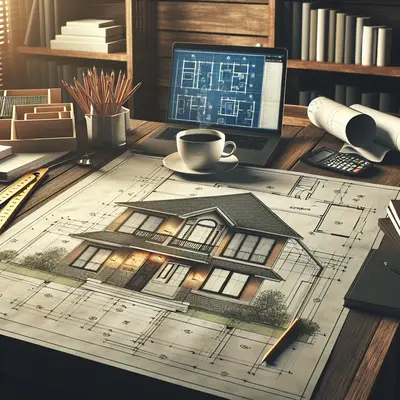
A remarkable renovation does not begin with demolition day; it begins with a brief. Before a single wall is opened or a finish is specified, the most successful homeowners approach their project as a carefully orchestrated enterprise—one that balances ambition, capital, and daily life with precision. Thoughtful project planning is less about Gantt charts and more about clarity: clarity of intent, sequence, risk, and standards. When handled well, planning becomes your quiet leverage, ensuring that every hour and every dollar moves the project toward a more elevated version of your home.
Below are five exclusive, planning-focused insights that sophisticated homeowners increasingly rely on—not as generic “tips,” but as strategic levers to safeguard quality, time, and sanity.
Designing the Renovation Brief: Your Strategic North Star
Before you request a single quote, assemble a written renovation brief—a concise but rigorous document that captures what you want this project to achieve beyond “new kitchen” or “updated bath.”
Instead of listing only features, articulate outcomes: improved natural light, better flow for entertaining, acoustic calm in bedrooms, hidden storage to reduce visual clutter, or an entry sequence that feels composed rather than congested. Pair each desired outcome with measurable indicators: lux levels for lighting, target decibel thresholds for noise, minimum storage cubic feet, or clear circulation widths.
Include in the brief your non‑negotiables (heritage trim, original floors, ceiling heights, or a particular stone) alongside your flex areas where you are open to alternatives. Capture your appetite for disruption: how long you can realistically live in a partial construction zone, which rooms must remain operational, and what hours work is acceptable.
This brief becomes your benchmark for every design choice, contractor conversation, and cost trade‑off. Instead of reacting to options in isolation, you can continuously ask: does this decision move us closer to the brief—or simply make the project more expensive?
Sequencing the Invisible Work: Planning Beyond Surfaces
For a truly elevated result, project planning must begin with the work no guest ever sees. The most refined renovations are underpinned by a disciplined approach to “invisible” systems: structure, insulation, wiring, plumbing, and ventilation.
Early in planning, request a coordinated review of existing conditions—not just by your designer, but by structural, mechanical, and electrical professionals where appropriate. Align on what must be upgraded for safety, code compliance, performance, and long‑term resilience before you indulge in surface finishes. This is not an aesthetic afterthought; it is a strategic choice that protects your investment and reduces costly mid‑project changes.
Map out a clear sequence that prioritizes structural corrections, envelope improvements (roof, windows, insulation), and rough‑ins before custom millwork or finishes are even ordered. Plan for temporary protections—zip walls, floor coverings, dust barriers, and negative air setups—to safeguard parts of the home that are not under renovation.
By treating the “unseen” work as a primary design element, you avoid the common trap of exhausting the budget on surfaces and then being forced to accept outdated systems behind them. Luxury, in a truly modern sense, includes quiet HVAC, consistent water pressure, clean air, and energy efficiency—all of which live behind the walls you are about to close.
Curating a Decision Architecture: Reducing Fatigue and Rework
Renovation failure rarely comes from a single wrong choice; it comes from hundreds of rushed micro‑decisions made under pressure. A premium planning process anticipates this and builds what can be called a “decision architecture”—a framework that stages what must be chosen, by whom, and by when.
Start by grouping decisions into logical families: spatial layout, systems and infrastructure, millwork and built‑ins, primary finishes (flooring, tile, countertops), secondary finishes (hardware, paint, fixtures), and styling. Within each family, sequence decisions in dependency order. For example, appliance specifications drive cabinetry design, which in turn affects electrical and ventilation planning; stone slab sizes can determine seam locations and even cabinet support requirements.
Document every decision with product cut sheets, finish schedules, and visual references in a shared digital space accessible to your designer, builder, and key trades. This central “single source of truth” dramatically reduces errors caused by verbal updates and outdated PDFs circulating via email.
Most importantly, build in decision deadlines. A sophisticated renovation respects the reality that delayed selections often cascade into delayed lead times, rushed substitutions, and on‑site improvisation. By curating your decision architecture in advance, you replace last‑minute panic with intentional choice.
Scenario Planning the Timeline: Protecting Lifestyle and Cash Flow
A renovation is not simply a construction timeline; it is a temporary reconfiguration of your life, your finances, and your mental bandwidth. Advanced project planning uses scenario thinking to stress‑test the schedule before a single trade is mobilized.
Begin with a realistic base schedule developed in concert with your general contractor and designer. Then introduce deliberate “what if” scenarios: what happens if key materials are delayed by six weeks? If permits take twice as long as anticipated? If a critical trade has to resequence their work? For each, define contingency actions: alternate materials already pre‑approved, temporary living arrangements, or re‑sequencing examples that keep the project moving without compromising quality.
Factor in life events—school calendars, major work deadlines, holidays, and family obligations. A well‑planned project might intentionally avoid peak disruption during exam periods or critical work quarters, even if it means starting slightly earlier or finishing slightly later.
From a financial standpoint, align the construction draw schedule with your cash flow, and anticipate overage scenarios with a ring‑fenced contingency that you treat as untouchable until genuinely needed. This form of scenario planning does not eliminate uncertainty, but it significantly reduces how often you will be forced into reactive decisions under duress.
Defining Quality Control as a Ritual, Not a Reaction
In refined renovations, quality is not inspected at the end; it is curated throughout. Effective project planning embeds quality control into the rhythm of the project, turning it from a last‑minute scramble into a standing ritual.
Establish, early on, a cadence of structured site reviews: pre‑demolition, post‑framing, post‑rough‑in, pre‑drywall, pre‑tile, and pre‑substantial completion. At each milestone, arrive with a clear checklist grounded in your renovation brief: alignment of openings, placement of switches and outlets, sightlines, clearances, symmetry of fixtures, and alignment of grout lines and seams.
Leverage mock‑ups wherever possible. A single on‑site sample of a tile layout, cabinet door profile, or lighting temperature can prevent expensive rework across an entire space. Make approvals explicit and documented—with photos, notes, and dates—so the team has an unambiguous reference.
Finally, agree in advance on tolerances: what is acceptable and what will require correction. For a premium project, these standards may reasonably exceed code minimums or standard industry tolerances. By defining quality not as a vague aspiration but as a series of observable, measurable standards, you protect the integrity of the design and the calm of the process.
Conclusion
Planning a renovation at a higher level is less about obsessing over spreadsheets and more about intentional choreography. A rigorous renovation brief, thoughtful sequencing of invisible work, a well‑designed decision architecture, scenario‑based scheduling, and ritualized quality control together form a strategic framework that transforms chaos into control. When this framework is in place, your project is no longer a collection of disconnected tasks—it becomes a coherent narrative in which every trade, decision, and detail aligns with a singular vision for how you wish to live. That is the true hallmark of a cultivated renovation: not only how it looks when finished, but how intelligently it was planned from the very first conversation.
Sources
- U.S. Department of Energy – Home Remodeling & Energy Efficiency – Covers best practices for upgrading building systems and the building envelope during renovations
- National Association of Home Builders – Remodeling Guidelines – Provides insight into professional remodeling processes, sequencing, and standards
- U.S. Consumer Product Safety Commission – Home Hazards During Renovation – Outlines hidden safety considerations (e.g., electrical, structural, lead, asbestos) to address in planning
- Harvard Joint Center for Housing Studies – Improving America’s Housing – Offers data and research on renovation trends, spending patterns, and common project pitfalls
- American Institute of Architects – Working with an Architect for Home Design – Explains how to structure briefs, manage decisions, and collaborate effectively during design and construction
Key Takeaway
The most important thing to remember from this article is that this information can change how you think about Project Planning.