A sophisticated renovation is no longer a performance for guests; it is a quiet, intelligent recalibration of how a home functions for the people who live in it every day. The most compelling design trends at the upper end of the market now favor discretion over display, enduring structure over fast fashion, and choreography over clutter. For homeowners planning a renovation, the real advantage lies not in chasing what is “in,” but in understanding the underlying currents that will keep a home relevant, resilient, and deeply livable for years to come.
Below are five exclusive insights shaping the most considered, design-forward renovations today—subtle, powerful shifts that reward those willing to think one layer deeper than surface-level trends.
Insight 1: From Open-Plan to “Layered Privacy”
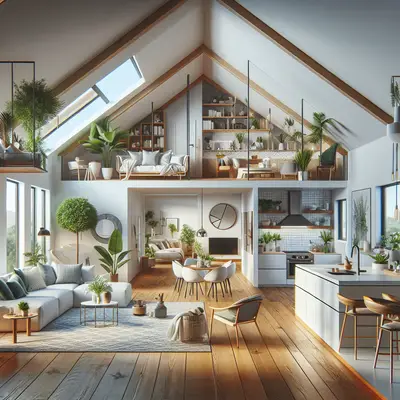
The era of the fully open floor plan is quietly giving way to something more nuanced: layered privacy. High-caliber homes are still airy and interconnected, but they now favor orchestrated sightlines, acoustic control, and zones that flex between togetherness and retreat.
Rather than demolishing every wall, designers are reintroducing thresholds, pocket doors, glass partitions, and partial-height walls to create a gradient of privacy. A family room may flow visually into the kitchen, yet a slight change in ceiling treatment, flooring pattern, or lighting delineates each zone. Generous cased openings preserve a sense of breadth while allowing sound and activity to be gently contained.
For a renovation, this means scrutinizing not just square footage but how it is experienced throughout the day. Where do you need acoustical quiet? Where should you feel embraced rather than exposed? Strategic partitioning, sound-absorbing finishes, and spatial layering produce homes that feel both expansive and composed—luxurious in their ability to host multiple realities at once without chaos.
Insight 2: Kitchens as Discreet Workrooms, Not Showrooms
The aspirational, hyper-styled “show kitchen” is yielding to a more discreet, task-driven model: the concealed workroom. In upper-tier renovations, the kitchen is increasingly being treated as a suite of spaces rather than a single stage.
This can express itself as a hidden prep pantry behind panelized doors, a scullery that contains true working mess, or secondary refrigeration and dishwashing capacity out of direct view. Primary kitchens are visually pared back, often with integrated appliances, fewer open shelves, and meticulously planned storage that minimizes countertop clutter. The effect is one of calm: the room reads as furniture, not machinery.
For homeowners planning a renovation, the question shifts from “How impressive will this kitchen look?” to “How invisible can the work become?” That might mean prioritizing a dedicated coffee station that closes away, upgrading ventilation to quietly manage serious cooking, or investing in custom millwork that swallows small appliances behind seamless fronts. A refined kitchen now balances restaurant-level function with gallery-level restraint, allowing life’s necessary activity to occur without dominating the home’s visual field.
Insight 3: The Rise of Material Integrity Over Surface Drama
The most enduring renovations today are defined less by what is seen at first glance and more by what is felt over time. Material integrity—how something wears, patinas, and ages—is now more valued than graphic veining or trend-driven finishes.
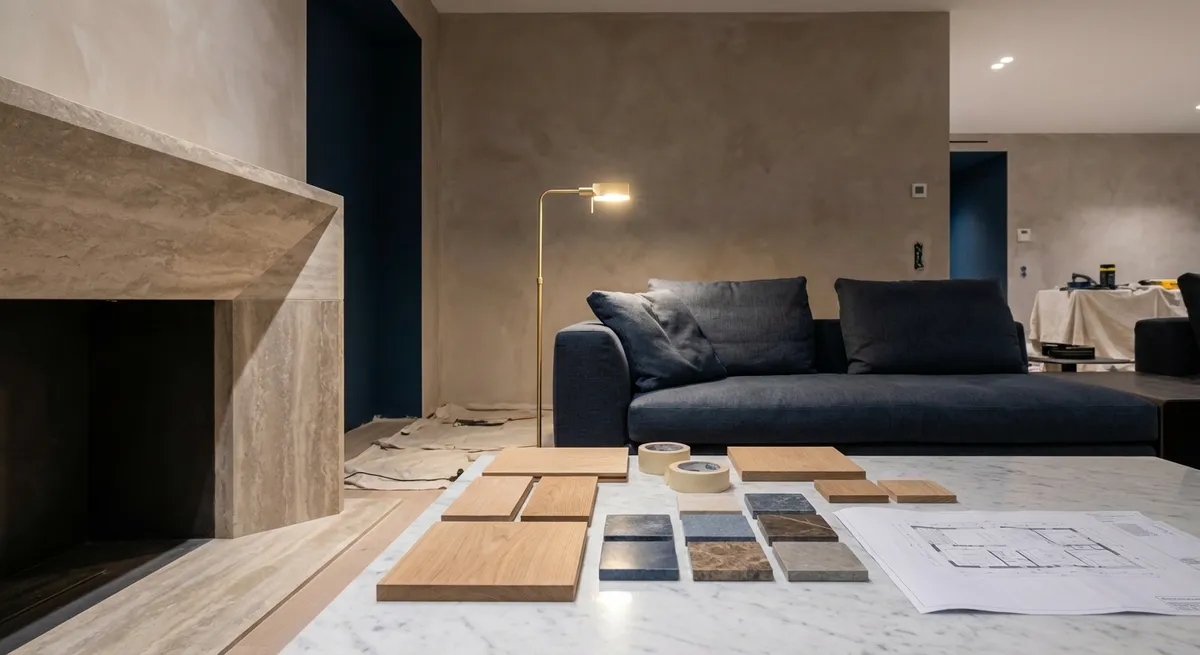
Designers are favoring honest, tactile materials whose character deepens with use: oiled woods, limewash plasters, unlacquered brass, honed stone, and natural textiles. Rather than specifying a striking but fragile surface that will look tired in three years, they are choosing finishes that accept micro-imperfections as a desirable narrative of use. Subtle texture is being elevated over gloss; quiet depth over high-contrast spectacle.
In a renovation, this calls for strategic patience. Before approving a finish, ask how it will look after a decade of sunlight, children, pets, and real cooking. Will it scratch gracefully or chip irreparably? Can it be repaired or refinished rather than replaced? A palette built around material integrity not only reads more sophisticated but also protects your investment, allowing the home to age in a way that feels intentional rather than accidental.
Insight 4: Invisible Technology, Visible Comfort
Technology in elevated homes is shifting from showpiece to infrastructure. The most desirable renovations are not packed with visible gadgets; they are quietly enabled by a layer of invisible intelligence that supports comfort, wellness, and efficiency.
This might include circadian lighting systems that adjust color temperature through the day, discreetly placed motion and occupancy sensors that fine-tune HVAC usage, or integrated shading that protects furnishings and stabilizes indoor climate. Smart home controls are being consolidated and simplified—think a few well-placed, elegantly designed keypads instead of a scattering of mismatched switches.
For homeowners, the strategic move is to treat technology as an architectural system, not an accessory. Plan early for wiring, network robustness, and future flexibility. Prioritize upgrades that directly enhance quality of life—thermal comfort, air quality, acoustic performance, and lighting—over novelty. The goal is a house that subtly anticipates needs, rather than one that constantly calls attention to its own cleverness.
Insight 5: Spaces Designed Around Ritual, Not Rooms by Label
One of the most refined shifts in current design thinking is the move away from rigid room labels—“formal living room,” “guest bedroom”—toward spaces choreographed around daily and seasonal rituals. High-end renovations are being programmed with precise behaviors in mind: where you read before bed, how you decompress after work, how mornings unfold on weekends.
This can manifest as a small, beautifully lit niche for a reading chair rather than an oversized, underused library; a window-adjacent bench with concealed storage that transforms a circulation path into a contemplative perch; or a flexible room designed to act as office, yoga studio, or guest suite via carefully planned millwork and lighting. The luxury lies in intentional use, not in sheer volume of underutilized rooms.
When planning a renovation, it is valuable to map not just furniture layouts but actual sequences: What is the first thing you do when you enter the home? Where does your laptop live when the workday ends? How do you like to entertain when it is just four people versus fourteen? Designing to these specific rituals often results in spaces that are smaller but far more resonant, deeply personalized, and unexpectedly versatile.
Conclusion
The most sophisticated renovations emerging today share a common thread: they privilege depth over display. Layered privacy, discreetly functional kitchens, materials chosen for their long-term integrity, invisible yet powerful technology, and spaces orchestrated around authentic ritual all reinforce a home that is both elevated and genuinely livable.
For homeowners at the planning stage, the opportunity is to resist the seduction of the immediately photogenic in favor of the quietly exceptional. By investing in structure, sequence, and substance, you create a residence that does not simply look current—it continues to feel right, season after season, as your life within it evolves.
Sources
- [American Institute of Architects – Home Design Trends Survey](https://www.aia.org/resources/6366-home-design-trends-survey) - Professional insights into evolving residential design priorities, including layout and technology integration
- [Harvard Joint Center for Housing Studies – Improving America’s Housing](https://www.jchs.harvard.edu/research-areas/reports/improving-americas-housing-2023) - Research on renovation patterns, long-term value, and homeowner investment behavior
- [U.S. Department of Energy – Energy Saver: Smart Home Systems](https://www.energy.gov/energysaver/smart-home) - Guidance on energy-efficient smart home technologies and infrastructure planning
- [U.S. Environmental Protection Agency – Indoor Air Quality](https://www.epa.gov/indoor-air-quality-iaq) - Authoritative information on air quality considerations that intersect with renovation and material choices
- [MIT School of Architecture + Planning – Design and Material Studies](https://sap.mit.edu/news) - Articles and research exploring materials, performance, and long-term architectural thinking
Key Takeaway
The most important thing to remember from this article is that this information can change how you think about Design Trends.