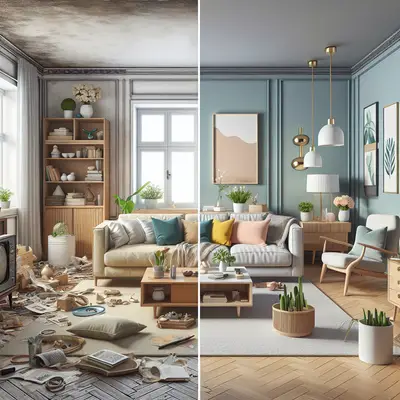
A considered renovation is less about tearing down walls and more about orchestrating a life you wish to live within them. For homeowners who value quiet luxury over spectacle, a remodel becomes an opportunity to align architecture, craftsmanship, and daily ritual. This is not about chasing trends; it is about designing a home that feels inevitably, almost effortlessly, like you—today and ten years from now.
Below are five exclusive, often overlooked insights that separate a merely “updated” home from one that feels enduring, composed, and exquisitely resolved.
1. Design the Daily Path, Not Just the Floor Plan
Most renovations begin with square footage: where to add, remove, or open. Sophisticated renovations begin with choreography: how you move, how you live, and how the home can unobtrusively support that rhythm.
Map your home’s “daily circuit” as though you were designing a boutique hotel suite tailored to you. How do you enter after a late flight—through the garage, through a side gate, through a lobby-like foyer? Where does your bag land, where do your shoes go, where do you want light to greet you? This subtle analysis informs much more than storage; it can dictate door placements, sightlines, and even where a charging drawer for devices belongs.
Consider micro-moments: the place where you pause with coffee, the corner where you read late at night, the route from primary suite to kitchen during an early morning. Ask your architect or designer to develop a circulation diagram before finalizing walls. A refined floor plan doesn’t simply “work”—it anticipates you. When this choreography is honored, the home feels intuitively right, even if guests cannot quite articulate why.
2. Prioritize “Silent Comfort”: Acoustics, Light, and Air
Truly elevated homes feel calm long before they appear beautiful. That serenity comes from qualities that are rarely captured in real estate listings: acoustics, daylight quality, and air comfort.
Acoustics: Sound management is a hallmark of premium environments. Insulate interior walls between bedrooms and living areas. Incorporate soft finishes—textiles, rugs, upholstered panels—strategically to dampen echo in open spaces. For townhomes or apartments, consider acoustic underlayment beneath floors and discreet fabric-wrapped panels that read as art, not utilities. A visually perfect room that reverberates like an empty gallery never feels fully luxurious.
Light: Daylight and artificial light should be layered, not merely bright. Orient work surfaces and reading nooks to benefit from natural light, while minimizing glare. Integrate dimmable, warm-white lighting that shifts from functional brightness to evening softness. Architectural lighting—cove lighting, recessed trims set slightly back, discreet wall grazers—adds dimension without visible fixtures shouting for attention.
Air: True comfort is also thermal and olfactory. High-efficiency HVAC systems, properly zoned, maintain quiet temperature control. Consider upgrading filtration to improve indoor air quality, especially in urban settings or if you cook frequently. Well-placed operable windows, trickle vents, or discreet ventilation strategies keep a home feeling fresh, not sealed.
These “silent comforts” rarely appear in inspiration photos, yet they are what make the difference between a home that impresses and a home that is genuinely restorative.
3. Invest in Joinery and Built-Ins as the Home’s “Tailoring”
If architecture is the suit, then custom joinery is the tailoring that makes it exceptional. Premium renovations distinguish themselves in the way cabinetry aligns, doors close, and storage disappears.
Built-ins should solve for both elegance and discipline. Instead of battling clutter with more furniture, ask: Where can the architecture itself hold what we own? Consider:
- A concealed bar integrated into living room millwork, with pocket doors that vanish during entertaining and close seamlessly when not in use.
- A primary closet where tall storage is framed like paneled walls rather than obvious cabinets, with lighting that flatters textiles and skin tone.
- Window seats with concealed drawers that act as both seating and seasonal storage, making bays and niches feel purposeful rather than awkward.
Focus on proportion and detail: continuous reveals, aligned sightlines, hardware that is felt more than seen. A simple cabinet becomes elevated when door rails align with existing moldings, when grips are integrated rather than surface-applied, and when materials transition cleanly between rooms.
High-quality joinery also acts as an organizing principle for the entire home. Once storage is deeply integrated, rooms can remain visually composed with far less effort, allowing the architecture—not the objects—to set the tone.
4. Curate a Materials Hierarchy, Not Just a Palette
Many renovations stall at an endless array of finishes: stone, wood, tiles, metals, paints. The more sophisticated approach is to define a materials hierarchy—what leads, what supports, and what whispers in the background.
Begin with one or two “quiet anchors”: perhaps a particular oak tone and a honed limestone, or a lacquer finish and a restrained marble. These elements recur across the home, establishing continuity. Then introduce “accent materials” sparingly—bronze hardware, a textured plaster, a singular patterned stone—limited to key touchpoints such as entry, primary bath, or the range wall.
Think in terms of touch as much as sight. What do your hands interact with daily? Door levers, stair rails, faucet handles, drawer pulls. These deserve a higher tier of materiality. Choosing one consistent metal in these tactile moments builds a sense of calm order, even if other materials shift mildly from room to room.
Also consider patina as a design principle, not a liability. Natural stone, oiled wood, and unlacquered metal age in a way that can feel collected rather than worn—if you embrace it intentionally. A home that allows for graceful aging of materials, rather than constant maintenance of perfection, feels more authentic and more livable over time.
5. Design for Future Flexibility Without Visible Compromise
A refined renovation anticipates change—without resorting to obvious multipurpose compromises. The greatest luxury is a home that adapts discretely, not a space cluttered with “convertible” gimmicks.
Start by designing rooms around archetypes rather than rigid labels. A “library” may currently serve as a home office, later as a quiet den, and eventually as a guest room. If the door placement, power sources, and closet strategy are thoughtfully planned, this evolution occurs effortlessly.
Consider:
- Wiring for future needs: Include concealed conduits, floor outlets in key positions, and extra low-voltage capacity while walls are open. This allows for evolving technology without visible cables or retrofits.
- Structural foresight: If there is even a remote chance you will add a second story, expand outward, or reconfigure a stair, ask your structural engineer to design with that scenario in mind now. It is far more cost-effective to over-spec a few beams than to undo a short-sighted structure later.
- Subtle zoning: Where possible, locate plumbing and mechanical risers in alignment so future bathrooms or a secondary kitchenette can be added with minimal disruption. This supports life transitions—multi-generational living, aging in place, or creating a partial rental—while maintaining architectural integrity.
Flexibility does not mean a space looks temporary or unresolved. The most elegant homes feel singularly intentional today, while quietly holding capacity for tomorrow’s chapters.
Conclusion
A truly elevated renovation transcends surface-level upgrades and pursues a deeper coherence—between how you live, what you value, and how each element of your home quietly supports both. When you design the daily path instead of just the plan, invest in invisible comforts, treat joinery as tailoring, orchestrate materials with hierarchy, and embed future flexibility, you create more than a beautiful space. You create a residence that feels composed, resilient, and unmistakably yours.
A premium home is not defined by how loudly it signals luxury, but by how softly and reliably it serves the life lived within it.
Sources
- U.S. Department of Energy – Energy Saver: Heating & Cooling - Insights on efficient HVAC, zoning, and comfort strategies that inform “silent comfort” decisions
- Harvard Joint Center for Housing Studies – Improving America’s Housing - Research on renovation trends, spending, and long-term planning for homes
- American Institute of Architects (AIA) – Residential Design Trends - Professional perspectives on evolving residential design priorities, including flexibility and comfort
- ILFI – Living Building Challenge: Materials Petal - Framework for thoughtful materials selection and hierarchy, with a focus on health and longevity
- GSA – Sound Matters: Acoustics in Buildings - Guidance on acoustical strategies that support quiet, high-performing interior environments
Key Takeaway
The most important thing to remember from this article is that this information can change how you think about Home Renovation.