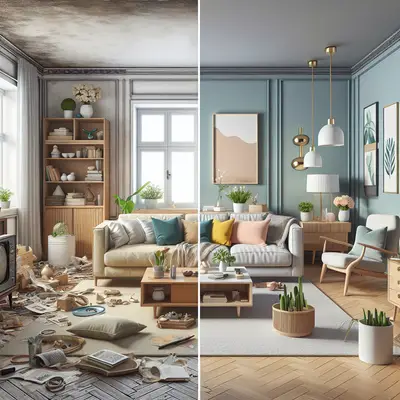
A considered renovation is less about demolition and more about calibration—subtle, strategic moves that align architecture, lifestyle, and long-term value. For discerning homeowners, the objective is not merely “updating” a property, but orchestrating a home that feels composed, enduring, and quietly exceptional. The following insights move beyond the usual advice and into the realm of refined decision-making—where every choice has a purpose, and every detail is working on your behalf.
Designing for the “Daily Sequence,” Not Just the Floor Plan
Most projects begin with square footage and room labels; sophisticated projects begin with sequences—how you live from dawn to dusk.
Rather than asking, “Where should the kitchen go?” ask, “How do mornings unfold in this house?” The path from bedroom to wardrobe, to coffee, to car should be almost frictionless. This shift from static planning to experiential planning often reshapes priorities: a modest but exquisitely organized mudroom may matter more than an oversized foyer; a thoughtfully lit circulation corridor may prove more valuable than an extra, seldom-used sitting room.
Work with your designer or architect to storyboard your day: where bags and keys land, where pets sleep, where work calls happen, where children’s projects live. Map these “micro-moments” onto the plan. The most refined homes feel luxurious not because they are large, but because their choreography reduces visual noise, wasted steps, and daily micro-irritations.
When you optimize for daily sequence, you end up with spaces that feel preternaturally “right”—a luxury that quietly reveals itself every single day.
Material Hierarchies: Investing in the Right Surfaces, Not All Surfaces
Not every surface deserves the same budget. Elevated renovations rely on a concept of material hierarchy: intentionally directing premium finishes to “high-consequence” touchpoints and hero moments, while using intelligent, understated materials elsewhere.
High-consequence surfaces are those you touch frequently or see constantly: kitchen counters, staircase handrails, interior door hardware, shower fixtures, and primary bathroom flooring. These are the elements that communicate quality in an instant. Upgrading these to stone with presence, solid metal hardware, or engineered wood with convincing depth of grain often has more impact than upgrading every room indiscriminately.
Conversely, “background” areas—secondary bedrooms, storage corridors, utility spaces—can be executed in robust, well-chosen but more economical finishes. The aim is not to create a visible divide, but a quiet, layered hierarchy where the eye is drawn to what matters most.
This deliberate allocation of material quality achieves two things: it controls cost without compromising perceived luxury, and it creates a visual narrative—rooms and moments that gently crescendo rather than shouting for attention all at once.
The Acoustics of Luxury: Designing for Quiet and Containment
True luxury is often heard—or rather, not heard. Sound control is one of the most undervalued dimensions of a renovation, yet it dramatically affects how “calm” or “expensive” a home feels.
Strategically enhancing acoustic performance means going beyond basic insulation. Consider adding sound-dampening underlayment beneath hard flooring, especially in multi-story homes. Specify solid-core interior doors for bedrooms, home offices, and powder rooms; the satisfying weight and muffled closure instantly convey quality. Ask your contractor about resilient channels or sound-rated drywall assemblies between key spaces such as bedrooms and entertainment areas.
In open-plan homes, introduce subtle sound breaks: partial walls, slatted screens, bookcases, or fabric-rich elements (upholstered dining chairs, drapery, rugs) that absorb reverberation. Even the choice of ventilation equipment and appliances matters—quieter models cost more initially but pay back daily with an absence of background hum.
A home that contains noise—rather than broadcasting it—is one that feels composed, private, and restorative. This is a form of luxury guests may never explicitly remark upon, but they will feel it in the overall serenity of the space.
Lighting as Architectural Couture, Not Afterthought
Sophisticated renovations treat lighting as an integral architectural layer, not merely the last line item on an electrical plan. The goal is luminous subtlety: a combination of ambient, task, and accent lighting that flatters both the interior architecture and the people living within it.
Begin with infrastructure: select more precise, often smaller-profile recessed fixtures with proper beam spreads, color temperature, and dimming capability. Opt for high color rendering index (CRI) lighting where finishes and artwork matter—this preserves the true tones of materials and textiles. Consider 2700–3000K as a warm, flattering baseline, with 3500K in kitchens or workspaces if you prefer a slightly crisper light.
Layer in expressive elements—statement pendants, sculptural sconces, or cove lighting—not as decorative afterthoughts but as focal tools that define zones, elongate ceilings, or emphasize architectural details. Then insist on dimming strategies and scenes: “evening entertaining,” “morning bright,” “cinema,” “quiet reading.” Scene-based control brings a bespoke quality to everyday life, allowing the home to shift mood with a single touch.
Executed well, the lighting plan becomes invisible in the best way—an atmospheric refinement that shapes how every finish, object, and moment is experienced.
Future-Proofing with Discretion: Infrastructure That Doesn’t Shout “Technology”
The most elegant renovations are future-ready without being enslaved to visible tech trends that age poorly. The art lies in discreet preparedness: embedding the capability for future systems without visually cluttering the space today.
Think in terms of low-voltage raceways, conduit runs, and strategic wiring chases that can be accessed later for additional networking, audiovisual, or security needs. Hardwire robust internet access points in ceilings where you can conceal them, rather than relying entirely on ad hoc solutions. When planning millwork, allocate hidden cavities or vented cabinets for equipment, so devices don’t proliferate on surfaces.
For smart home controls, avoid assembling a patchwork of incompatible apps and hubs. Instead, plan for a coherent ecosystem—even if you start modestly—so shading, lighting, climate control, and security can eventually converge into a single, graceful interface. Specify devices and switches that look refined and tactile, not overly “gadget-like.”
By centering infrastructure and flexibility rather than flashy hardware, you create a renovation that can adapt gracefully, avoiding the dated feel of visible tech that seemed cutting-edge five years ago and out of place today.
Conclusion
A truly elevated renovation is defined less by spectacle and more by discernment. It is the choice to prioritize daily sequences over raw square footage, to invest in touchpoints rather than blanket upgrades, to quiet the home acoustically, to treat light as an architectural material, and to embed future-ready discretion rather than overt, aging tech.
These five insights are not about spending more; they are about spending with intention. When each decision is weighed for how it will feel, function, and endure, the result is a home that does more than look renovated—it lives beautifully, year after year.
Sources
- U.S. Department of Energy – Energy Saver: Lighting Choices - Overview of efficient lighting options, color temperature, and quality considerations
- National Association of Home Builders – The Psychology of Floor Plans - Insight into how layout and circulation impact daily living and satisfaction
- Mayo Clinic – Noise: How It Affects Your Health - Explains the health and wellness implications of noise, supporting the value of acoustic design
- Harvard Joint Center for Housing Studies – Improving America’s Housing - Research on renovation trends, investment patterns, and homeowner priorities
- Consumer Technology Association – Integrated Home Infrastructure Guidelines - Industry standards and guidance on prewiring and planning for home technology integration
Key Takeaway
The most important thing to remember from this article is that this information can change how you think about Home Renovation.