A truly considered renovation does more than refresh finishes; it recalibrates how a home feels, functions, and endures. Today’s most compelling design trends are quiet rather than loud, layered rather than showy, and deeply intentional rather than impulsively “on trend.” For homeowners who value discretion, longevity, and architectural poise, the current design conversation is rich with opportunities to create spaces that age gracefully—and live beautifully.
Below are five exclusive, forward-looking insights shaping sophisticated renovations now, each grounded in both design intelligence and lived experience.
Insight 1: The Rise of “Soft Architecture” Inside the Home
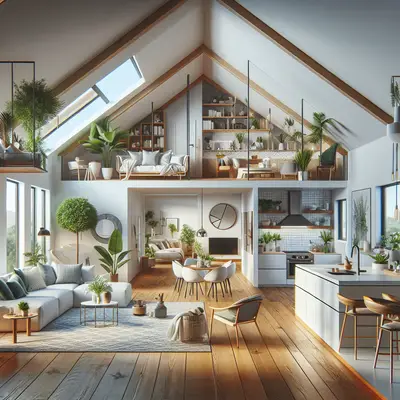
One of the most elegant shifts in current design is the move toward “soft architecture”—built elements that gently shape how spaces are used without feeling rigid or overdesigned. Instead of relying on furniture alone, homeowners are using integrated forms to create subtle boundaries and rhythm.
Think of:
- Low partition walls that double as bookcases between living and dining areas
- Arched or widened doorways that cue a transition without closing off light
- Deep window reveals and built-in benches that visually frame key views
- Integrated plinths, platforms, or ceiling coffers that define zones without clutter
This approach has two powerful advantages. First, it allows open-plan living to feel considered and composed, rather than like one large, echoing room. Second, it creates an architectural backbone that can outlast style cycles; soft architectural moves retain relevance long after furniture, art, and accessories evolve.
For renovators, the key is to brief your designer and builder to think beyond “walls and rooms” and into subtle forms: half-height planes, recessed niches, built-in seating, and articulated openings. These elements invite slower, more deliberate use of space—and give your home an unmistakable sense of calibration.
Insight 2: Material Pairings That Age With Grace, Not Gimmick
The most enduring renovations depend less on a single “hero material” and more on thoughtful pairings. Instead of all-marble kitchens or all-wood bathrooms, the emerging trend is toward layered, tactile combinations that anticipate patina and wear.
Sophisticated pairings now include:
- Honed stone with limewash or mineral-based plasters
- Rift-sawn oak with brushed stainless or unlacquered brass
- Textured tiles (zellige, extruded porcelain) alongside smooth, matte walls
- Natural fiber textiles against subtly veined quartz or engineered stone
The objective is tactile contrast: rough to smooth, cool to warm, matte to soft sheen. When chosen well, materials don’t compete—they converse. And crucially, they weather gracefully. A honed stone countertop, for example, will accept small marks as part of its story, while a high-gloss, hyper-perfect surface often reveals every flaw and quickly feels dated.
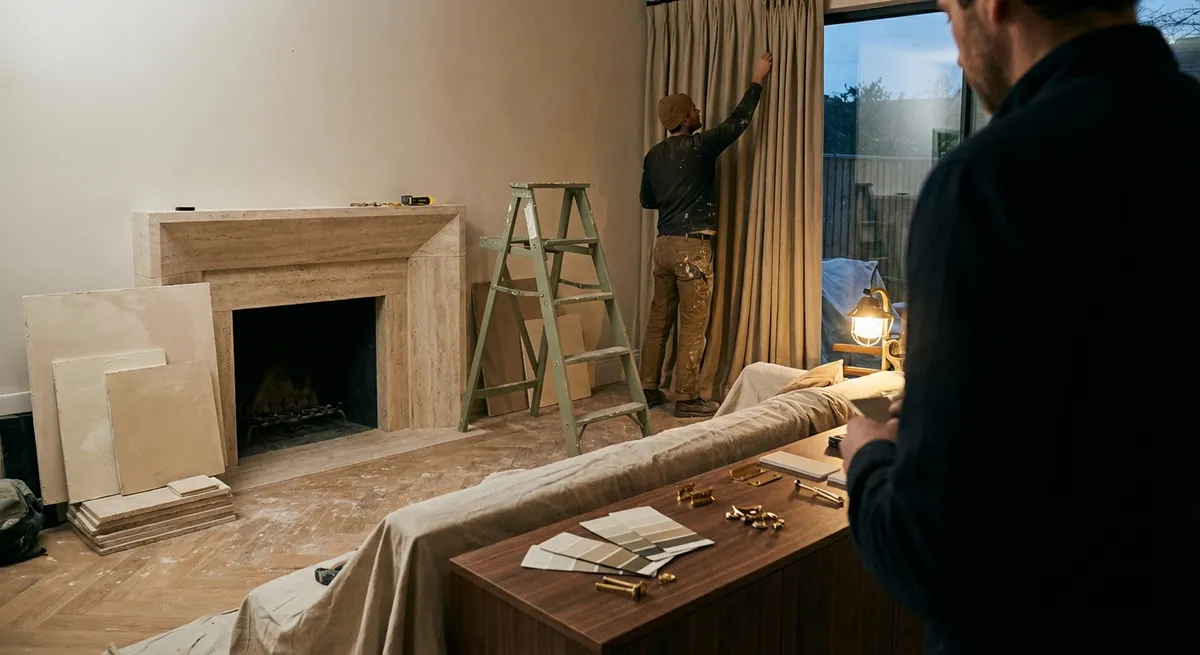
When planning a renovation, request samples early and evaluate them together in natural light. Lay stone, wood, metal, and fabric side by side and ask two questions:
How will these look in ten years with real wear?
Do they still feel coherent when decor trends shift?
If the pairing relies on a fleeting “wow” moment, reconsider. If it feels calm, textural, and quietly memorable, you’re closer to a truly future-proof scheme.
Insight 3: Lighting as a Curated Hierarchy, Not an Afterthought
In refined renovations, lighting is treated less like infrastructure and more like a choreography of atmospheres. The era of peppering ceilings with identical downlights is giving way to a layered strategy where each fixture has a role and a reason.
A sophisticated lighting approach typically includes:
- Ambient lighting for general visibility (discreet downlights, cove lighting)
- Task lighting precisely positioned over counters, desks, and reading zones
- Accent lighting to honor art, architectural details, or textured walls
- Decorative lighting—pendants, sconces, and table lamps—as sculptural statements
What distinguishes premium projects is not the sheer number of fixtures, but the hierarchy: lighting is dimmable, zoned, and intentionally warm (often 2700K–3000K) to flatter both materials and people. Rather than relying on a single “on/off” experience, multiple layered scenes support morning focus, evening dining, or late-night winding down.
During design, insist on a dedicated lighting plan early—before ceiling and joinery details are finalized. Discuss beam angles, color temperature, and control systems, not just fixture aesthetics. Well-planned lighting has an outsized impact on how sophisticated your renovation feels day to day; it is often what makes a home read as “quietly luxurious” rather than simply “new.”
Insight 4: Intentionally Zoned Privacy in an Open-Plan Era
Open layouts remain popular, but the most elevated renovations now introduce deliberate gradients of privacy. Rather than a binary of “open” versus “closed,” spaces are tuned according to how much exposure, quiet, or intimacy they should allow.
You’ll see this in homes where:
- Kitchens retain visual connection to living areas but incorporate concealed prep zones or pantries
- Home offices borrow light from shared spaces yet have acoustic separation and subtle doors or screens
- Primary suites include small vestibules, not just doors opening directly onto the bedroom
- Secondary living rooms or “quiet salons” sit slightly apart for reading, music, or conversation
This approach acknowledges that modern life has competing needs—work, rest, socializing, parenting—all occurring under one roof. The most intelligent renovations respond with a spectrum of spaces, from communal to retreat-like, without sacrificing visual harmony.
When briefing your design team, describe not just what you want a room to look like, but what you want to protect: uninterrupted sleep, focused work, elegant yet contained entertaining, or discreet storage. From there, thoughtful zoning—through layout, doors, soft partitions, or level changes—can give your home structure without feeling closed in.
Insight 5: Tailored Storage as a Design Feature, Not a Hidden Necessity
In premium renovations, storage is no longer something to be disguised; it is crafted as a visible expression of order and intent. Thoughtfully designed storage doesn’t just hide belongings; it edits the visual field, allowing key design gestures to breathe.
Current high-level storage strategies include:
- Full-height joinery walls that read as architectural panels rather than “cabinets”
- Integrated handles (shadow gaps, routed pulls) instead of busy hardware in secondary areas
- Dedicated niches and charging drawers for devices, eliminating countertop clutter
- Wardrobes with a mix of hanging, drawers, and open display to encourage deliberate curation
- Laundry and utility rooms treated with the same material care as kitchens
The aim is not to create more storage indiscriminately, but to align it precisely with how you live: how many coats you actually own, how you entertain, where school bags land, how you prefer to fold linens. In a refined renovation, storage is calibrated, not generic.
During planning, walk through your existing home and note friction points: piles, overflow, awkward corners. Translate each point into a design response—a specific cabinet, drawer, bench, or tall cupboard. When those solutions are executed with the same material discipline as the rest of the home, storage ceases to be an afterthought and becomes part of the home’s quiet sophistication.
Conclusion
Design trends at the upper end of residential renovation are moving away from quick visual impact and toward depth: subtle architectural moves, tactile material pairings, thoughtful light, calibrated privacy, and bespoke storage. None of these elements shout, but together they form a home that feels composed, personal, and built to endure.
For homeowners planning a renovation, the opportunity is to look beyond surface-level “updates” and instead orchestrate a series of intelligent, long-lived decisions. When those decisions are made with clarity and restraint, the result is a home that not only photographs beautifully, but lives beautifully—day after considered day.
Sources
- American Institute of Architects – Home Design Trends Survey - Offers insights into evolving residential design priorities, including layout and lifestyle-driven planning
- Harvard Joint Center for Housing Studies – Improving America’s Housing Report - Provides research on renovation patterns, homeowner preferences, and long-term investment in home improvements
- U.S. Department of Energy – Residential Lighting - Explains best practices in residential lighting, color temperature, and efficiency, informing layered lighting decisions
- MIT School of Architecture and Planning - Broad research on architecture and spatial design, including how built environments affect behavior and comfort
- The New York Times – “The New Luxury Is Having Nothing on Your Counters” - Examines contemporary high-end kitchen and storage trends centered on concealment, order, and understated luxury
Key Takeaway
The most important thing to remember from this article is that this information can change how you think about Design Trends.