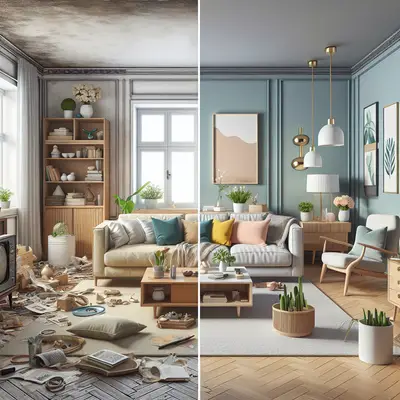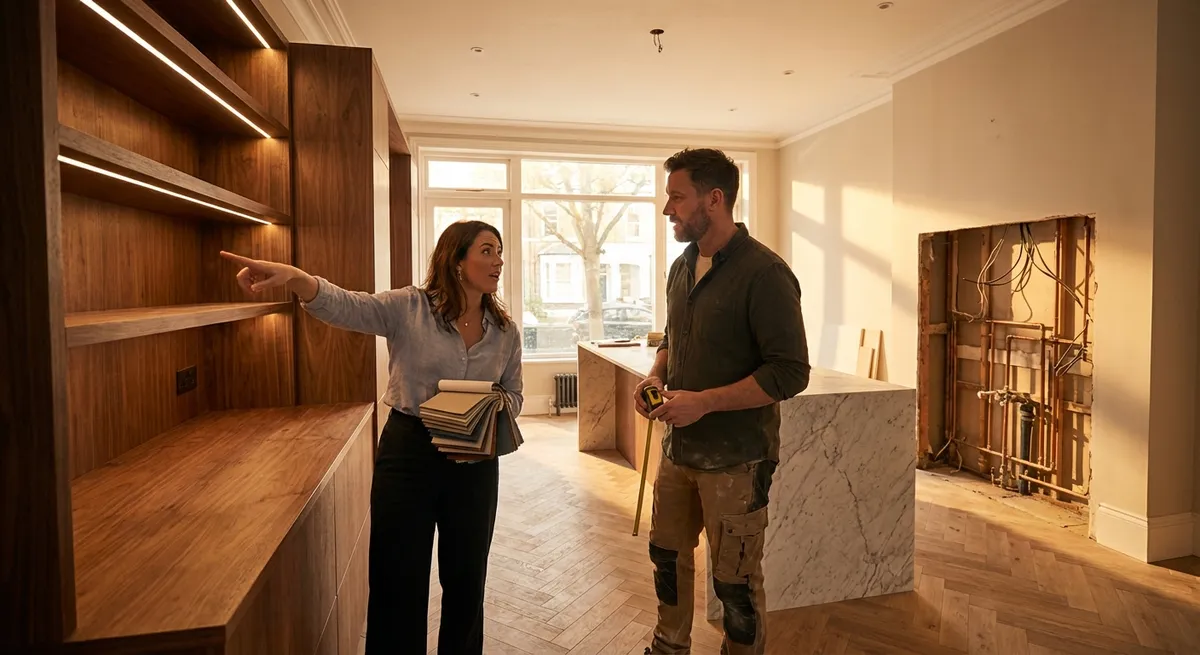
Renovation at its highest level is not simply about upgrades; it is about authorship. A truly considered home feels less like a collection of newly finished rooms and more like a coherent narrative—one that unfolds quietly, yet unmistakably, through proportion, materiality, light, and restraint. For homeowners who are past “before-and-after” theatrics and instead pursuing enduring, intelligent refinement, the difference lies in a handful of subtle but decisive choices.
Below are five exclusive, often overlooked insights that distinguish a sophisticated renovation from a merely competent one.
1. Design the Volume, Not Just the Floor Plan
Most renovations fixate on the bird’s-eye view—walls, doors, and circulation lines—while neglecting what it feels like to stand, sit, and move within the space. The true luxury lives in the volume: ceiling heights, sightlines, layered thresholds, and how each room breathes.
Begin by mapping vertical experience, not only horizontal. Where can you introduce a quiet shift in height to signal a change in function without erecting a wall—perhaps a lowered ceiling over a dining niche, or a raised doorway to frame a view? Consider axial views: the line of sight when you open the front door, when you enter the main suite, when you turn toward a window at dusk. A deliberately framed view—of a garden, a textured wall, a sculptural light—adds a sense of calm authority.
When working with existing constraints, think in “micro-volumes.” Slightly deepening window jambs, thickening a primary wall to create built-in niches, or recessing a headboard zone can impart weight and presence. These moves cost a fraction of structural interventions but contribute meaningfully to the home’s sense of gravitas.
2. Curate a Material Hierarchy Instead of a Finish Collection
Rather than selecting finishes room by room, approach materials as a hierarchy with clear roles: primary, secondary, and accent. This is how galleries and flagship boutiques achieve visual calm; they repeat a disciplined material palette, shifting scale and application rather than color and texture in every space.
Select one or two “anchoring” materials that quietly recur throughout the house—perhaps an oiled oak, a honed limestone, a brushed nickel or patinated bronze. These should appear in multiple contexts: flooring, millwork details, hardware, stair elements. Next, introduce a limited roster of secondary materials that support, not compete: subtle plaster, a restrained paint spectrum, a consistent stone type in wet spaces.
The final layer, accents, should be sparing and purposeful—used where your eye naturally comes to rest: a fireplace surround, the island countertop, the shower niche back panel. This hierarchy not only produces visual continuity but also simplifies maintenance, procurement, and long-term replacement. It is the difference between a home that feels “decorated” and one that feels composed.
3. Engineer Quiet Comfort Into the Bones
True luxury in a renovation is often what you don’t see—and what you don’t hear. Invisible upgrades in acoustics, thermal comfort, and air quality create an environment that feels unhurried and composed, regardless of what is happening outside its walls.
Prioritize acoustic zoning early. Consider sound insulation between bedrooms and active zones, solid-core doors for key rooms, and strategic soft surfaces that absorb reverberation in large, open areas. If you are removing walls, counterbalance the new openness with discreet sound-absorbing elements: paneled ceilings, upholstered banquettes, rugs anchored by low, substantial furniture.
Similarly, treatment of light and heat should be engineered, not improvised. High-performance glazing, thoughtful window orientation, and layered window treatments (sheers plus heavier drapery or shades) make spaces usable and gracious at more times of day and seasons of the year. Pair this with well-planned, zoned HVAC and smart controls; the sensation of stable, quiet comfort is one of the most underrated hallmarks of a well-executed renovation.
4. Build in Adaptability With Intention, Not Compromise
Sophisticated homes are not static; they are prepared. The most intelligent renovations anticipate how life may change and embed that flexibility elegantly, rather than through clumsy add-ons later.
Think of certain rooms as “shape-shifters” that can adopt new roles with minimal disruption. A study with discreetly integrated closet millwork can become a guest room; a wide hallway with built-in storage and a window seat can someday morph into a small work zone or reading nook without structural overhaul. In children’s rooms, consider neutral, architectural backdrops—timeless paneling, enduring flooring, robust storage—so furnishings, not construction, carry the weight of changing tastes.
Behind the walls, plan infrastructure for future possibilities: capped plumbing for a potential second bathroom, wiring for motorized shades or integrated speakers, conduit for EV charging or solar integration. These provisions are comparatively modest during renovation and disproportionately expensive after finishes are complete. The result is a home that ages not only gracefully in appearance, but also intelligently in function.
5. Treat Lighting as the Home’s Editorial Direction
If architecture is the script, lighting is the edit that sets nuance, tempo, and tone. Many renovations overspend on decorative fixtures while neglecting the underlying lighting strategy, resulting in beautifully designed rooms that feel oddly flat at night.
Begin with layers: ambient, task, and accent. Ambient light should be soft and indirect where possible—recessed fixtures used sparingly, supplemented by cove lighting, wall washers, and concealed LED strips that graze surfaces. Task lighting must be precise and comfortable: under-cabinet lights in the kitchen, directional fixtures over islands, focused sconces for reading, integrated mirrors in bathrooms.
Accent lighting is where the home acquires its cinematic quality. Illuminate art, niches, textured wall finishes, and architectural moments like stair runs or ceiling coffers. Commit to a coherent color temperature strategy (often in the 2700–3000K range for residential) and dimmability. A sophisticated renovation reads differently at 7am, 2pm, and 9pm—not because the furniture changes, but because the light has been choreographed to quietly support each moment of the day.
Conclusion
A refined renovation is not the sum of its invoices; it is the orchestration of volume, materials, comfort, adaptability, and light into a quiet but confident whole. Homeowners who attend to these deeper structural and sensory layers—rather than chasing isolated trends—end up with spaces that feel both contemporary and enduring, expressive yet composed.
The most successful projects are those where every visible decision is underpinned by an invisible discipline: consistent material logic, considered infrastructure, acoustic and thermal calm, and lighting that reveals the home at its best. When these elements are in dialogue, the result is not merely a renovated property, but a residence with presence—one that feels resolved today and prepared for tomorrow.
Sources
- [U.S. Department of Energy – Energy Saver: Residential Lighting](https://www.energy.gov/energysaver/residential-lighting) - Overview of efficient lighting strategies, color temperature, and layering for homes
- [Harvard T.H. Chan School of Public Health – The Impact of Green Buildings on Cognitive Function](https://www.hsph.harvard.edu/news/press-releases/green-buildings-cognitive-function/) - Discusses how building performance (air quality, comfort) affects well-being and decision-making
- [American Institute of Architects – Residential Design Trends Survey](https://www.aia.org/resources/6316593-aia-home-design-trends-survey) - Provides insight into evolving residential design priorities including flexibility, comfort, and materials
- [National Institute of Building Sciences – Whole Building Design Guide](https://www.wbdg.org/design) - Comprehensive resource on integrated design principles such as acoustics, lighting, and envelope performance
- [Dezeen – Residential Projects Archive](https://www.dezeen.com/architecture/residential-architecture/) - Curated global examples of residential architecture demonstrating material hierarchies, lighting concepts, and spatial volume strategies
Key Takeaway
The most important thing to remember from this article is that this information can change how you think about Home Renovation.