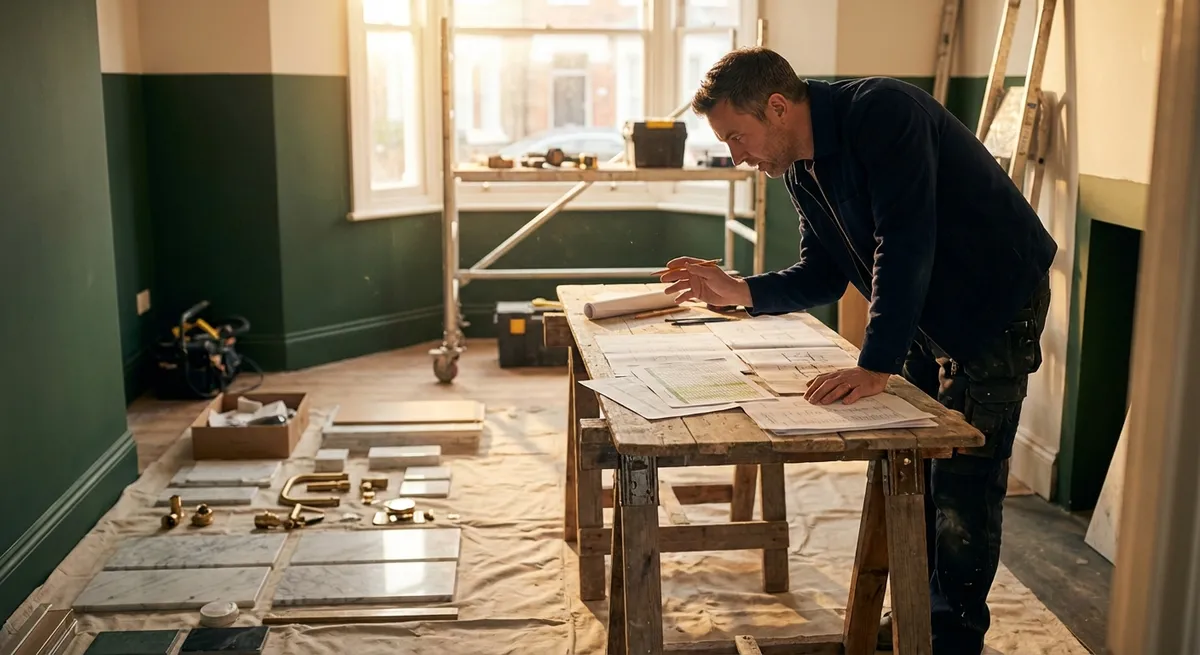
Renovation is rarely undone by poor taste. More often, it falters under a budget that was never truly architected. For homeowners with refined expectations, budget management is not about restriction; it is about orchestrating resources so that every choice feels deliberate, justified, and quietly luxurious. When managed with intent, the budget becomes less of a ceiling and more of a framework for excellence.
Below are five exclusive budget insights that sophisticated renovators use to protect both design integrity and financial sanity—without ever looking like they compromised.
Designing a Budget That Mirrors Your Lifestyle, Not Just Your House
Most renovation budgets are drawn as static spreadsheets—numbers divorced from how you actually live. A more refined approach begins not with line items, but with rituals.
Start by mapping your daily and weekly patterns: where you spend the most time, how you entertain, where you decompress, how often you cook, and what spaces remain visually “on stage” when guests visit. Then weight your budget proportionally to those realities. If you host professionally at home, the entry sequence, powder room, and main entertaining areas merit a greater share of funds than secondary bedrooms. If cooking is central to your lifestyle, the kitchen’s functional underpinnings—ventilation, lighting, layout—should command a larger investment than decorative upgrades elsewhere.
This lifestyle-first approach transforms your budget into an x-ray of your priorities, not a generic percentage allocation. It also makes trade-offs easier: when a decision arises, you can ask, “Does this materially enhance how we live here?” If the answer is no, it should be the first candidate for reduction or removal. The result is a renovation that feels intuitively right every day, long after the invoices are paid.
The Invisible Luxuries: Allocating for What Guests Will Never See
Sophisticated renovations often feel effortless precisely because they are underpinned by investments that are almost invisible. Sound insulation between rooms, premium underlayment beneath stone floors, higher-grade hinges and drawer slides, upgraded wiring and plumbing—all of these quietly elevate daily life without calling attention to themselves.
A common budgeting mistake is to overspend on surfacing materials while underfunding what lies behind them. The irony is that a modest tile installed flawlessly over a stable, well-prepared substrate will outlast and outperform a premium stone laid over compromised infrastructure. Begin by protecting your “invisible luxuries”: electrical capacity for future appliances, properly sized HVAC for comfort and air quality, moisture management in bathrooms, and strong structural framing. Only then layer on aesthetic splendor.
Set a predetermined percentage of the budget—often 25–40% for older properties—for infrastructure, systems, and technical detailing. Treat this portion as non-negotiable. A renovation that invests in silence, solidity, and reliability will feel more luxurious in practice than one that simply photographs well.
Curating Cost, Not Just Cutting It: The Power of Intentional Downgrades
Elite budget management is not about spending the most; it is about knowing exactly where not to. The most disciplined renovators make strategic, almost surgical downgrades that leave the experience of the space untouched—or, in some cases, improved.
Consider surfaces that are visually prominent but lightly used. A showpiece island countertop may merit natural stone, while secondary counters perform perfectly in a high-quality composite. In baths, you might pair a statement slab in the main vanity with more modest tile in the shower stall, relying on precise layout and impeccable grout lines to elevate the whole composition. Custom millwork can be reserved for key focal points—a fluted entry console, a bespoke dining niche—while closets and secondary built-ins rely on semi-custom solutions with upgraded hardware and finishes.
Create a “conscious downgrade list” early in the process: elements that can be gracefully simplified without eroding the architectural story. Share this with your designer and contractor so value engineering is proactive, not reactionary. When compromises are pre-selected, you avoid the panicked, last-minute cuts that often diminish the project’s coherence.
Managing Time as a Budget Line: Securing Price, Reducing Friction
Time is an under-acknowledged currency in renovation. Delays, indecision, and late design changes frequently erode budgets as surely as expensive materials. Homeowners with a premium mindset treat time as a financial asset and plan accordingly.
Begin by front-loading decisions that affect core trades: layout, structural changes, mechanical systems, window and door specifications, and major built-ins. The earlier these are frozen, the more accurate your bids will be and the less you will pay in change orders. Lock in long-lead items—tile, appliances, specialty fixtures—before demolition begins to avoid costly schedule gaps where labor is present but idle.
Where possible, secure written quotes with defined validity windows and understand escalation clauses for materials. A small retainer to hold pricing or a phased purchasing strategy can be more cost-effective than absorbing mid-project price volatility. Build a contingency of both money (typically 10–20%, depending on property age) and time (a realistic buffer in your move-in or lease-back plans). Sophisticated budgeters measure not only what they spend, but how much delay costs them in temporary housing, storage, disrupted routines, and professional commitments.
Building a Financial Buffer for Future Elegance, Not Just Future Repairs
Most renovation contingencies are framed as protection against problems—hidden rot, outdated wiring, structural surprises. While essential, a more elevated approach also includes a “future elegance buffer”: funds intentionally reserved for opportunities, not just emergencies.
During construction, you may discover a beautiful original beam worth exposing, an unexpectedly pleasing sightline that invites a framed opening, or a chance to upgrade to a better fixture that completes the narrative of a room. Without financial flexibility, these moments become regrets instead of refinements. Allocating a defined portion of your contingency—perhaps half—for strategic enhancements empowers you to say yes to the ideas that genuinely elevate the project.
Think of this buffer as a patron’s fund for your own home: not to indulge whims, but to endorse the most compelling design moves that emerge once walls are opened and spaces are experienced in three dimensions. Knowing that this reserve exists also reduces decision fatigue; you can distinguish between an impulse upgrade and a meaningful design opportunity by asking whether it merits dipping into that carefully protected reserve.
Conclusion
A considered renovation budget is less about arithmetic and more about authorship. It governs not just how much you spend, but how intelligently, in what sequence, and in service of which experiences. When your budget reflects your lifestyle, fortifies the invisible, curates where to save, respects time as a financial lever, and preserves room for future elegance, the result is a home that feels both grounded and quietly exceptional.
In that sense, budget management is not the constraint on your renovation—it is the craft that allows every detail, visible and unseen, to feel precisely as it should.
Sources
- U.S. Department of Energy – Home Upgrades for Comfort and Efficiency – Guidance on investing in systems and envelope upgrades that improve long-term comfort and reduce operating costs.
- National Association of Home Builders – Study of Life Expectancy of Home Components – Data on how long materials and systems typically last, useful for prioritizing “invisible” investments.
- Harvard Joint Center for Housing Studies – Improving America’s Housing – Research on renovation spending patterns and trends that inform strategic budgeting.
- Consumer Financial Protection Bureau – Planning to Finance a Home Improvement – Official guidance on funding, timelines, and contingencies for home projects.
- American Institute of Architects – Best Practices: Residential Project Planning – Professional insights on sequencing decisions and managing changes to control cost and schedule.
Key Takeaway
The most important thing to remember from this article is that this information can change how you think about Budget Management.