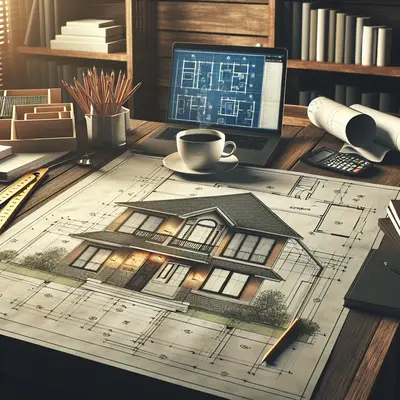
Every exceptional renovation begins long before the first wall is opened or the first finish is selected. Its success is rooted in a kind of invisible architecture—an orchestration of decisions, priorities, and contingencies that most visitors will never see, yet instantly feel. Project planning at this level is less about checklists and more about choreography: aligning time, capital, professionals, and your own standards of living into a seamless, coherent whole.
This is where refined homeowners distinguish themselves—not by spending more, but by planning better.
Designing the Timeline, Not Just the Space
Most homeowners focus first on spatial outcomes: layouts, finishes, lighting, and function. Discerning renovators begin instead with time. A renovation is a temporary lifestyle disruption; elegant planning ensures that disruption feels controlled, not chaotic.
Develop a layered timeline: a high-level master schedule, and then a more intimate “daily life” schedule. The master schedule tracks design milestones, permit submission windows, lead times for custom items, and the sequence of trades on-site. The daily life schedule considers when you wake, where you work, how you entertain, and how seasonal shifts (holidays, travel, weather) affect the rhythm of your household.
Rather than asking “When will it be done?” focus on “How will this feel at every phase?” Build in deliberate, non-negotiable buffers—time for design decisions to mature, time to resolve unexpected structural findings, and time at the end for thoughtful punch-list work. A project that appears to “finish early” because it was realistically and elegantly padded will always feel more composed than one that scrambles to meet an optimistic date that was never truly viable.
Curating Your Professional Ensemble with Intent
Planning is only as strong as the people who execute it. Many homeowners choose their general contractor first and allow that decision to shape the rest of the team. A more elevated approach is to consider the project as an ensemble performance—with you as the executive producer.
Begin with clarity on your own decision style and availability. Are you decisive but time-poor? You may need a design-build firm or an interior architect who can pre-filter options and manage cross-discipline coordination. Are you highly detail-oriented and willing to be hands-on? An independent architect and a separate contractor might suit you, provided there is a shared project management framework.
In interviews, go beyond portfolio and fees. Ask each professional how they communicate when something goes wrong, how they handle change orders, who actually leads coordination meetings, and how they document decisions. The goal is not perfection, but predictability. The most sophisticated planning move you can make is to assemble a team that already has a history of working together harmoniously; this reduces friction at the exact moments when the project demands unity and calm.
Five Exclusive Planning Insights for the Refined Renovator
Within the broader discipline of project planning, there are a handful of subtler, often-overlooked strategies that materially elevate both the process and the outcome of a renovation. Homeowners who embrace these five insights operate at a distinctly higher level of control and composure.
1. Treat Decision Fatigue as a Project Risk, Not a Personal Failing
Renovations require hundreds of micro-decisions: heights, finishes, profiles, door swings, outlet placements, hardware types. Left unmanaged, this becomes exhausting, and exhaustion leads to rushed choices and avoidable compromises.
Integrate a “decision calendar” into your project plan. Group related decisions (all plumbing fixtures, all decorative lighting, all hardware) into curated sessions with your designer or architect, each bounded by a clear deadline. Demand that your team presents you with 2–3 well-vetted options per choice, not 40. This reframes decision-making from a scattershot, email-driven ordeal into a structured, almost editorial process.
By treating cognitive bandwidth as a finite resource, you protect your ability to maintain taste-level consistency from the first drawing to the final installation.
2. Plan a Temporary Lifestyle, Not Just a Temporary Accommodation
Most homeowners plan where they will live during construction—few plan how they will live. The distinction is critical. A graceful renovation anticipates morning routines, work demands, privacy needs, and even grocery habits.
If you remain in the home, create a “renovation sanctuary”: a dust-controlled, off-limits zone with reliable Wi-Fi, comfortable seating, and adequate storage. If you relocate, ensure access to storage for items you may unexpectedly need (seasonal clothing, key documents, specialty kitchen equipment). Take the time to digitize essential records and photos before demolition; physical access will be compromised, and digital order will become an unexpected luxury.
This level of planning transforms the renovation period from something merely endured into a season that feels deliberate and manageable.
3. Build a Materials Risk Map Before You Order a Single Item
Material choices are not just aesthetic—they are logistical and strategic. Before placing major orders, request a “materials risk map” from your design or construction team: a concise breakdown of which items have the longest lead times, the highest damage or defect rates, and the most complex installation requirements.
Identify single points of failure: the one imported stone slab that dictates the kitchen timeline, the custom window system that affects weatherproofing, the special-order tub whose drain rough-in height changes everything. For each high-risk item, define a Plan B in advance—an alternate selection or reconfiguration that you could accept without derailing the project’s character.
This kind of strategic foresight doesn’t dilute design ambition; it protects it.
4. Define “Non-Negotiables” and “Graceful Compromises” Up Front
Not all details are created equal. The most elegant projects are not the ones with zero compromises—they are the ones where compromises are made in alignment with a clearly articulated hierarchy of importance.
Before construction begins, write down your top five non-negotiables: the aspects of functionality, proportion, or craftsmanship that you refuse to dilute. Perhaps it’s the quiet performance of the HVAC system, the exact alignment of sightlines from entry to garden, or the integrity of original architectural mouldings. Then identify areas that can flex under pressure—secondary finishes, interior doors in lesser-used spaces, or certain built-in elements that could be phased.
Share this hierarchy with your team. When cost or schedule pressures arise—and they will—everyone will already know where you are willing to pivot, and where you are not. This preserves the core character of the project even when conditions shift.
5. Plan the First 30 Days After Completion with the Same Care as the Build
Most planning efforts dissolve the moment the contractor leaves. Yet the first 30 days of living in a renovated home are when small oversights and subtle misalignments become glaringly apparent.
Bake a “post-completion phase” into your project plan. Schedule a formal walkthrough two weeks after move-in, when you have lived with systems, storage, and circulation long enough to notice what feels slightly off. Keep a running list of adjustments—from dimmer levels and door closers to drawer organizers and under-cabinet lighting tweaks.
Negotiate in advance that the contractor and key trades will return for a dedicated refinement day. Planning for this from the outset transforms inevitable punch-list moments from adversarial confrontations into collaborative tuning.
Elevating Communication Into a Project Asset
Even the most meticulously crafted plan can fracture if communication is informal or inconsistent. Instead of relying on scattered emails and ad hoc texts, insist on a central project communication structure.
At minimum, request a weekly standing update—whether via call, site meeting, or video conference—anchored by three elements: current status versus plan, decisions needed from you (with deadlines), and emerging risks or uncertainties. Ask that all formal decisions and approvals be captured in a shared log, accessible to all key stakeholders. This is not bureaucracy; it is governance.
For larger or more complex projects, consider appointing a single point of contact—whether a construction manager, owner’s representative, or highly organized designer—to synthesize technical information into clear, executive-level briefs for you. Your role, then, is not to chase details but to set direction, approve strategy, and uphold standards.
Refined planning turns communication from a reactive stream of updates into a structured flow of alignment.
Conclusion
A renovation, at its best, is a controlled transformation—of space, of daily life, and often of how you experience your own home. The projects that feel effortless are not accidents of good fortune; they are the result of disciplined, thoughtful planning that respects time, temperament, and taste in equal measure.
When you treat planning as the quiet architecture beneath the visible one, you unlock a renovation that does more than look beautiful. It functions with grace, unfolds with composure, and reflects a level of intentionality that will be felt long after the paint has dried and the last box has been unpacked.
Sources
- U.S. Department of Energy – Planning Home Renovations for Energy Efficiency – Guidance on incorporating efficiency and long-term performance into renovation planning
- Harvard Joint Center for Housing Studies – Improving America’s Housing – Research on renovation trends, spending patterns, and homeowner behavior
- American Institute of Architects (AIA) – Working with an Architect – Best practices for assembling and collaborating with a professional design team
- National Association of Home Builders (NAHB) – Steps to Remodeling – Framework for the phases and structure of a typical renovation project
- Consumer Financial Protection Bureau – Considering a Home Renovation – Considerations around financial planning and risk management for home improvements
Key Takeaway
The most important thing to remember from this article is that this information can change how you think about Project Planning.