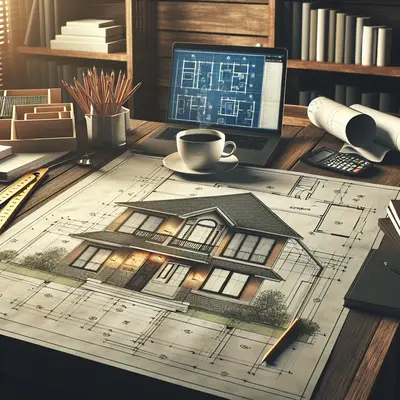
A refined renovation does not begin with paint swatches or tile samples; it begins with an architecture of decisions that most guests will never see. The homes that feel effortlessly considered—where the light falls just right and the spaces work without friction—are rarely accidents. They are the result of project planning executed with the restraint, precision, and foresight usually reserved for boutique hotels and private galleries. This is the quiet layer beneath the finishes: a planning process that anticipates, orchestrates, and protects both your investment and your peace of mind.
Designing the Renovation “Operating System” Before the Design Itself
Most homeowners rush to the visible decisions—fixtures, palettes, layouts—without defining how decisions will be made in the first place. The most successful projects start with an “operating system” for the renovation: a small set of rules that govern everything that follows.
Clarify who has final say on design, budget, and schedule—and whether those roles are held by one person, shared by partners, or delegated to a designer or project manager. Decide how changes are requested and approved, and at what threshold (cost or time) they require a pause for formal re-evaluation. Establish preferred communication channels and rhythms: weekly site walks, scheduled progress calls, or shared digital boards where drawings, quotes, and revisions live in one place.
This structure feels corporate at first glance, but in practice it is an act of self-preservation. It prevents emotional decisions made under pressure, protects relationships from being strained by surprise costs, and keeps your team aligned when the inevitable unexpected conditions appear behind your walls. The elegance of the final space is quietly born here.
Mapping “Invisible Priorities” Before You Lock the Scope
Most renovation plans are built around obvious objectives: update the kitchen, add a bath, open a wall. Discerning homeowners, however, define a second tier of “invisible priorities” that never appear on a mood board but fundamentally shape the project.
These might include acoustic comfort (minimizing sound transfer between bedrooms and living areas), future-proofing for aging in place, wiring for robust home networking and smart systems, or specifying materials for low maintenance and superior indoor air quality. You may also choose to prioritize daylight optimization over strict adherence to existing room configurations, or circulation flow over maximal square footage.
By explicitly ranking these intangible priorities before design begins, you give your architect, designer, and contractor a more nuanced brief. When trade-offs arise—as they always do—they can protect the elements that matter most to your long-term experience of the home, even if the compromise means a slightly smaller island or a different tile. This elevates planning from simple problem-solving into strategic curation.
Treating Risk as a Design Element, Not an Afterthought
Risk is usually handled as a contingency line on a spreadsheet, politely ignored until something goes wrong. A more sophisticated approach is to treat risk the way designers treat light or texture: something to shape intentionally from the outset.
Begin by categorizing potential risks: structural (hidden damage, aging systems), regulatory (permits, inspections, zoning), financial (material price changes, scope creep), and human (contractor availability, decision fatigue). For each, decide on a mitigation strategy in advance. For instance, allocate a tiered contingency—one pool for truly unforeseen issues uncovered during demolition, another reserved for design enhancements you may choose to add mid-project.
Request exploratory investigations early: opening small inspection points in walls, scanning for structural or moisture issues, and thoroughly documenting existing electrical and plumbing conditions. This “diagnostic” phase may feel like a delay, but it dramatically reduces the likelihood of catastrophic surprises that derail both budget and timeline. When risk is consciously designed into your plan, the renovation feels less like a gamble and more like a controlled, if intricate, choreography.
Planning the Cadence of the Project, Not Just the Completion Date
Most homeowners fixate on one date: “When will it be finished?” High-caliber planning instead focuses on cadence—the rhythm of the project from first measurement to final walkthrough.
Begin with your life, not your contractor’s availability. Map major personal milestones over the coming year: travel, work deadlines, school terms, or family events. Then, layer the renovation phases onto this calendar: design development, permit review, long-lead material orders, demolition, rough-in, finishes, and commissioning. The goal is not merely to avoid conflict, but to align the most disruptive phases with periods of greater flexibility or planned time away from the home.
Within the project itself, establish milestone check-ins that are more substantive than quick updates: moments where layout changes are no longer permitted, where finishes become locked, or where cost revisions are consolidated and approved. This creates a measured, predictable tempo, preventing “decision avalanches” that happen when everything is urgent at once. A well-orchestrated cadence protects your sanity and gives the project a quiet, professional inevitability.
Curating Your Professional Team Like a Long-Term Partnership
Selecting professionals is often treated as a procurement task—collect bids, compare numbers, select the lowest acceptable price. In a premium renovation, however, you are effectively building a temporary organization that will manage a significant asset: your home. The criteria must therefore extend far beyond cost.
Assess how potential partners think, not just what they charge. During early conversations, notice whether they ask probing questions about how you live, how long you plan to remain in the home, and what you value in everyday comfort. Examine their documentation style: are proposals and drawings precise, annotated, and transparent? Request to see not only glossy photographs, but also examples of specifications, schedules, and change order logs from past projects (with client details redacted).
Treat chemistry and communication sophistication as hard constraints, not soft preferences. Your renovation team will be guiding you through unfamiliar technical territory; you want professionals who can translate complexity without condescension, and who demonstrate calm under stress. In many cases, a slightly higher fee buys not just better craftsmanship, but better planning discipline—the difference between a project that feels improvisational and one that feels quietly assured from start to finish.
Building a “Post-Renovation” Plan Before Demolition Begins
A truly elevated project plan extends beyond the final coat of paint. The most experienced homeowners plan for the life of the renovated home before the first wall is opened.
During design, request a maintenance and operations perspective on each major component: finishes, mechanical systems, specialty lighting, smart home devices, and exterior elements. Confirm expected lifespans, recommended maintenance intervals, and the realistic cost and difficulty of replacing components later. Ask your team to assemble a digital “house manual” containing warranties, product data sheets, paint formulas, tile and grout specifications, and as-built drawings.
Plan for a formal post-occupancy review three to six months after completion. By calendaring this in advance, you create a structured moment to address minor issues that only reveal themselves through daily use: door adjustments, comfort tweaks, dimmer fine-tuning, or small layout refinements. This final layer of planning transforms your renovation from a finite project into an evolving asset—one that is documented, maintainable, and ready to adapt as your life changes.
Conclusion
A renovation that feels quietly luxurious is never the result of finishes alone. It is born from planning that respects your time, anticipates risk, honors invisible priorities, and treats your professional team as strategic partners rather than vendors. By designing the “architecture behind the architecture”—your decision framework, your cadence, your risk profile, and your long-term stewardship—you create conditions where craftsmanship can shine without drama. The outcome is a home that does not simply look elevated, but lives with an ease and coherence that only meticulous project planning can provide.
Sources
- U.S. Consumer Financial Protection Bureau – Considering a home renovation - Guidance on financial and contractual considerations when planning renovations
- U.S. Department of Energy – Home renovation and energy efficiency - Explains how to integrate efficiency and building systems into renovation planning
- National Association of Home Builders – Guide to hiring a contractor - Best practices for selecting and evaluating renovation professionals
- American Institute of Architects – Working with an architect - Outlines how to structure relationships, scope, and communication with design professionals
- Harvard Joint Center for Housing Studies – Improving America’s Housing - Research-based insight into renovation trends, spending, and long-term planning considerations
Key Takeaway
The most important thing to remember from this article is that this information can change how you think about Project Planning.