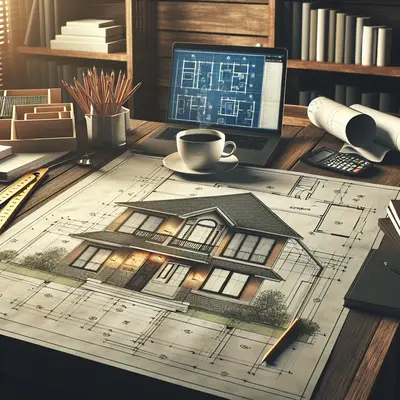
Renovations that feel effortless from the outside are rarely accidental. Behind every serene before-and-after lies a precise blueprint: a project plan that anticipates pressure points, choreographs decisions, and protects both aesthetics and investment. For homeowners who expect more than a routine remodel, planning is not administration—it is the quiet architecture of intent.
Below, we explore a refined approach to project planning, weaving in five exclusive insights that sophisticated homeowners use to elevate their renovation from functional to truly exceptional.
Designing the Renovation Narrative Before the Floor Plan
Renovations often begin with floor plans, mood boards, and material samples. Yet highly successful projects typically start even earlier—with a narrative.
Instead of asking, “What should this room look like?” a more powerful starting point is, “What story should this home tell about how we live?” Do you entertain frequently but prefer discretion? Do you work across time zones and need acoustic privacy? Do you anticipate aging in place or multi-generational living? These questions shape a narrative that becomes the reference point for every subsequent decision.
A narrative document—brief but precise—can include lifestyle patterns, sensory preferences (light, sound, texture), and thresholds of tolerance (such as clutter, visible tech, or maintenance). When shared with your architect, designer, and builder, it transforms the project from a purely spatial exercise into a lifestyle alignment. This narrative becomes the lens through which trade-offs are evaluated, reducing decision fatigue and keeping the project anchored in what truly matters.
Exclusive Insight #1: Treat your renovation as a story arc, not a shopping list. A clearly articulated lifestyle narrative, captured in writing, will become your most powerful planning tool—more influential than any single drawing or specification.
Time as a Design Material, Not Just a Schedule
Most homeowners experience timelines as constraints: start dates, milestones, and completion goals. But in refined project planning, time is treated as a design material in its own right.
Some design choices require elapsed time to validate: how light moves through the space across seasons, how sound travels between rooms during different hours, and how your household truly flows over the course of a week. When possible, a pre-renovation “observation period” of several weeks—where you document bottlenecks, unused zones, and peak-activity points—will inform a far more precise brief.
Similarly, not all decisions need to be locked in at once. Certain layers—like millwork internals, hardware, or soft furnishings—can benefit from being deferred until primary spatial and structural decisions are resolved. This staged commitment preserves flexibility and allows your taste to mature with the evolving design.
Exclusive Insight #2: Build deliberate “decision windows” into your schedule. Instead of forcing premature choices, time-box when specific categories of decisions must be finalized, and sequence them so the most foundational choices inform the rest.
The Silent Infrastructure of a Calm Renovation
The most elegant renovations are frequently defined by elements no guest will ever see: ventilation routes, electrical capacity, sound insulation, and concealed service access. This silent infrastructure is where project planning can either future-proof your home or limit it for decades.
Begin by mapping not just current requirements, but plausible future ones. Will you eventually integrate EV charging, smart home systems, or all-electric appliances? Are you considering solar, battery storage, or high-efficiency mechanical systems later? Upgrading wiring, panel capacity, and duct pathways while walls are open is significantly more cost-effective and far less disruptive than retrofitting later.
Equally, plan for serviceability. Where will access panels be hidden? How will major appliances or components be replaced in ten or fifteen years without dismantling finished surfaces? Thinking in terms of “graceful maintenance” preserves both aesthetics and sanity over the long term.
Exclusive Insight #3: Create an “invisible specification” document. Beyond visible finishes, capture decisions around wiring capacity, plumbing access, insulation levels, and mechanical rough-ins. This invisible layer will define the comfort, adaptability, and performance of your home far more than any paint color.
Orchestrating Stakeholders With Executive-Level Clarity
Renovations are miniature enterprises: multiple trades, parallel workstreams, supply constraints, and budget oversight. Treating your project with the discipline of an executive initiative yields elevated outcomes and fewer unwelcome surprises.
Begin with a concise project charter—no more than one page—that articulates objectives, non-negotiables, budget range, risk tolerance, and decision-making authority. Decide early who holds final say on aesthetics, structural trade-offs, and cost escalations, and ensure this hierarchy is clear to your professional team.
Next, create a single source of truth: a shared digital hub where drawings, specifications, change orders, and schedules live in updated form. Informal messages and on-site discussions are inevitable, but they should always be reconciled back to this central record. This structure reduces miscommunication and protects you when memories differ months later.
Exclusive Insight #4: Run your renovation like a boardroom, not a group chat. A formal project charter and centralized documentation prevent scope drift, emotional decision-making, and confusion when pressures mount.
Curating Risk, Not Merely Contingency
Most homeowners understand the idea of a financial contingency, but fewer actively curate risk as part of their planning. High-caliber renovations deliberately choose where to take calculated risks and where to enforce absolute stability.
Technical risk—such as opening structural walls or relocating major plumbing—requires both contingency and scenario planning. What if asbestos or outdated wiring is found? What if a key structural element needs reinforcement? Planning these “if/then” pathways in advance allows for rapid, rational responses instead of stressed improvisation.
There is also aesthetic risk. Some design choices (a bold stone, unconventional layout, or highly bespoke joinery) carry emotional and resale implications. By explicitly categorizing decisions as “conservative,” “measured,” or “bold,” you can balance innovation with long-term reassurance—and align these categories with spaces: public, semi-private, and private.
Exclusive Insight #5: Maintain a written “risk register” for your renovation. For every major decision, note the upside, downside, risk category, and your tolerance level. This objectivity protects you from overreacting under pressure and ensures bold moves are made intentionally, not accidentally.
Conclusion
A refined renovation is not defined solely by what you see when the dust sheets are removed. It is defined by what you do long before demolition begins: the narrative you craft, the time you structure, the infrastructure you elevate, the collaboration you orchestrate, and the risks you curate.
Project planning, when approached with intent, transforms a renovation from a demanding undertaking into a controlled, elegant evolution of your home. It protects your investment, honors your lifestyle, and ensures that every visible finish is supported by an invisible framework of intelligent decisions.
Sources
- U.S. Department of Energy – Home Remodeling and Energy Efficiency - Guidance on planning upgrades to improve home performance and future-proof infrastructure
- Harvard Joint Center for Housing Studies – Improving America’s Housing - Research on renovation trends, spending, and strategic planning considerations
- American Institute of Architects (AIA) – Working With an Architect - Best practices for defining scope, objectives, and professional collaboration
- National Association of Home Builders (NAHB) – Remodeling Planning & Advice - Practical guidance on preparation, risk, and coordination in residential renovations
- Consumer Financial Protection Bureau – Planning for Home Improvements - Insight into financial planning, contingency, and risk around renovation spending
Key Takeaway
The most important thing to remember from this article is that this information can change how you think about Project Planning.