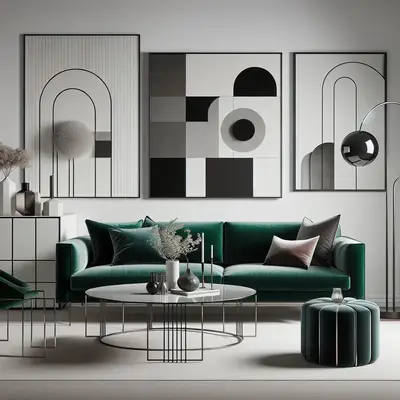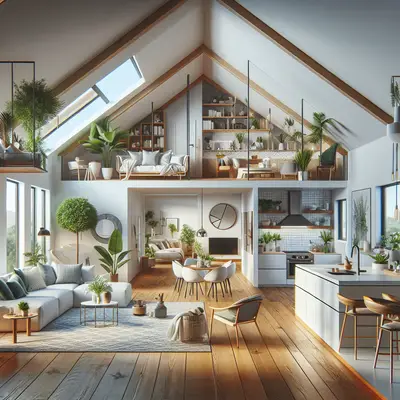
Luxury in residential design is no longer measured in spectacle, but in calibration—of light, of proportion, of privacy, of sound. For homeowners planning a renovation today, the most compelling spaces are not loudly opulent; they are exquisitely intentional. They anticipate how you will move, host, decompress, and age in place. They hide their intelligence. They privilege sensory comfort over visual noise.
What follows is a lens on five emerging, deeply considered design currents—each less about trend-chasing and more about strategic decisions that will keep your home relevant, serene, and quietly exceptional for years to come.
Insight 1: The Gallery-Grade Envelope – Walls, Light, and Negative Space
The most sophisticated renovations now begin not with the sofa or the stone, but with the envelope: walls, ceilings, openings, and light. The goal is less “decorated room” and more “gallery-grade shell” into which life and objects can be thoughtfully layered.
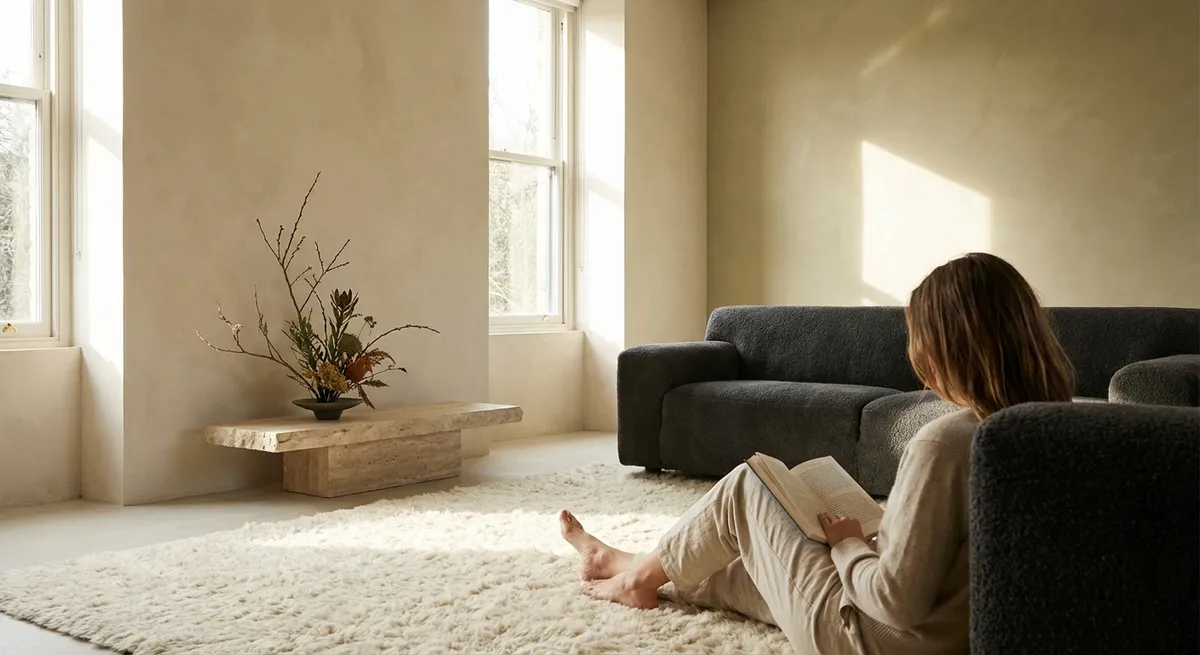
This starts with wall and ceiling strategy. Monochromatic envelopes—where walls, trims, and sometimes ceilings share a finely tuned hue—create a cocooning, gallery-like calm. The nuance lies in finish and undertone: a chalky matte in a complex off-white or muted stone tone softens edges, blurs corners, and lets forms and art stand forward without competition. Carefully edited negative space becomes part of the composition, giving key pieces room to breathe.
Natural light is then treated as a material in its own right. Window sizes, mullion patterns, and sill heights are calibrated to frame views and modulate brightness rather than simply “let in as much light as possible.” Layered lighting—recessed, indirect cove, architectural wall washing, and ultra-refined decorative fixtures—transforms the same room from morning clarity to evening intimacy with quiet theatricality. The result is a home that feels more akin to a private gallery or boutique hotel suite: calm, legible, and deeply flattering to anything placed within it.
For a renovation, this means prioritizing the shell early in the process: investing in plaster quality, shadow gaps instead of bulky trim, elegantly recessed drapery tracks, and thoughtful lighting design before any conversation about furniture. These are the subtle decisions that telegraph “bespoke” long after the latest trend in chairs has dated.
Insight 2: Material Pairings That Age With Intention, Not Anxiety
The next frontier of sophisticated design is not just what materials you choose, but how they will age—and whether that patina is embraced or resented. High-end clients are increasingly seeking homes that look better ten years in, not ten days after the installation crew leaves.
True luxury materials—solid wood, natural stone, unlacquered metals, limewash, clay plasters—develop character with use. They show the story of a home well-lived rather than striving to look perpetually new. The art lies in pairing materials with complementary aging profiles. For example, combining a honed stone countertop that will softly etch over time with a resilient, tight-grain wood floor can create visual richness without feeling unkempt. An unlacquered brass that will warm and darken with touch works beautifully alongside a more stable, powder-coated metal on high-wear handles and pulls.
From a renovation planning standpoint, this calls for a strategic zoning of “patina-positive” and “patina-sensitive” areas. In a kitchen, this might mean using a forgiving natural stone on an island where family gathers and a more durable engineered surface in zones prone to staining. In bathrooms, porous stone flooring can be sealed and balanced with dense, low-maintenance wall tiles in wet zones. The objective is to remove the low-level anxiety of “maintaining perfection” and replace it with a sense that every mark contributes to a narrative of use.
Discuss aging and maintenance expectations with your designer and contractor early. Ask explicitly: “How will this look in five years of daily life?” A refined renovation does not avoid time; it choreographs it.
Insight 3: Spatial Sequencing as a Daily Ritual, Not a Floor Plan
Truly elevated renovations now read less like simple floor plans and more like choreographed sequences of experience. Instead of thinking in terms of rooms, leading designers think in thresholds, compressions, releases, and sightlines that support daily rituals.
Consider the journey from entry to main living space. A sophisticated home might introduce a moment of compression—a narrower, calmer foyer or vestibule with controlled light and lower ceilings—before opening dramatically into a brighter, taller living area with a framed view. This simple sequence eases transition from the outside world to private sanctuary. Doors, openings, and even flooring transitions can be tuned to make this shift almost cinematic, yet utterly functional.
Ritual-based planning goes further. Where do you put down your keys, shed a blazer, plug in a phone, remove shoes? Instead of scattering these functions, a well-planned renovation builds them into a single, beautifully resolved micro-zone: a slender console with hidden charging inside a drawer, concealed hooks behind a flush panel, a bench integrated into millwork that aligns perfectly with a wall reveal. Morning routines, evening wind-downs, weekend hosting—all can be translated into spatial sequences rather than ad hoc furniture placement.
For homeowners, this demands a different type of brief for your design team. Rather than saying “we need a bigger kitchen,” articulate the narrative: “We cook together; one of us is always at the cooktop, the other is prepping, and friends tend to cluster inconveniently in the same corner.” From there, your renovation becomes an exercise in designing choreography, not just square footage. The result feels less like a larger house and more like a home that understands you.
Insight 4: Integrated Quiet Technology, Hidden in Plain Sight
The most sophisticated renovations now treat technology as infrastructure, not decor. Screens shrink, wiring disappears, and intelligence is felt rather than seen. In an era of constant digital noise, the truly premium home has become a place where tech serves comfort, security, and performance—without dominating the visual field.
Start with the essentials: robust, discreet networking; zoned climate control; and carefully designed lighting systems. These can be fully integrated into architectural elements—switches that align with door jambs, speakers concealed within ceiling details, motorized shades recessed into coves. Instead of a wall polka-dotted with switches and thermostats, consider centralized control panels or minimalist keypads programmed for scenes like “Morning,” “Arrival,” and “Evening Dining.”
Acoustic design is emerging as a new marker of luxury. Sound attenuation—between bedrooms, between floors, and from the exterior—contributes more to perceived quality than many visible finishes. Insulation choices, resilient channels in ceilings, solid-core doors, and acoustic seals can transform a home’s ambiance from echoing to hushed. In open-plan spaces, the use of soft textiles, acoustic panels disguised as art, and textured wall finishes can refine sound without visually cluttering the room.
For renovation planning, the key is to treat technology and acoustics as early-stage architecture, not late-stage accessories. Engage specialists before walls are closed. Ensure each visible tech element earns its place aesthetically. The most luxurious detail may be the one you never notice: the room that simply feels calm, the temperature that is always right, the light that shifts almost imperceptibly with the time of day.
Insight 5: Multi-Layered Flex Rooms That Don’t Look “Flexible”
Today’s most intelligent renovations are increasingly defined by one or two quietly adaptable spaces—rooms with multiple, fully resolved identities that never feel like compromises. The era of visibly “multi-purpose” rooms crowded with fold-out furniture is giving way to spaces whose flexibility is engineered into architecture and millwork.
Imagine a study that reads as an impeccably tailored library most of the time: wall-to-wall shelving, a curated desk, a single extraordinary lounge chair. With a few reconfigurations, it becomes a refined guest suite: a concealed wall bed disappears back into the millwork, integrated blinds and blackout shades transform the mood, and a nearby powder room reveals a shower behind an elegantly paneled door. The space never feels temporary; it simply reveals another facet of itself.
Similarly, a “media den” can be designed as a sophisticated salon: TV concealed behind sliding art panels, low-profile speakers built into a perimeter shelf, lighting scenes that shift from entertaining to film watching without bringing down the aesthetic temperature of the room. In smaller homes, dining zones can double as workspaces via built-in storage, hidden charging, and the strategic use of movable, pedestal-based tables that can be reoriented without visual disruption.
For homeowners planning renovations, the strategic question is: where can one room credibly earn two or three distinct roles without feeling like a compromise in any of them? The answer will rarely be achieved with furniture alone. It involves millwork depth, wiring placements, door locations, window treatments, and storage design that has been plotted for each “mode” of use. Done well, these rooms expand the functional footprint of the house without expanding its physical size—a distinctly modern form of luxury.
Conclusion
The most compelling design currents today have little to do with surface novelty and everything to do with refinement: of envelope, of materials, of sequence, of quiet tech, of spatial flexibility. They ask homeowners to think beyond color palettes and fixtures and to engage with how life will unfold, moment by moment, within the home.
Renovations anchored in these principles tend to age gracefully because they are built on timeless qualities—proportion, light, tactility, calm—rather than temporary visual trends. As you plan your own project, consider not just how your home will look on completion day, but how it will feel in the stillness of early morning, during a crowded dinner, on a difficult week, and ten years from now. The new quiet of luxury is not an absence of expression; it is the disciplined presence of only what truly matters.
Sources
- [Harvard Joint Center for Housing Studies – Improving America’s Housing](https://www.jchs.harvard.edu/research-areas/remodeling) - Research on U.S. remodeling trends, spending, and homeowner priorities
- [American Institute of Architects (AIA) – Home Design Trends Survey](https://www.aia.org/resources/6296-home-design-trends-survey) - Insights into emerging residential design trends from architects’ practices
- [U.S. Department of Energy – Energy Saver](https://www.energy.gov/energysaver/energy-efficiency-home-design) - Guidance on energy-efficient home design, lighting, and building envelope strategies
- [GSA – Sound Matters: How to Achieve Acoustic Comfort in Buildings](https://www.gsa.gov/governmentwide-initiatives/sustainability/emerging-building-technologies/sound-matters-how-to-achieve-acoustic-comfort-in-green-buildings) - Federal guidance on acoustic comfort and sound control strategies in buildings
- [MIT School of Architecture + Planning – Research & Publications](https://sap.mit.edu/research) - Academic perspective on architecture, spatial experience, and technology integration in the built environment
Key Takeaway
The most important thing to remember from this article is that this information can change how you think about Design Trends.