The most compelling renovations today are not the loudest, the largest, or the most expensive—they are the most intentional. Sophisticated homeowners are moving beyond trend-chasing toward spaces that feel composed, enduring, and quietly expressive of their values. This is not about showpiece rooms; it is about a home that reads as considered from every angle, even in the smallest transitions.
Below, we explore five exclusive, under-the-radar design insights shaping premium renovations now—subtleties that rarely appear on mood boards, yet define how elevated a home truly feels.
1. The Art of Negative Space: Designing What You Don’t Build
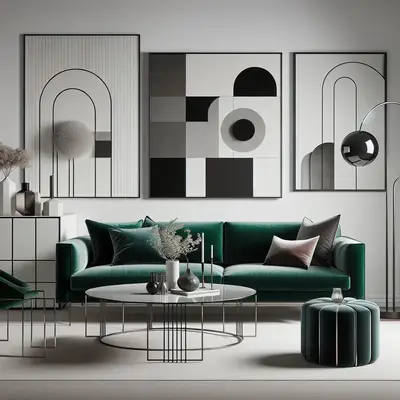
The most luxurious element in a home is often what is not there: visual noise, cluttered lines, and unnecessary features. Negative space—the intentional absence of objects or ornament—is becoming a hallmark of refined renovation.
Rather than filling every wall, sophisticated renovations lean into edited compositions: one exceptional piece on a long corridor wall instead of a gallery grid; a single sculptural pendant in place of layered but competing fixtures. Built-ins are designed with restrained profiles and flush fronts so that millwork reads as architecture, not storage furniture.
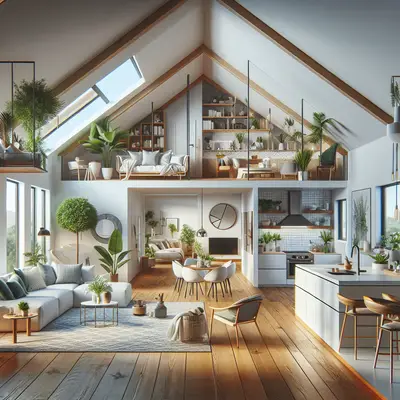
This approach extends to circulation. Wider thresholds, generous breathing space between key furnishings, and unencumbered sightlines create a subtle sense of calm that feels distinctly high-end. In kitchens, fewer upper cabinets in favor of concealed storage walls and tall pantries yield a more “architectural” rather than “cabinet-heavy” expression.
The strategic question becomes: What can be removed, simplified, or visually quieted without compromising function? Answering that well is increasingly what separates a merely “updated” space from one that feels impeccably curated.
2. Monochrome, Elevated: Nuanced Layering Within a Single Palette
Monochrome design is evolving from stark minimalism into something richer, softer, and more complex. The most refined renovations are now embracing tone-on-tone schemes where dozens of micro-variations within one color family create depth without visual chaos.
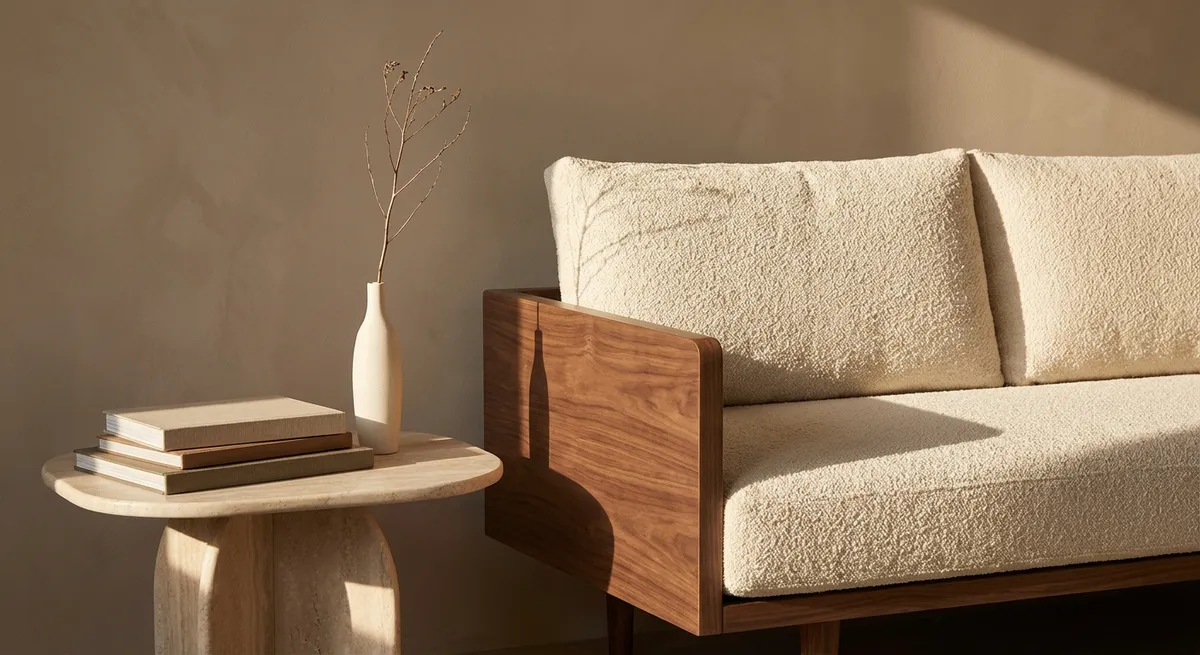
Think of an all-warm-neutral living room: limewash walls in a mushroom tone, oak floors with a cool undertone, ivory wool upholstery, and stone with faint veining that syncs with the surrounding palette. The effect is not “all beige” but rather a symphony of adjacent tones that register as calm, cohesive, and deliberately composed.
This approach requires rigor with undertones. A cool gray countertop beside a warm greige wall will destabilize an otherwise polished scheme. Sampling finishes in the actual light of the space, and viewing them together—not in isolation—is non-negotiable.
Monochrome layering also allows you to invest in texture and materiality instead of competing colors: bouclé vs. tight-weave linen, honed vs. leathered stone, fluted vs. flat cabinetry. The color story recedes so that proportion and craftsmanship come to the foreground—precisely where a premium renovation should place its emphasis.
3. Tailored Transitions: Where the True Luxury Quietly Lives
Most design attention goes to “hero rooms”—kitchens, primary suites, living spaces. Yet in elevated projects, the greatest sophistication often appears in the transitions: hallways, thresholds, landings, and junctions where materials meet.
Consider the following quiet luxury markers:
- Perfected junctions where stone dies cleanly into timber, with minimal or concealed trims.
- Aligned sightlines so doors, openings, and major fixtures line up with intention, not accident.
- Consistent detailing—the same door profile, hinge finish, and casing language repeated throughout, even in secondary spaces.
- Thoughtful lighting cues at transitions: a low wall wash leading down a hallway, or a single recessed fixture subtly announcing a change in zone.
Upgrading these “in-between” moments has an outsized effect. For instance, re-cladding a stair handrail in a refined timber or leather, or replacing mismatched door hardware with a unified collection, recalibrates how the entire home is perceived.
Designing transitions as if they are rooms in their own right—not mere connectors—signals a level of discipline and refinement that is immediately legible, even if visitors cannot pinpoint why the home feels so composed.
4. Performance-Grade Luxury: Materials Chosen for How They Age
A growing number of discerning homeowners are rejecting “preciousness” in favor of materials that are both beautiful and resilient. The new status lies in surfaces that age gracefully, not those that demand constant anxious upkeep.
This does not mean defaulting to purely utilitarian finishes. Instead, it means specifying:
- Engineered stone or sintered surfaces where heavy cooking or entertaining is central, reserving natural marble for areas where patina feels appropriate.
- High-quality, factory-finished wood flooring with robust top layers that allow refinishing while offering superior dimensional stability.
- Textured or matte finishes—on metals, paints, and tiles—to disguise fingerprints, scuffs, and everyday use.
In wet zones, large-format stone or porcelain with minimal grout joints not only appears more luxurious but also reduces maintenance. Even upholstery is shifting: performance linens and velvets now read convincingly high-end while withstanding family life and pets.
The key is interrogating every specification with two questions: How will this look in five years? and What level of vigilance will it require? Premium design today privileges materials that tell a story over time without requiring the homeowner to live in a state of constant caution.
5. The Composed Glow: Lighting as an Architectural Narrative
In sophisticated renovations, lighting is no longer an afterthought or a decorative add-on—it is a narrative tool that shapes how each space is experienced from dawn to night. The best-lit homes feel subtly cinematic: never harsh, never flat, always intentional.
Three principles define this new approach:
- Layered hierarchy: ambient, task, and accent lighting are planned together, with clear roles and minimal redundancy. A room might have a single strong architectural gesture—a linear pendant, for example—supported by understated downlights and well-placed wall lights.
- Warmth and consistency: unified color temperatures (often in the 2700–3000K range) ensure a cohesive atmosphere, especially in open-plan areas. Stray cool-white fixtures instantly break the spell of an otherwise premium space.
- Concealment as elegance: integrated LED channels in shelving, toe-kicks, and ceiling coves create a soft halo effect that feels luxurious precisely because the light source is barely visible. Good lighting lets surfaces, textures, and forms perform; it does not demand attention itself.
Well-designed lighting elevates every other investment in the renovation—architecture, finishes, furnishings. A modest kitchen with impeccable lighting design will often read more sophisticated than a high-budget room with poorly conceived illumination. For homeowners seeking a quiet but transformative design move, lighting is one of the most powerful—and most underestimated—levers.
Conclusion
Refined renovation today is less about spectacle and more about discernment. The homes that feel genuinely elevated share a common thread: restraint in what is added, rigor in what is aligned, and foresight in how spaces will live and age.
By attending to negative space, monochrome nuance, tailored transitions, performance-grade materials, and an orchestrated lighting narrative, homeowners can move beyond surface-level upgrades into a realm of design that feels enduring, intelligent, and quietly unforgettable. These are the renovations that do not simply photograph well—they live well, year after year.
Sources
- Harvard Joint Center for Housing Studies – Improving America’s Housing – Data and analysis on renovation trends and homeowner priorities
- American Institute of Architects (AIA) – Home Design Trends Survey – Insights into architectural and residential design directions
- NYTimes Real Estate – Design and Decorating Coverage – Reporting on high-end residential design, materials, and renovation strategies
- Dezeen – Residential Interiors – Global examples of sophisticated, architect-led interior projects
- U.S. Department of Energy – Lighting Choices to Save You Money – Technical guidance on lighting types, color temperatures, and efficiency
Key Takeaway
The most important thing to remember from this article is that this information can change how you think about Design Trends.