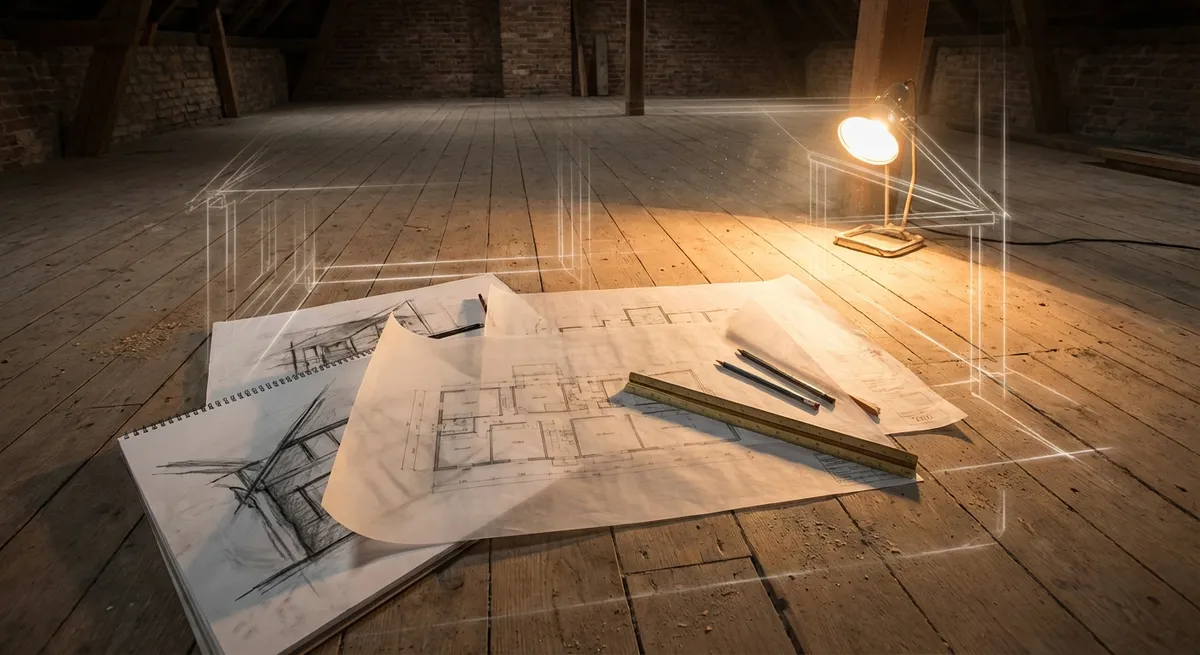
A truly elevated renovation is rarely defined by what you see first. It’s defined by what never goes wrong. Behind every calm, beautifully executed project lies an invisible architecture of planning—decisions made early, structure imposed gently but firmly, and a strategy that anticipates complexity rather than reacts to it. For the discerning homeowner, project planning is not a bureaucratic exercise; it is the quiet discipline that protects your time, your investment, and the integrity of your vision.
Below are five exclusive, often-overlooked planning insights that distinguish a merely “completed” renovation from one that feels impeccably orchestrated from first consultation to final walkthrough.
Designing Backwards from Your “Quiet Hour”
Most homeowners begin with aesthetic inspiration or square footage. Sophisticated planning begins elsewhere: with a single, very specific moment in your day.
Picture the exact “quiet hour” you want this renovated space to serve—early-morning light in a kitchen, late-evening stillness in a library, the hushed transition from entertaining to solitude. Plan the entire project backwards from that moment.
Instead of asking “What will this room look like?”, ask:
- What do I need to feel here—relief, focus, connection, privacy?
- At what time of day will I use this space most?
- What should be heard, smelled, and seen (and what should be absent)?
- Sequencing decisions so that light studies, electrical layout, and window treatments are resolved before finishes are chosen.
- Prioritizing budget where that daily experience is most directly affected (e.g., task lighting, acoustic control, circulation flow).
- Scheduling site visits at the actual times you plan to inhabit the space, to verify qualities like glare, shadow, and sound.
From there, align your project plan to those answers:
This “quiet hour” lens becomes a filter for every planning decision. It allows you to say no—elegantly and with conviction—to options that may be fashionable but do nothing for your lived experience.
Building a Decision Hierarchy, Not a To-Do List
Renovation fatigue rarely comes from the size of the project; it comes from the number of decisions made without a clear order of importance. A refined project plan doesn’t simply list decisions—it ranks them.
Create a decision hierarchy that structures the entire renovation:
Structural and Systems Decisions
Anything that affects the bones: layout, load-bearing walls, HVAC, plumbing runs, window openings, insulation, and electrical capacity. These define what is possible.
Functional Framework Decisions
Storage strategy, circulation paths, clearances, door swing directions, appliance placement, work zones. These define how the space behaves.
Sensory Decisions
Lighting layers, acoustics, tactile materials, ventilation quality, and sightlines. These define how the space feels, beyond how it looks.
Detail and Finish Decisions
Fixtures, hardware, colors, textiles, decorative lighting, styling. These complete the narrative but should never dictate earlier moves.
Your project plan should mirror this hierarchy in both timeline and approvals. For example:
- Establish a rule that no finish purchases are made until structural and system drawings are finalized and signed off.
- Require that lighting design is approved before you lock in ceiling details or millwork elevations.
- Treat every “downstream” selection as contingent on a higher-order decision being stable.
This disciplined hierarchy protects you from the chaos of rework and the expense of late changes. It also makes collaboration with architects, designers, and contractors more elegant: everyone is clear on what must be decided now and what must wait.
Curating Constraints as Carefully as You Curate Materials
The most refined renovations are not those with infinite options; they are those defined by beautifully chosen constraints. Instead of seeing constraints as obstacles, treat them as part of the design brief—and codify them in your project plan.
Curate your constraints in four dimensions:
Time Constraint with Character
Instead of “finish by October,” define the time constraint with nuance: - Non-negotiable milestones (e.g., “kitchen must be functional by school term start”) - Blackout periods for major site work (e.g., during key travel or life events) - Preferred site hours to respect neighbors and your own schedule
Distilled Budget Boundaries
Break the budget into character-led categories rather than pure line items: - Comfort & longevity (insulation, windows, HVAC, quality hinges and hardware) - Daily ritual (lighting, key surfaces, fixtures you touch every day) - Quiet luxury (one or two defining gestures—stone, custom millwork, or a single exceptional piece)
Architectural Non-Negotiables
Decide which existing features are sacred—perhaps a window view, a ceiling height, a staircase, or original floors. Embed these in the project scope as items that may be enhanced but not compromised.
Lifestyle Boundaries
Clarify how much disruption you are truly willing to accept: - Will you live on-site or relocate? - Are you comfortable with phased work or do you require a single, concentrated period of disruption? - What level of dust, noise, and access restriction is tolerable?
These curated constraints guide your team intelligently. They create a planning framework that is both firm and inspiring, allowing disciplined creativity rather than reactive compromise.
Treating Trade Coordination as a Design Discipline
Many renovations falter not from poor design, but from poor choreography among trades. In a sophisticated project plan, trade coordination is treated as seriously as aesthetic direction.
Approach coordination as a design discipline with its own structure:
- Create a “Contact Constellation”
Document every professional involved—architect, designer, GC, structural engineer, specialty trades, suppliers, and fabricators—in a single, elegantly simple chart that clarifies who speaks to whom, and about what. Share it with everyone.
- Schedule “Intersection Meetings”
- Electrician + millworker (for integrated lighting, power in cabinetry, switch placement relative to built-ins)
- Plumber + tile installer (for drain locations, niche heights, and waterproofing sequences)
- HVAC + architect/designer (for vent placement, soffits, ceiling details)
- Insist on Shop Drawings for Anything Custom
These are brief, focused sessions specifically for points where trades overlap:
For millwork, metalwork, stone, or specialty glass, ensure shop drawings are created, reviewed, and approved before fabrication. This is where many quiet catastrophes are prevented—mismatched dimensions, awkward reveals, misaligned fixtures.
- Align Lead Times with Critical Path
Flag anything with an extended lead time—custom windows, specialty tile, appliances, bespoke fixtures—and build your schedule around their arrival. Your plan should make clear which decisions must be made early to keep the project’s rhythm intact.
Handled this way, coordination becomes an act of refinement, not damage control. The result is a site that feels calm, with fewer “on-the-fly” compromises and more intentional detail.
Creating a Post-Completion Strategy Before Demolition Begins
Truly elevated planning extends beyond the final clean. A sophisticated renovation plan considers how the space will age, be maintained, and potentially adapted—long before construction starts.
Embed a post-completion strategy into your project planning documents:
- Material Care Dossier
Request and organize maintenance guidelines for every significant surface and fixture: stone, wood, metals, specialty finishes, mechanical systems. Decide in planning whether you prefer low-maintenance materials or are comfortable with patina and wear.
- Access and Serviceability Planning
- Can critical shut-offs be reached easily?
- Are access panels discreet but usable?
- Can major appliances or mechanical components be removed or serviced without dismantling built-ins?
- Future Adaptability Considerations
- Conduit or chases for potential future technology (EV chargers, additional data cabling, advanced lighting controls)
- Structural foresight (reinforcement where future built-ins, partition walls, or heavier fixtures might be added)
- Subtle provisions for aging-in-place (threshold-free showers, blocking in walls for potential future grab bars, generous clearances)
- Warranty and Document Archive
- As-built drawings
- Manuals, warranties, and serial numbers
- Paint formulas, grout colors, tile SKUs, hardware specs
- Before/after photos of walls prior to closure (showing wiring, plumbing, and framing)
During design reviews, deliberately ask:
While planning, quietly integrate:
Early in the project, designate a “house archive”:
This foresight transforms your renovation from a one-time event into a long-lived asset. The planning itself becomes part of your home’s value—quietly protecting every decision you’ve made.
Conclusion
A refined renovation is not simply the sum of its finishes or the talent of its professionals. It is the product of an intentional, disciplined planning process that begins with a single human moment, orders decisions with precision, treats constraints as design tools, choreographs every trade, and looks respectfully into the future.
When you approach project planning as the invisible architecture of your renovation, you give your home something rare: not just beauty, but composure. The work feels inevitable rather than improvised, and you, as the homeowner, move through the process with clarity instead of fatigue. That quiet assurance is the true hallmark of a cultivated renovation.
Sources
- U.S. Department of Energy – Energy Saver: Home Design – Guidance on planning building systems, windows, insulation, and efficient layouts that should be considered early in renovation planning.
- National Association of Home Builders (NAHB) – Remodeling – Professional insights on remodel planning, working with contractors, and sequencing work.
- American Institute of Architects (AIA) – Working with an Architect – Explains client–architect collaboration, scope definition, and documentation practices that inform sophisticated project planning.
- Harvard Joint Center for Housing Studies – Improving America’s Housing – Research on renovation trends, investment, and homeowner priorities, useful for understanding how planning impacts long-term value.
- This Old House – Planning a Remodeling Project – Practical overview of sequencing, contractor coordination, and key early decisions in renovation projects.
Key Takeaway
The most important thing to remember from this article is that this information can change how you think about Project Planning.