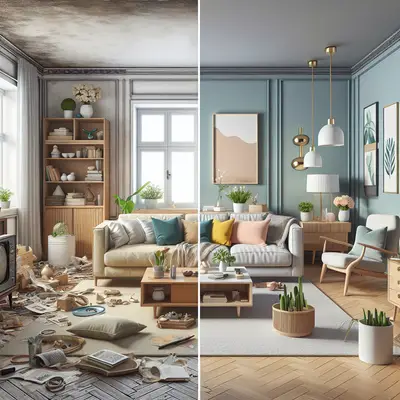
Every exceptional renovation tells a story long before a single wall is moved. Beneath the finishes and fixtures lies a quiet grammar—proportions, alignments, sightlines, and sequences—that separates a merely updated space from a profoundly elevated one. For homeowners planning a renovation, understanding this invisible structure is the difference between “nicely done” and “impeccably resolved.”
This is renovation as composition: considered, layered, and strategically restrained. What follows are five exclusive insights that sophisticated renovators and design professionals quietly rely on—but rarely articulate in a single place.
Designing for Arrival: The Art of the First 10 Seconds
The most successful renovations are choreographed around arrival, not square footage. The first 10 seconds after you step through the door define your perception of the entire home—your brain rapidly assesses light, order, and coherence long before it notices materials or brands.
Begin your planning by standing at your current entry and tracing your instinctive path: where your eyes land, where you drop your keys, what you try to ignore. Your renovation brief should explicitly address this sequence. Consider how to align the view from the front door with a controlled focal point—a framed garden, a curated artwork, a perfectly centered window—rather than a cluttered kitchen or a dark hallway.
A modest architectural move, such as widening an opening, lowering a sill to create a larger window, or re-centering a pendant light on an axis, can completely recalibrate this arrival experience. Thoughtful storage near the entry (concealed shoe cabinets, integrated coat niches, or a flush wall of millwork) removes visual noise. When the first impression is serene and intentional, every subsequent space feels more luxurious, regardless of budget.
Proportion Over Price: Why Scale Outranks Specification
Premium renovations whisper quality through proportion before they ever speak through expensive finishes. A simple painted wall with impeccable alignment, appropriate scale, and balanced negative space will feel more refined than a wall clad in costly stone with poorly judged dimensions.
Examine key vertical and horizontal measurements before choosing any materials. Counter heights, sill heights, and door head heights should feel consistent and deliberate. Where possible, align upper cabinet tops with door heads and window heads to create a continuous, quiet datum line. This is a visual anchor that instantly elevates a space.
Similarly, consider the scale of elements relative to room size. In a generous room, overly small trim, narrow baseboards, and tiny light fixtures can cheapen the feel. In a compact space, overly large tiles or bulky fixtures may feel oppressive. Work with a scaled plan or 3D model to test sizes before committing. Get the proportions right, and even mid-range materials can read as bespoke.
Light as Architecture, Not Accessory
Most homeowners treat lighting as an afterthought—a decorative layer added once the “real” renovation is complete. In sophisticated homes, lighting is treated as architecture, planned as meticulously as walls and windows.
Start with natural light. Note where daylight enters at different hours, and design around it. Can a doorway be widened, a transom added, or a solid door replaced with glass to borrow light from an adjacent room? In many renovations, strategic borrowing of natural light is more transformative than adding new fixtures.
Then consider layered artificial lighting: ambient (general illumination), task (focused light where you work), and accent (to sculpt texture and highlight detail). Avoid relying solely on evenly spaced downlights, which can flatten a space. Instead, combine cove lighting, wall washers, picture lights, and low-level floor or toe-kick lighting to create depth and intimacy.
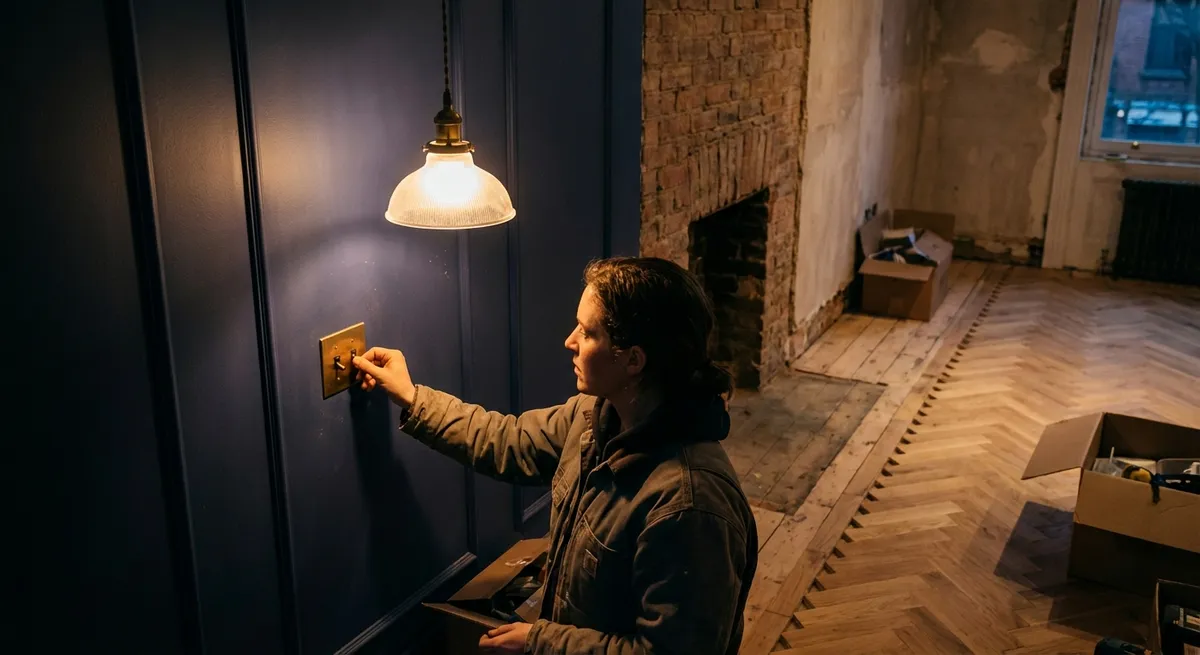
Plan switch locations to support real habits: a single master switch by the bedroom door to turn off everything at once, dimmers for dining and living zones, and intuitive controls near circulation paths. Quietly intelligent lighting—beautiful when fully lit, and even more compelling when partially dimmed—signals a renovation that has been deeply considered.
Material Continuity: Crafting a Cohesive Narrative
Luxury in renovation often emerges not from the number of materials used, but from the discipline to edit them. Establish a clear material narrative that flows through the home, with intentional repetition and subtle variation.
Choose a primary palette (for example: one timber tone, one stone or stone-look surface, and a restrained metal finish), then decide where deviations are justified and meaningful. Consistent flooring across major public spaces can visually enlarge the home and create a sense of continuity; even when transitions are necessary, ensure thresholds are clean and deliberate.
Pay close attention to how materials meet. A flush transition between tile and timber, a perfectly aligned grout joint with a door jamb, or a precisely mitered corner communicates craftsmanship more powerfully than any brand name could. Where budget is constrained, invest in the junctions: edges, corners, and seams are where quality—or compromise—is most visible.
Finally, think of each room as a chapter of the same book. The kitchen island might echo the tone of the entry console; the hardware in bathrooms might discreetly reference the fixtures in the powder room. This quiet continuity is what makes a renovation feel harmonized rather than assembled.
Future‑Facing Flexibility: Designing for the Life You Haven’t Lived Yet
While trends shift quickly, well-planned renovations anticipate change without appearing generic. Rather than attempting to “future-proof” through guesswork, design flexible frameworks that can adapt gracefully as life evolves.
Start with infrastructure. Invest in robust electrical capacity, thoughtful outlet placement, and discreet conduits for future data or smart-home upgrades. Reinforce walls where you may later want to mount shelving, sliding doors, or screens. In kitchens and utility rooms, allow a margin for future appliance sizes rather than locking every millimeter into custom joinery.
Think carefully about rooms that can perform multiple roles over time: a study that can become a guest room with a concealed wall bed; a secondary living area pre-wired to become a media room or home office; a generous landing that could later receive built-in desks or storage. Flexibility also extends to furniture decisions—consider built-ins that can be reconfigured or re-faced without demolition.
This approach protects your investment. A renovation that can absorb new technologies, household compositions, and work patterns without major structural change is inherently more resilient—and more valuable. The most sophisticated homes are those that look composed today while quietly prepared for tomorrow.
Conclusion
An exceptional renovation is rarely the product of a single dramatic gesture. It is the cumulative effect of dozens of quiet, intelligent decisions—how you arrive, what you see first, how light moves across the day, how materials converse from room to room, and how easily your home can evolve with you.
By attending to these often-overlooked dimensions—the choreography of entry, the discipline of proportion, the architecture of light, the continuity of materials, and the strategy of flexibility—you move beyond “updated” and into genuinely elevated. This is the hidden grammar of a well-renovated home: subtle, rigorous, and enduringly refined.
Sources
- American Institute of Architects (AIA) – Residential Design Trends – Insight into how architects are prioritizing light, flexibility, and spatial planning in contemporary homes
- Harvard Joint Center for Housing Studies – Improving America’s Housing – Research on renovation investments, long-term value, and homeowner priorities
- U.S. Department of Energy – Energy Saver: Lighting Choices – Technical guidance on lighting types, efficiency, and layering strategies
- HGTV – Home Entryway Design Ideas – Examples illustrating the visual and functional impact of well-designed arrival spaces
- MIT School of Architecture + Planning – Design Research – Broader context on architectural thinking around space, proportion, and future-adaptive environments
Key Takeaway
The most important thing to remember from this article is that this information can change how you think about Home Renovation.