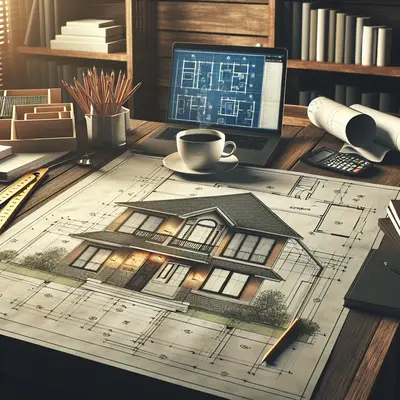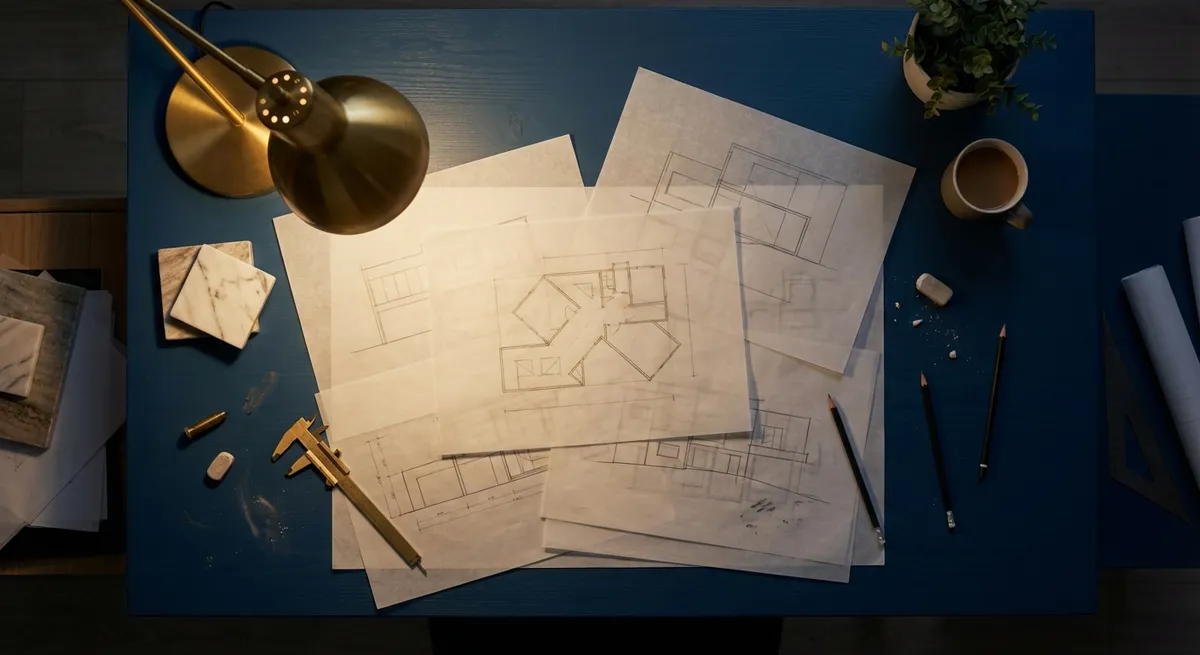
A truly elevated renovation is never accidental. Long before the first wall is opened or stone is set, the caliber of the outcome is encoded in the project plan—its structure, its sequence, its quiet safeguards. For discerning homeowners, planning is less about ticking boxes and more about composing a coherent, resilient framework that respects time, craft, and the future life of the home.
This is where project planning transcends logistics and becomes a form of design in its own right. Below, we explore how to approach planning with the same intentionality you bring to materials and aesthetics—plus five exclusive insights that sophisticated renovators use to stay firmly in control while giving artisans room to excel.
Designing the Project Before Designing the Space
Before finalizing a single finish, the most successful renovators design the project itself. This means establishing how decisions will be made, how information will flow, and how success will be measured—so that every subsequent choice has a defined context.
Start by clarifying your renovation’s governing intent. Is this home being prepared for multi-decade living, discreetly elevated for resale, or adapted for new patterns of work and hosting? That clarity shapes everything from how aggressively you upgrade infrastructure to where you tolerate compromise.
Map the project lifecycle as you’d map a floor plan: initial feasibility checks, design development, value and risk reviews, contractor selection, pre-construction coordination, execution, and commissioning/deficiency correction. Each phase should have a specific purpose, defined deliverables, and a clear decision gate before moving forward.
When you treat the plan as a designed object—edited, refined, and aligned with your standards—it stops being a loose schedule and becomes a governing architecture for the entire renovation.
Building a Decision Framework, Not Just a Schedule
A premium renovation is rarely derailed by a single poor choice; it is eroded by a series of reactive decisions made under pressure. The antidote is to embed a decision framework into your project plan, so that judgment under stress is replaced by process.
Define your decision tiers in advance. Routine choices (such as minor fixture substitutions) might be delegated to your designer within a pre-agreed palette. High-impact decisions—anything altering structure, visible finishes, or long-term maintenance—should be escalated to you with clearly presented options, cost/time implications, and documented recommendations.
Set a cadence for structured decision meetings (weekly or biweekly) where your team brings issues before they become urgent. Pair this with a “no same-day major decisions” policy unless safety or legal compliance is at stake. This creates a buffer against impulsive approvals made simply to avoid delays.
By elevating how decisions are made—not just when—you preserve the coherence of the original vision even as the inevitable surprises of construction arise.
Five Exclusive Insights for the Discerning Renovator
Sophisticated homeowners tend to plan differently. Beneath the surface of polished outcomes are quiet disciplines that rarely appear in generic renovation advice. These five insights can materially change both your experience and your results.
1. Treat Infrastructure as a Parallel Project, Not a Line Item
Rather than burying mechanical, electrical, and plumbing upgrades in a single column of the budget, treat them as their own project-within-the-project—with separate goals, milestones, and standards.
Define in advance what “future-ready” means for your home: capacity for EV charging, low-noise HVAC zoning, dedicated circuits for future appliances, smart home backbone, or greywater readiness. This allows your trades to design infrastructure as a system, instead of patching around immediate needs.
By elevating infrastructure to project status, you avoid the false economy of cosmetic upgrades sitting on obsolete systems—and you position the home to adapt elegantly to future technologies.
2. Time Your Project Around the Market, Not Just Your Calendar
Beyond personal availability, sophisticated planners quietly consider market and supply dynamics. Instead of asking, “When do we want to start?” they ask, “When will this project be least exposed to volatility?”
Working with your team, assess when labor in your area is typically at peak demand, when supply chains are most strained, and when weather patterns could destabilize exterior or structural work. Starting slightly off-peak can mean better subcontractor attention, fewer rushed decisions, and more negotiating room on lead times.
This temporal strategy is rarely visible in glossy “after” photos—but it often determines whether the path to those photos is orderly or chaotic.
3. Curate a “Non-Negotiables Dossier” Before Design Begins
Rather than listing must-haves in a casual conversation, high-performing projects document them with precision at the outset. Think of this as your non-negotiables dossier—a concise, written articulation of what cannot be compromised.
This may include things like acoustic performance between levels, sightlines from specific rooms, daylight quality at certain times of day, thresholds for indoor air quality materials, or protected architectural features that must remain untouched. Each item should be accompanied by a rationale: comfort, heritage, health, long-term value, or personal significance.
By capturing these early and in writing, you give your architect, designer, and builder a stable backbone against which to resolve inevitable trade-offs. When conflicts arise, the team already knows what must be protected—and where there is room to flex.
4. Plan for Two “Reality Checks”: One on Space, One on Experience
Well-planned renovations schedule two formal reality checks into the project:
- A spatial reality check during design (often using detailed 3D modeling or a taped-on-floor mock-up) to confirm circulation, furniture placement, and sightlines. This is where you discover that the kitchen island is too large for comfortable movement or that a planned door swing conflicts with real-world living patterns.
- An experiential reality check early in construction, focusing on acoustics, lighting intent, and view corridors. This might involve walking the framed space at different times of day, or temporarily mocking lighting levels and fixture locations before final electrical rough-in.
By institutionalizing these checks in your plan, you dramatically reduce the “I wish we had realized this earlier” moments that otherwise haunt even expensive renovations.
5. Protect Your Own Bandwidth as a Project Resource
Savvy homeowners recognize that their attention and decision capacity are finite resources that must be actively managed. The most refined projects fail when the homeowner is chronically overextended, leading to rushed or absent approvals.
In your project plan, block dedicated weekly time (even 60–90 minutes) for reviewing drawings, responding to RFIs (requests for information), and pre-reading proposals before meetings. Establish a primary communication channel and a response-time expectation so your team knows how to get decisions without constant chasing.
You can also appoint a “proxy decision-maker” for second-tier items—someone who understands your taste and priorities and can triage issues when you’re traveling or unavailable. This protects the schedule while keeping your judgment focused on moments that truly impact the outcome.
Integrating Design, Risk, and Craft Into One Coherent Plan
A refined project plan does more than list tasks and dates; it integrates design aspirations, risk management, and construction craft into a single, coherent system.
Work with your professional team to create a layered plan:
- A design layer that sequences concept, schematic, and detailed design with specific checkpoints for spatial, aesthetic, and functional review.
- A risk layer that identifies potential regulatory, structural, and supply-chain vulnerabilities, with predefined responses (alternate materials, sequencing adjustments, or temporary protections).
- A craft layer that recognizes which elements demand the most skilled trades and builds extra time and coordination around those moments—stonework, custom millwork, integrated lighting, or complex glazing, for example.
When these layers are visible and synchronized, the project moves with a sense of calm inevitability. Trades know when they will be required, designers know when their decisions must be finalized, and you have a clear view of how each choice ripples through the schedule and the home’s long-term life.
This is the quiet luxury of exceptional planning: a renovation that feels orchestrated rather than improvised, where the eventual beauty of the space is matched by the elegance of the process that created it.
Conclusion
At the highest level of residential renovation, project planning is not a bureaucratic necessity—it is the unseen structure that holds everything else in place. By designing the project before the space, formalizing how decisions are made, and applying exclusive disciplines such as infrastructure-as-project, market-timed starts, non-negotiables dossiers, reality checks, and bandwidth protection, you transform planning into a strategic asset.
The result is not only a more beautiful home, but also a renovation journey that aligns with the way discerning homeowners prefer to live: deliberate, composed, and firmly in control of both the process and the outcome.
Sources
- U.S. Department of Energy – Home Renovation & Energy Efficiency – Guidance on infrastructure and systems upgrades that can be integrated into renovation planning
- National Association of Home Builders (NAHB) – Pre-Construction Planning – Overview of phases and best practices in residential construction and renovation
- American Institute of Architects (AIA) – The Residential Design Process – Insight into design phases, client roles, and decision points when working with architects
- Harvard Joint Center for Housing Studies – Remodeling Research – Data and analysis on renovation trends, investment patterns, and homeowner behavior
- Consumer Financial Protection Bureau – Planning for Home Improvements – Practical considerations on budgeting, contracts, and risk from a regulatory perspective
Key Takeaway
The most important thing to remember from this article is that this information can change how you think about Project Planning.