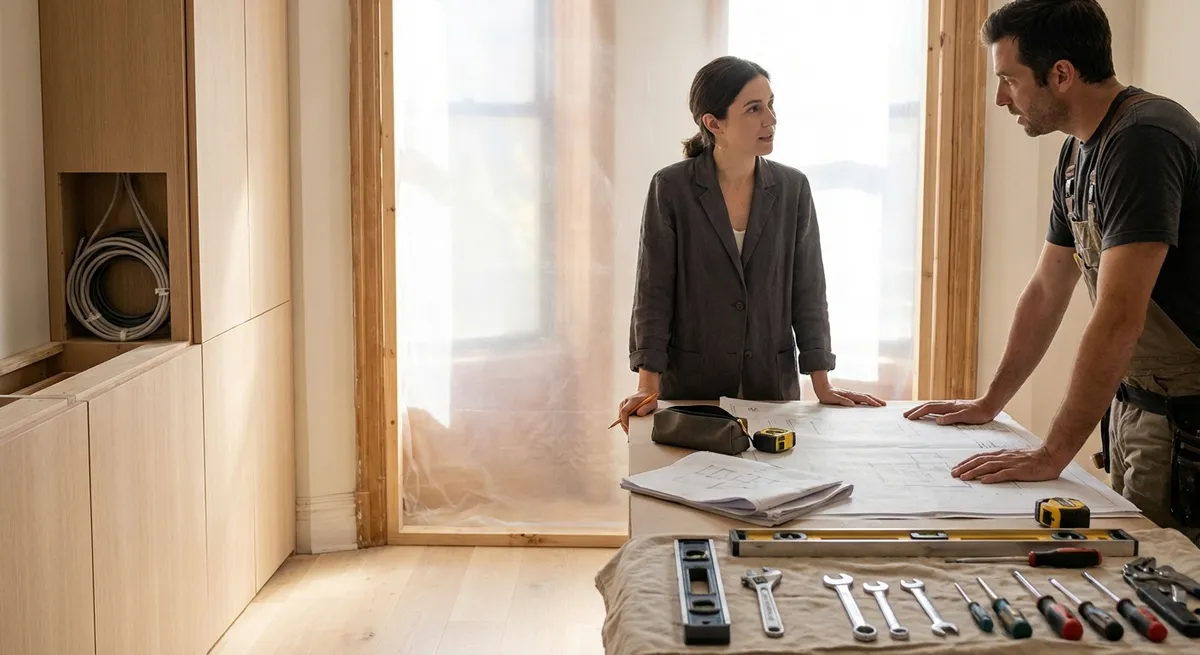
Renovation at its highest level is less about spectacle and more about orchestration. The most successful projects feel inevitable when complete—as though the home could never have been otherwise. Achieving that level of quiet confidence demands more than inspiration images and a generous budget; it requires strategy, discipline, and an appreciation for details that most homeowners never see, but always feel.
Below are five exclusive insights that serious renovators rely on—subtle, often invisible decisions that transform a project from merely “updated” to truly elevated.
Designing Backwards from Daily Rituals
Most renovations begin with moodboards and material palettes. Exceptional renovations begin with rituals.
Before you sketch a layout or approve a finish, map the choreography of your day. How do you move through the home from waking to winding down? Where do phones, keys and bags actually land? Which spaces are used daily, and which are aspirational but rarely occupied? This isn’t about idealized living; it’s about designing for the life you already lead—and the life you realistically want.
A refined renovation brief translates rituals into spatial decisions: an extra 18 inches in a hallway where two people always pass; a concealed charging drawer where devices naturally accumulate; a secondary sink in the kitchen at the true work zone, not just where plumbing already exists. When you design around ritual, luxury emerges as effortlessness: fewer compromises, smoother transitions, less friction in the smallest moments.
The test of success is simple: six months after completion, your home should feel profoundly intuitive. You should not have to think about where things go, or how you move; the space should already be telling you.
Prioritizing Structural Intelligence Over Surface Beauty
Premium projects distinguish themselves not only by what you see, but by what you’ll never need to worry about. The most intelligent renovations allocate disproportionate attention—and budget—to structure, systems, and building performance.
This means inviting the structural engineer, architect, and general contractor into the conversation early, even if you think your project is “mostly cosmetic.” Load-bearing walls, aging foundations, hidden moisture, and outdated electrical systems quietly dictate what is possible, safe, and future-proof. Ignoring them to “save” money only defers cost and multiplies disruption.
Investing in structural soundness, robust insulation, proper flashing, and upgraded electrical capacity rarely photographs well, but it protects finishes, safeguards health, and stabilizes long-term value. Premium homeowners increasingly understand that an elegant marble bath resting on compromised waterproofing is not luxury—it is a liability with a waiting date.
The most sophisticated strategy: treat every renovation as an opportunity to reset the home’s underlying performance baseline. When the bones are right, every subsequent design decision has more freedom and far less risk.
Creating a Hidden Infrastructure for Flexibility
Truly elevated homes are designed not only for today’s needs, but for tomorrow’s unknowns. Rather than guessing what the future holds, refined renovators create invisible optionality—subtle provisions that allow the home to adapt with minimal demolition and disruption.
This can be as deliberate as running conduit in key walls to accommodate future smart home wiring or EV chargers, or as subtle as designing closets and adjacent spaces to be combined into a small office, nursery, or accessible bathroom later with limited structural work. Oversizing mechanical chases slightly, planning for potential gray-water systems, or leaving access panels in strategic locations can transform future projects from invasive to controlled.
In kitchens and media spaces particularly, consider how rapidly technology and lifestyle change. A flexible power and data plan—floor outlets, redundant wiring paths, junction boxes in ceilings—keeps the home relevant long after specific hardware feels dated.
Hidden infrastructure is one of the greatest quiet luxuries: the ability to evolve gracefully without tearing apart what you’ve already invested in and learned to love.
Crafting a Material Hierarchy, Not Just a Palette
Many homeowners assemble collections of beautiful finishes, then discover they compete for attention or age unevenly. Sophisticated renovations work instead with a hierarchy of materials—an intentional system that defines what is foundational, what is accent, and what is intentionally silent.
Begin with your “quiet base”: resilient, calm surfaces that can recede—flooring, primary wall finishes, major millwork. These should be durable, repairable, and timeless in profile. Next, define your “articulation layer”: trims, hardware, fixtures that bring nuance and rhythm without shouting. Finally, identify a very limited set of “hero materials”—perhaps a stone, metal, or specialty veneer—that appear sparingly and deliberately, in spaces where you want the eye to rest.
This hierarchy achieves three powerful outcomes. First, it creates visual calm even when the home is busy. Second, it allows for strategic refreshes over time—changing lighting, hardware, or textiles without unsettling the architectural language. Third, it mitigates regret: by concentrating bold choices in focal zones and keeping broad surfaces more neutral, you maintain optionality while still enjoying distinctive character.
The most premium homes don’t announce their expense; they reveal their depth slowly, through proportion, tactility, and coherence. A clear material hierarchy is the backbone of that subtle sophistication.
Elevating Execution: The Art of the Finish Line
Many renovations falter not in concept, but in the final 10%—when fatigue sets in, small compromises accumulate, and “good enough” begins to replace “correct.” Yet this final phase is where a project either becomes magazine-worthy or quietly disappointing.
Elevated renovators treat the finish line as its own discipline. This includes a formal punch list process, scheduled walk-throughs with each trade, and a clear standard of quality communicated from the outset: alignment tolerances for tile, expectations for paint transitions, thresholds, caulking, and joinery. Millimeter-level decisions in these areas create a sense of precision that clients often can’t name but instantly recognize.
Equally critical is commissioning: systematically testing every system and element—HVAC balance, water pressure, drainage, lighting scenes, appliance performance. Adjusting a door closer, refining dimmer ranges, or correcting a subtle slope before handover can transform daily usability.
Finally, document everything. An elegant renovation includes a “house manual”: paint schedules, appliance specifications, maintenance guidelines, warranties, and as-built plans. This is the operational counterpart to quiet luxury—your future self (or a future buyer) will treat it as a mark of true professionalism and care.
Conclusion
A renovation of genuine caliber is not defined solely by its aesthetics or its budget, but by the intelligence with which it has been conceived and executed. Designing from daily rituals, prioritizing structural integrity, embedding flexibility, orchestrating a disciplined material hierarchy, and elevating the finish line—these are the levers that separate a merely updated home from one that feels inevitable, enduring, and quietly distinguished.
In a world of quick transformations and fleeting trends, the most valuable renovation is the one that grows more compelling, more comfortable, and more coherent with every passing year. That is the real quotient of refinement.
Sources
- U.S. Department of Energy – Home Remodeling – Guidance on energy-efficient upgrades and building performance considerations
- American Institute of Architects – Home Design & Remodeling – Professional perspectives on planning, structure, and design integration
- This Old House – How to Plan a Remodel – Practical frameworks for renovation planning and execution
- Harvard Joint Center for Housing Studies – Improving America’s Housing – Research and data on renovation trends, investment, and long-term value
- National Association of Home Builders – Remodeling – Industry insights on best practices, codes, and professional standards in remodeling
Key Takeaway
The most important thing to remember from this article is that this information can change how you think about Home Renovation.