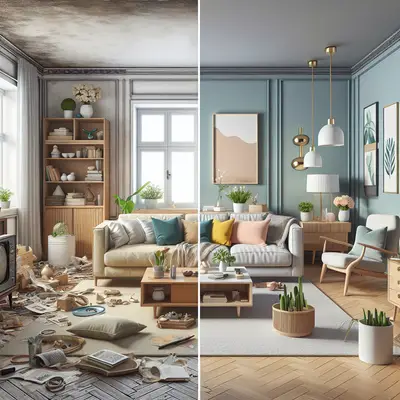
Renovation at the upper end of the market is no longer a performance of excess; it is a study in restraint, intention, and invisible competence. The most successful homes today feel effortless on arrival—quietly intelligent, deeply comfortable, and architected to serve your life without demanding your attention. This is not about marble for marble’s sake, or chasing fleeting design trends. It is about creating a residence that moves in sync with its owners: responsive, resilient, and poised to age with grace.
Below are five exclusive insights that discerning homeowners are using to shape renovations that look refined on the surface and operate with near-clinical precision beneath it.
1. Designing for the “Invisible Day”: When Your Home Works Without You
A high-caliber renovation is evaluated not only when you are entertaining, but on the most unremarkable Tuesday of the year. The “invisible day” is the quiet metric: how your home behaves when no one is trying to impress anyone.
Begin by walking through your routine from wake-up to lights out and document every friction point: where you set your keys, where you drop bags, where mail accumulates, how you move between coffee, laptop, and wardrobe. These are the pressure points that should drive layout and joinery decisions more than any singular design trend.
Custom millwork can discreetly choreograph your day: a shallow cabinet near the entry that swallows keys and chargers, concealed waste and recycling within sight lines of your prep zones, or a linen cabinet that opens toward both bedroom and bath to eliminate unnecessary steps. Power outlets inside drawers, integrated device charging in banquettes, and motion-activated lighting in circulation areas all contribute to an environment that anticipates your movements.
A home that feels “effortless” rarely is; it is meticulously strategized to remove micro-irritations that you would struggle to articulate but immediately notice once resolved.
2. Beyond Open Plan: Zoned Spaces That Respect Privacy and Acoustics
The pure open plan is quietly being reconsidered in sophisticated renovations. While large, flowing sight lines remain desirable, the conversation has evolved from tearing down every wall to editing them with precision. The goal: spatial continuity without sacrificing acoustic control, visual privacy, or opportunities for intimacy.
Zoning your home is less about square footage and more about function stacks. Group noisy activities—cooking, television, workouts—at a distance from restorative spaces such as bedrooms and reading nooks. Subtle level changes, partial-height walls, steel-framed glass partitions, and wide cased openings can delineate zones while maintaining light and volume.
Acoustics, often neglected, deserve early attention. Consider sound-absorbing materials in ceilings and walls, especially in double-height spaces and media areas. Upholstered wall panels, heavy interlined drapery, and high-quality underlayment beneath stone or timber flooring help refine soundscapes so that conversations remain private and the home never echoes like a gallery.
A well-zoned home feels socially expansive when needed yet instantly contractible—offering quiet corners, visual calm, and the ability to close a door when life demands separation.
3. Material Intelligence: Editing, Not Accumulating
Cultivated homeowners are moving away from a patchwork of “premium” finishes toward a more disciplined material palette. Rather than layering marble upon brass upon exotic wood, the elevated approach is to select a concise set of materials and explore them through variation—finish, proportion, and application.
Invest in fewer but better: a consistently specified stone carried from kitchen counters to powder room vanity; a single timber species used across flooring, doors, and bespoke furniture; a limited metal vocabulary that unifies hardware, fittings, and lighting. This creates a calm visual rhythm and makes every deviation—an unexpected texture, a sculptural light—feel intentional rather than arbitrary.
Material intelligence is also about performance. Select stones and surfaces that tolerate real life: sealed quartzites rather than delicate marbles in high-use kitchens, porcelain slabs in shower enclosures for fewer grout lines, and exterior-grade finishes in mudrooms and utility spaces that will absorb daily wear. Your designer and contractor should be comfortable providing test samples for staining, scratching, and maintenance before final specification.
The most refined interiors are not those stuffed with expensive materials, but those where every surface feels inevitable, justified, and quietly robust.
4. Quiet Technology: Integrating Intelligence Without Visual Noise
In sophisticated renovations, technology should feel like a discreet consigliere rather than an overbearing host. The objective is not to flaunt automation but to let it recede into the architecture—present, reliable, and visually silent.
Centralized lighting control, for example, allows fewer wall switches and more intentional scenes: “morning,” “arrival,” “dining,” “evening,” pre-programmed to balance natural light, art lighting, and pathway illumination. Smart thermostats, motorized shades, and occupancy sensors can significantly improve comfort and energy efficiency without adding visual clutter.
Key is to design for technology at the architectural stage, not as an afterthought. Recessed conduits, dedicated AV closets, in-ceiling speakers aligned with lighting grids, and structured cabling allow systems to evolve over time without destructive retrofits. Screens can be recessed, mirrored, or hidden behind millwork; Wi-Fi access points can be integrated into ceilings or joinery rather than dangling from shelves.
A future-facing renovation is one that can adopt the next generation of devices without rewriting the house. Think of the home as a stable shell with adaptable technological layers, not the other way around.
5. Precision Planning for Guests: Hospitality-Grade Comfort at Home
Truly refined homes think rigorously about how guests arrive, circulate, and rest. This is not a matter of creating hotel pastiche, but rather orchestrating a guest experience that feels both generous and effortlessly managed by the host.
Consider entry choreography: Is there a natural place for coats and bags that does not invade private zones? Can guests access a powder room without passing through utility spaces? Is there a logical view or focal point as they step inside—a framed garden, a curated artwork, a perfectly proportioned staircase—that signals considered design?
Guest suites benefit from a hospitality mindset: easily accessible luggage surfaces, blackout provisions, intuitive lighting controls beside the bed, accessible outlets and USB-C charging, and a clear, well-lit path to the bath. Even where space is at a premium, a built-in niche or wall-mounted shelf can offer guests a sense of ownership during their stay.
Circulation for gatherings deserves equal attention. Allow for discrete catering or prep access if you entertain frequently; ensure that service routes do not intersect with the most public social spaces. A home that appears effortlessly gracious to guests is usually underpinned by backstage planning that keeps operations invisible.
Conclusion
A renovation of genuine caliber is less about visible opulence and more about orchestrated ease. When done well, the result is a home that remains composed under daily use, anticipates its occupants’ needs, and feels quietly aligned with their standards—today and a decade from now. By designing for the invisible day, zoning with intention, practicing material discipline, integrating technology with restraint, and elevating the guest experience, you move beyond cosmetic upgrades into architecture that behaves intelligently.
The most rewarding renovations are those that do not simply photograph well in the first year, but that continue to reveal their intelligence in small, almost private ways—every time a door closes with a soft click, light rises exactly when you need it, or a space absorbs the complexities of life and still feels serene.
Sources
- [U.S. Department of Energy – Energy Saver: Home Design](https://www.energy.gov/energysaver/energy-efficient-home-design) - Guidance on designing energy-efficient homes, including zoning, insulation, and daylighting considerations that support long-term comfort and performance
- [Harvard Joint Center for Housing Studies – Improving America’s Housing](https://www.jchs.harvard.edu/research-areas/remodeling) - Research and reports on renovation trends, homeowner priorities, and long-term value in residential improvements
- [National Kitchen & Bath Association (NKBA) – Design Trends](https://nkba.org/insights/design-trends/) - Professional insights into emerging kitchen and bath design priorities, including materials, layouts, and technology integration
- [UL – Sound & Acoustics in Buildings](https://code-authorities.ul.com/about/code-authority-concepts/acoustics/) - Technical overview of acoustics in building design, relevant to zoning, privacy, and comfort in refined homes
- [CEDIA – Smart Home Technology Basics](https://cedia.org/cedia-homeowners/cedia-homeowners-what-is-a-smart-home) - Industry perspective on integrating smart home systems in a way that is reliable, discreet, and architecturally coordinated
Key Takeaway
The most important thing to remember from this article is that this information can change how you think about Home Renovation.