Renovation at its highest level is not about spectacle; it is about orchestration. The most refined homes rarely announce their transformation—they reveal it gradually, in the way light behaves at 4 p.m., in how a door closes with a soft conviction, in the quiet confidence of decisions that were made long before the first wall came down. For homeowners who expect more than a cosmetic makeover, the difference lies in a handful of disciplined, insider strategies that professionals guard closely.
Below are five exclusive insights for those planning a renovation that must feel deliberate, enduring, and impeccably resolved.
1. Design for the Next Owner You Would Respect, Not the One You Fear
Many renovations chase an imaginary “resale buyer” and end up diluted, generic, and oddly forgettable. A more intelligent approach is to design for a future owner you would respect—someone discerning, informed, and unwilling to pay a premium for superficial upgrades.
This subtle shift changes decisions. Instead of over-customizing for your current life stage, you refine the bones of the house: circulation paths, proportions of rooms, ceiling heights, daylight access, storage logic, and acoustic comfort. You don’t ask, “Will this impress at an open house?” You ask, “Will this still feel rational and elegant in 10–15 years, even if tastes shift?”
This mindset naturally favors timeless materials over trend-driven finishes, layouts that can flex with different life scenarios, and infrastructure that feels invisible but uncompromising—electrical capacity, insulation, soundproofing, ventilation, and plumbing access. You are, in essence, designing a home that will age with dignity, rather than one that peaks on the day the contractor leaves.
2. Treat Light as Architecture, Not Decor
Most homeowners select lighting near the end of a project, after the structural decisions are locked. High-level renovators do the opposite: they script the light first and let architecture respond.
Begin by mapping the choreography of natural light through the day and seasons. Identify moments where light can be borrowed—clerestory openings above doors, glazed interior partitions, widened stairwells, mirrors that double as light conduits rather than mere décor. Then layer artificial light with the same rigor: ambient (to soften and hold a room), task (to sharpen focus), and accent (to articulate form, material, and depth).
Sophisticated projects meticulously manage glare, color temperature, and control. Warm, dimmable layers can make modest materials feel richer. Thoughtful switching and zoning—such as separate controls for toe-kick lighting in bathrooms, under-cabinet lighting in kitchens, or low-level night paths—change the emotional tone of the home without a single additional square foot.
In the finest renovations, the lighting plan is read like a score: subtle crescendos between rooms, quiet passages at night, and the occasional deliberate highlight where something truly deserves to be seen.
3. Invest Where You Touch, Not Just Where You Look
One of the clearest markers of a premium renovation is how it feels under the hand, foot, and body. Visual upgrades are easy; haptic refinement is rarer—and far more persuasive.
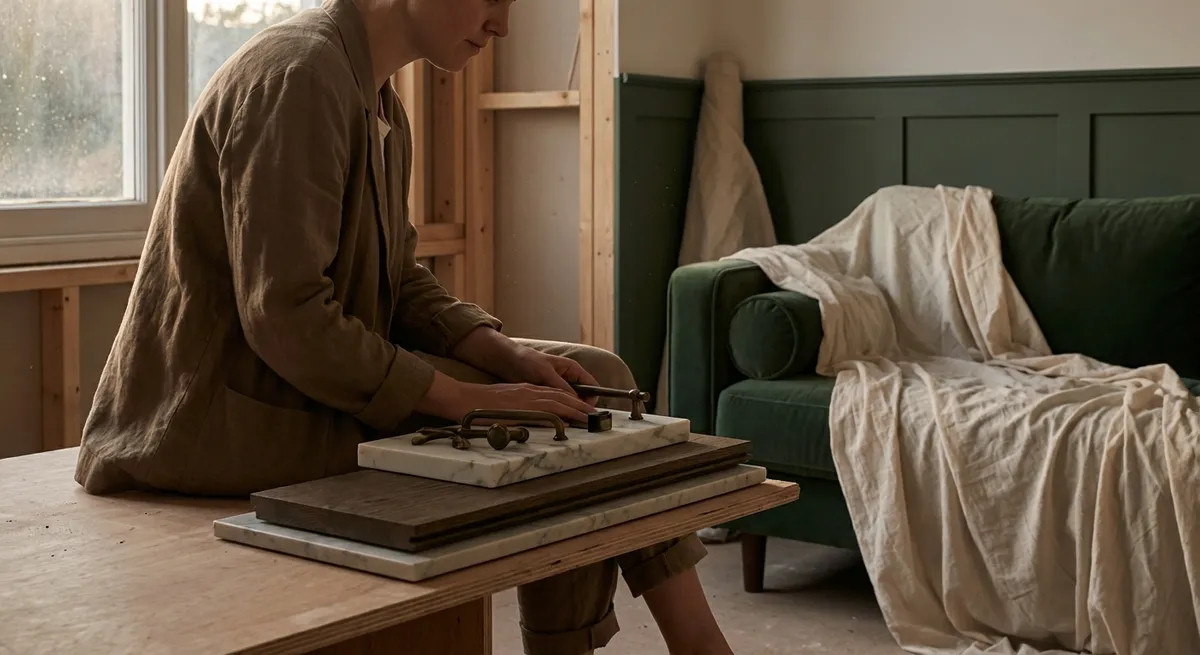
Start with the elements you handle daily: door hardware, cabinet pulls, faucet levers, banisters, window latches. The weight, temperature, and resistance of these objects communicate quality in a way that outlives nearly any color trend. A solid brass lever, a precision-machined latch, or a perfectly balanced drawer slide does more for perceived luxury than an entire accent wall.
Flooring is another critical touchpoint. The acoustic profile of each step, the subtle give underfoot, and the way the material receives light all contribute to the home’s emotional temperature. Premium projects often mix materials—stone at entries, warm wood in living spaces, softer surfaces in bedrooms—but maintain a consistent language of quality and proportion across transitions.
Finally, don’t overlook “invisible touchpoints”: how doors close, how quietly drawers return, how smoothly shades lower, how the thermostat interface responds. Every frictionless encounter adds up to an impression that the home is not only beautiful, but intelligently, almost silently, on your side.
4. Design for Silence, Not Just Space
Square footage sells, but silence sustains. One of the most underappreciated luxuries in residential design is acoustic control—a factor many renovators ignore until it is too late to rectify without major disruption.
Thoughtful planning treats silence as a core design constraint. That means placing bedrooms away from high-traffic circulation paths, separating noisy mechanical spaces from quiet zones, and strategically locating laundry rooms, powder rooms, and media areas to avoid late-night regrets. It also means attending to construction details that rarely appear on inspiration boards: resilient channels, acoustic insulation in interior partitions, solid-core doors, door seals, and soft-close mechanisms.
At a higher level, silence is curated by material choices. Hard, reflective surfaces everywhere will amplify sound; carefully placed textiles, upholstered pieces, acoustic panels disguised as art, and well-chosen rugs create gentler soundscapes. Even the design of HVAC diffusers and return grilles can reduce the subtle hiss that cheapens the overall ambiance.
Homeowners who prioritize acoustic performance discover that their renovation feels more restful, more private, and far more expensive than its actual cost would suggest. Silence, managed well, becomes a form of everyday luxury.
5. Align Craft, Not Just Style
Many renovations look costly at first glance but reveal a disjointed story when examined more closely. Faucets suggest one design era, trim work another, appliances a third—each element beautiful in isolation but incoherent as a whole. The true hallmark of a sophisticated renovation is not a singular “style,” but a consistent standard of craft across all visible and invisible layers.
This begins with a clear design language: proportion of frames and reveals, thickness of countertops, how tiles terminate at edges, how lighting fixtures align with architectural elements, and how hardware families relate from room to room. It then extends to execution: alignment of grout lines, the precision of miters, the logic of outlet placement, the integration of technology without visual clutter.
High-caliber homeowners and designers often create a “craft brief” that sits alongside the aesthetic concept: a document that defines acceptable tolerances, preferred joinery methods, edge details, and transition rules. This guide anchors the trades, reduces improvisation on-site, and keeps the project from devolving into a collage of disconnected decisions under deadline pressure.
The result is a home where every detail seems to belong—where nothing feels accidental, and nothing loudly competes for attention. Style, in such homes, is the byproduct of disciplined craft, not an overlay trying to hide imprecision.
Conclusion
The most compelling renovations rarely rely on overt statements or fashionable gestures. They distinguish themselves through nuance: how light is orchestrated, how quietly the house behaves, how confidently one space hands you off to the next. By designing for a future owner you would respect, treating light as architecture, privileging touch over mere appearance, cultivating silence, and insisting on aligned craft, you move beyond “updated” into something far less common—resolved.
A renovation executed at this level is not simply an improvement; it becomes a quiet manifesto about how you expect your home to serve you, day after day, year after year, without ever having to raise its voice.
Sources
- Harvard Joint Center for Housing Studies – Improving America’s Housing – Data and analysis on renovation trends, spending, and long-term improvement patterns.
- National Institute of Building Sciences – Whole Building Design Guide – Guidance on integrated design principles including light, acoustics, and holistic performance.
- U.S. Department of Energy – Energy Saver: Passive Solar Home Design – Insights into harnessing natural light and heat, relevant for early-stage renovation planning.
- U.S. Environmental Protection Agency – Indoor Air Quality – Background on healthy indoor environments, ventilation, and building systems that support comfort.
- GSA – Sound Matters: How to Achieve Acoustic Comfort in Buildings – Practical and technical considerations for acoustic performance that can be applied to high-end residential projects.
Key Takeaway
The most important thing to remember from this article is that this information can change how you think about Home Renovation.