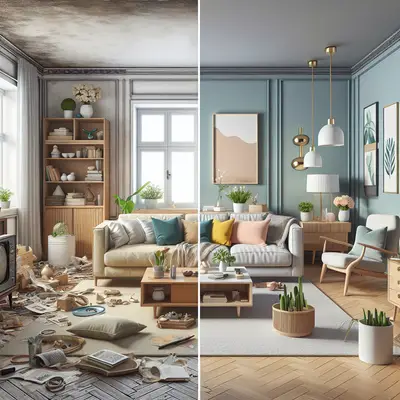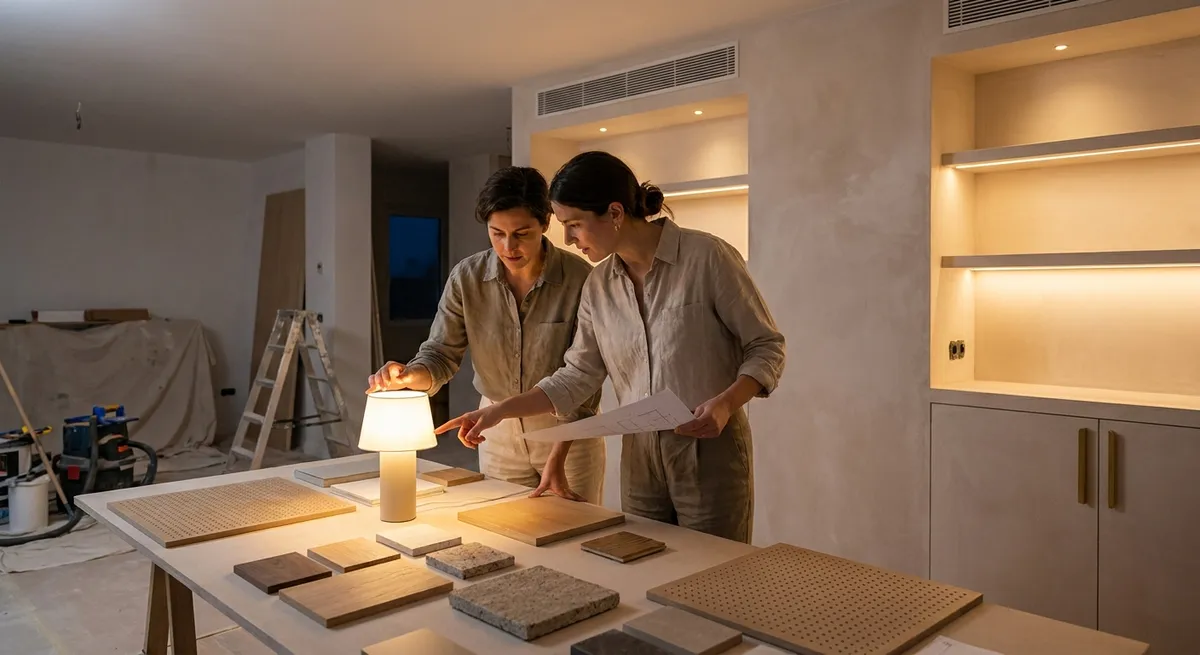
A truly elevated renovation is rarely about spectacle. It’s about the decisions no one sees, the alignments only a trained eye notices, and the calm assurance that every element has been placed with intent. For the Renovate Quotient homeowner, success is measured not only in beauty, but in longevity, discretion, and a sense of composed ease that lingers long after the last contractor leaves.
Below are five exclusive, underutilized insights that separate a merely “updated” property from a renovation that feels inherently, quietly exceptional.
1. Designing for Silence: Acoustic Comfort as a Luxury Finish
Most renovation plans treat acoustics as an afterthought—if they address it at all. Yet, in a refined home, quiet is not accidental; it is engineered.
Thoughtful acoustic planning begins at the bones of the project: wall assemblies, subfloors, insulation choices, and door construction. Upgrading to solid-core interior doors, adding acoustic underlayment beneath hardwood or stone, and specifying mineral wool insulation in key walls (bedrooms, bathrooms, home offices, media rooms) can drastically reduce sound transfer without altering the visual design. Even seemingly decorative moves—full-length drapery, fabric wall panels, built-in bookcases—can be calibrated to absorb or diffuse sound.
The result is a home where conversations stay where they belong, footsteps soften, and mechanical noise recedes into the background. It’s the kind of comfort that guests can’t quite name, but immediately feel. In a world of open plans and hard surfaces, the quietest homes often feel the most sophisticated.
2. The Hidden Grid: Alignments, Sightlines, and the Art of Subtle Order
Luxury in architecture often reveals itself through a sense of effortless order—nothing obviously calls attention to itself, yet everything appears “just right.” That effect is rarely accidental; it’s the product of a disciplined commitment to alignments and sightlines.
Consider how door heads, window heads, and built-in cabinetry can be brought to a consistent datum line along a corridor or within a living space. Outlet and switch placement can be subtly rationalized so they neither fight with artwork nor clutter focal walls. HVAC grilles can be integrated within millwork reveals rather than scattered randomly across ceilings.
Before construction, walk the home (or a 3D model) as though you were a guest entering for the first time. Stand in each threshold and study what you see directly in front of you: Does a hallway terminate in a carefully framed view or in the side of an appliance? Does a corridor reveal layered light or a tangle of door swings? Adjusting walls by as little as two or three inches, re-centering openings, or reshaping a transition can fundamentally change how gracefully the home reveals itself.
These are surgical moves, but their collective impact is profound: your home reads as composed, not crowded; intentional, not improvised.
3. Intelligent Infrastructure: Future-Proofing the Invisible Systems
An elegant renovation doesn’t just serve you this year; it anticipates the next decade. While most homeowners concentrate on surfaces and fixtures, the quietly strategic ones invest in infrastructure—upgrades that may not appear on a listing photo, but absolutely affect valuation, comfort, and resilience.
This might mean:
- Electrical capacity and pathways: Upgrading the panel and adding conduit runs or empty chases in walls for future wiring (EV chargers, expanded home office needs, whole-house networking, or security upgrades).
- Mechanical zoning and distribution: Reconfiguring HVAC into multiple zones with smart controls to fine-tune comfort and efficiency in different wings or floors of the home.
- Water management and plumbing: Adding shutoff valves at strategic locations, installing leak detection systems near laundry and mechanical rooms, and considering recirculating hot water loops to reduce waste and waiting time.
- Structured low-voltage backbone: Running CAT6 or better cabling to key locations (offices, media spaces, ceilings for access points) even if the technology mix changes later; robust hardwiring stays valuable.
These choices are the architectural equivalent of a tailored garment with reinforced stitching and hand-finished seams. No one notices them at first glance—but they determine how well the piece wears, adapts, and performs over time.
4. Layered Lighting: Curating Atmosphere Rather Than Simply Illuminating
The difference between a renovated space that feels “finished” and one that feels quietly cinematic is often lighting—not just in quantity, but in hierarchy and control.
Instead of defaulting to uniform recessed cans, consider a layered composition:
- Ambient: Soft, indirect lighting through coves, wall washes, or well-placed ceiling fixtures that create an overall glow without glare.
- Task: Thoughtful illumination exactly where it is needed—under-cabinet lighting in kitchens, focused reading lights at seating, mirror lighting designed to flatter rather than flatten.
- Accent: Discreet fixtures to graze textured walls, highlight art, or pick out architectural details, adding depth and drama.
- Decorative: Pendants and chandeliers that are as much sculptural objects as light sources, used intentionally rather than by default.
Pair this with a control strategy that respects the cadence of real life: pre-set scenes for “Evening Guests,” “Quiet Morning,” “Work Mode,” or “Night Path” help the home respond effortlessly to you rather than demanding constant adjustment. Dimmers and scene controls should be standard, not upgrades.
In a cultivated renovation, lighting is not merely a utility—it's a choreography. The more carefully it is planned, the more the home feels poised, grounded, and subtly luxurious.
5. Material Narratives: Specifying for Patina, Not Perfection
Premium renovations often fail, paradoxically, by aiming for a static kind of perfection—surfaces that look immaculate on day one and then slowly, inevitably, betray the life lived within them. A more refined approach respects patina as part of the design brief from the outset.
Begin by distinguishing which elements should remain crisply unchanged (e.g., window seals, structural components, weather barriers) versus those that can age gracefully (e.g., natural stone, solid wood, unlacquered hardware). Selecting materials with a known, attractive aging profile—oiled oak instead of plastic-laminate lookalikes, honed rather than highly polished stone, unlacquered brass over thinly plated finishes—allows the home to gather character without appearing tired.
Equally important is specifying maintenance protocols during design, not as an afterthought. A limestone floor or marble countertop can be entirely appropriate in a kitchen if you are honest about sealers, cleaning products, and periodic professional care. The true luxury is not the absence of change, but the assurance that change will remain beautiful.
When curated with this mindset, your renovation becomes less a snapshot and more an unfolding narrative. The home ages as you do—gracefully, intentionally, and with a kind of integrity that quick-fix remodels can never match.
Conclusion
A sophisticated renovation is defined less by what it flaunts and more by what it quietly perfects. Acoustic serenity, disciplined alignments, future-ready infrastructure, orchestrated lighting, and a thoughtful relationship to patina are not always visible in photographs—but they’re unmistakable in person.
For the homeowner who values composure over spectacle, these five insights form a discreet advantage. They turn a renovation from a series of isolated upgrades into a coherent, enduring experience—one that feels as considered in its smallest junction as in its grandest room.
Sources
- U.S. Department of Energy – Energy Saver: Heating & Cooling – Guidance on HVAC zoning, efficiency, and system planning relevant to mechanical upgrades in renovations
- Harvard Joint Center for Housing Studies – Improving America’s Housing – Research on renovation trends, investment in existing housing stock, and long-term value of infrastructural improvements
- National Institute for Occupational Safety and Health (NIOSH) – Noise and Hearing Loss Prevention – Technical insight into sound, decibel levels, and noise mitigation strategies applicable to residential acoustic planning
- Illuminating Engineering Society (IES) – Professional standards and best practices for lighting design, including layering and visual comfort
- American Institute of Architects (AIA) – Home Design Resources – Articles and guidance on residential design principles, including sightlines, material selection, and long-term planning
Key Takeaway
The most important thing to remember from this article is that this information can change how you think about Home Renovation.