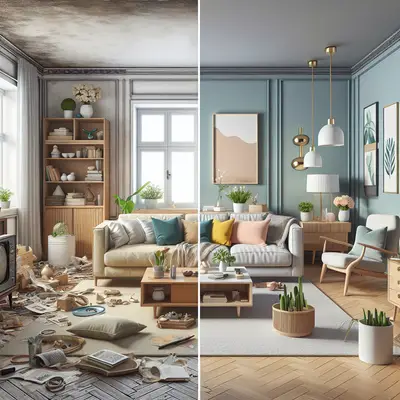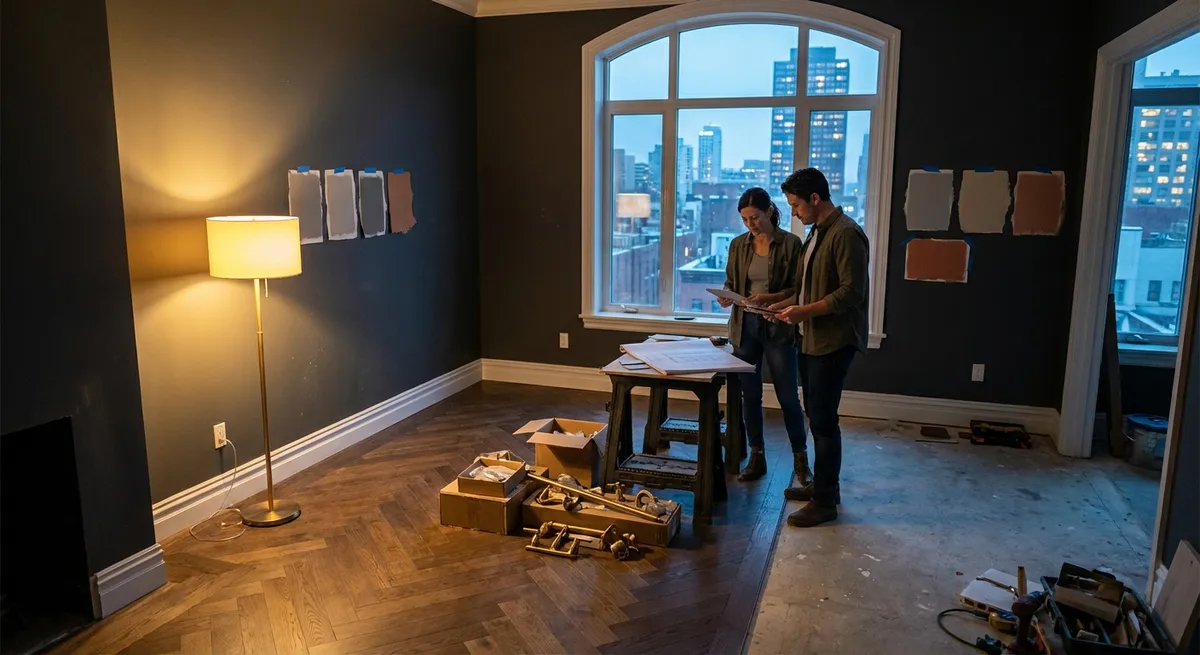
Renovation at its highest level is not about spending more; it is about knowing precisely where and how to apply pressure. The most accomplished homeowners treat their projects less like shopping and more like curation—of space, light, function, and long-term value. What follows are five underused but powerful levers that separate a merely “updated” home from one that feels resolutely considered and quietly exceptional.
1. Design the Daily Route, Not Just the Rooms
Most projects begin with rooms as discrete checkboxes: kitchen, primary suite, office, mudroom. The refined approach starts with choreography—how you actually move through the home from morning to night.
Map your daily routes before you finalize a single drawing. Trace how you enter with groceries, where you drop keys and bags, how you transition from work mode to evening, where you read, how guests move from arrival to dining to a nightcap. Ask your designer or architect to overlay these routes on the floor plan and highlight points of friction: tight pinch-points, awkward doors, appliance conflicts, sightlines to clutter zones, or noisy overlaps between quiet and active spaces.
From there, refine circulation as if you were editing a film. Slightly widen high-traffic corridors, realign doors so they don’t collide, create micro “pause points” for a console, bench, or art piece where traffic naturally slows. Align storage with movement—coat closet and shoe storage at the exact moment you remove shoes, a charging drawer where you actually drop devices, pull-out pantry storage adjacent to prep, not just “in the kitchen.”
This is the level at which the home begins to feel uncannily easy to live in—where guests comment that your space “just works” without quite understanding why.
2. Treat Natural Light as an Architectural Material
Paint color and furniture often receive the bulk of attention, yet natural light is the invisible luxury that determines whether those elements sing or fall flat. A sophisticated renovation treats daylight as a primary building material, not an afterthought.
Begin by documenting how light behaves in your home over an entire day and in each season: which rooms are starved of light, which overheat, where glare is a problem, and where the sunset quietly disappears behind a wall. Use this to inform window placement, size, and glazing decisions—not just aesthetics.
North-facing light is steady and flattering, ideal for offices and studios. East light suits breakfast spaces and morning routines; west light can be magical in living rooms but harsh in kitchens and home offices without shading strategies. South light can be generous but demands attention to overhangs, low-e coatings, and window treatments to avoid turning spaces into greenhouses.
Layer your daylight strategy: combine clerestory windows for privacy and sky views, a selectively placed skylight or sun tunnel for dark interior zones, and larger openings where views are worthy of framing. Then choreograph artificial light to complement—not compete with—natural light, using dimmable, warmer fixtures in the evening to align with circadian rhythm and reduce visual fatigue.
The result is a home that feels alive at 8 a.m., serene at 3 p.m., and quietly luminous after dark, without resorting to aggressive overhead glare.
3. Build a Performance Brief, Not Just a Style Moodboard
Most homeowners arrive at their first design meeting armed with imagery: saved posts, inspiration boards, product screenshots. That aesthetic research is valuable—but incomplete. The truly elevated renovation begins with a performance brief that defines what the home must do, not merely how it should look.
Think in terms of measurable, experience-based targets. Acoustic comfort: can you hold a phone call in the office while a movie plays in the next room? Thermal comfort: are you targeting stable temperatures across seasons and rooms with minimal hot/cold zones? Air quality: will you integrate high-efficiency filtration and thoughtful ventilation, particularly in kitchens and bedrooms? Maintenance: how many hours per week are you willing to devote to upkeep?
Formalize these in writing, alongside aesthetic cues. A performance brief might specify: preferred interior temperature range, target noise reduction between floors, ideal lighting levels in workspaces, durability expectations for surfaces (e.g., stone that tolerates patina vs. surfaces that must remain pristine), and cleaning preferences (you may favor materials that look better slightly imperfect if you dislike constant polishing).
Share this with your entire project team—designer, architect, builder, and key trades—and revisit it at each major decision point. When a choice arises between the beautiful but noisy, and the quietly excellent but less flashy, a strong performance brief keeps the project aligned with your long-term comfort and sanity.
4. Conceal Complexity, Elevate Simplicity
Refined homes often appear deceptively simple: a clean wall plane, a single continuous floor material, an unbroken ceiling line. Achieving that effortlessness requires deliberately managing where complexity is allowed to exist—and where it must disappear.
Instead of letting mechanicals, AV equipment, routers, and utility functions scatter room by room, consolidate them into well-planned “backstage zones”: a proper mechanical closet, a concealed media hub, a charging and mail station tucked behind doors. In kitchens, consider a fully integrated appliance wall and a modestly sized “hidden pantry” where countertop appliances live in daily use but out of sight.
Plan elevations—what you see when you stand or sit in each space—with ruthless clarity. Aim to keep visual noise low on your primary sightlines: minimal outlet clutter on feature walls, HVAC registers integrated with trim, lighting and speakers aligned in disciplined grids rather than randomly sprinkled. Ask specifically for flush transitions where different materials meet—flooring to thresholds, tile to drywall, millwork to stone—because these junctions often determine whether your renovation reads as truly elevated or merely “nice.”
This approach does not demand maximal spending. It demands coordination and intent—asking trades to collaborate early so ducts, wiring, insulation, and structure support the calm, integrated envelope you see and live with every day.
5. Design for Future You, Not Just Present You
Many renovations over-index on immediate life circumstances—young children, current work setup, or a particular aesthetic mood—without accounting for how quickly those variables change. A sophisticated renovation is not frozen in time; it is quietly pre-wired (sometimes literally) for graceful evolution.
Begin by identifying your probable scenarios over the next 10–15 years: remote or hybrid work patterns, aging in place considerations, guest or multigenerational living, potential resale, or shifts in mobility and health. You don’t need to build everything now; instead, design in capability.
This might look like: reinforcing bathroom walls now for future grab bar installation without opening them later; slightly widening key doorways and hallways; designing a “flex room” that can move from office to nursery to den with minimal disruption; pre-wiring for additional EV charging, solar integration, or smart-home infrastructure; choosing flooring and stair details that will age well with pets, children, and future owners.
Also consider timelessness not as a constraint, but as a strategy: invest in enduring architectural elements—proportions, light quality, durable materials—while keeping trend-sensitive elements (paint colors, decorative lighting, textiles) easy to update. This layering allows your home to evolve gracefully without constant large-scale overhauls.
By planning for the future as rigorously as the present, you convert your renovation from a one-time event into a long-arc investment that continues to feel relevant, accommodating, and quietly luxurious for years beyond its completion.
Conclusion
A renovation of true distinction is not defined by square footage or brand names. It is defined by the invisible intelligence underneath: the way your home anticipates your movements, flatters daylight, performs quietly in the background, hides complexity, and adapts to the arc of your life.
If you approach your project through these five lenses—daily routes, natural light, performance, controlled complexity, and future-readiness—you move beyond “updated” and into the rare territory of a home that feels considered, composed, and deeply attuned to the way you live. That is the Renovate Quotient: the difference between a project that impresses at the reveal, and one that continues to reward you, quietly and consistently, long after the last tradesperson has left.
Sources
- [U.S. Department of Energy – Daylighting](https://www.energy.gov/energysaver/daylighting) – Explains principles of daylighting, window orientation, and energy-conscious light strategies.
- [Harvard T.H. Chan School of Public Health – The 9 Foundations of a Healthy Building](https://www.hsph.harvard.edu/healthybuildings/9-foundations-of-a-healthy-building/) – Outlines core performance factors like air quality, thermal comfort, and lighting that inform a strong renovation performance brief.
- [U.S. Environmental Protection Agency – Indoor Air Quality Basics](https://www.epa.gov/indoor-air-quality-iaq/inside-story-guide-indoor-air-quality) – Provides guidance on ventilation, filtration, and source control relevant to high-performing homes.
- [National Institute on Aging – Home Safety and Aging in Place](https://www.nia.nih.gov/health/home-safety-and-fall-prevention-older-adults) – Offers considerations that translate into future-ready renovation decisions, especially for accessibility.
- [Columbia University – Center for Urban Real Estate: Design and Value](https://sipa.columbia.edu/academics/research-centers-and-programs/center-urban-real-estate) – Discusses how thoughtful design and long-term performance contribute to property value and livability.
Key Takeaway
The most important thing to remember from this article is that this information can change how you think about Home Renovation.