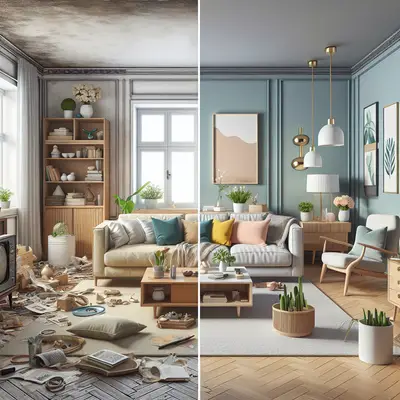
Most renovations chase the obvious: new finishes, updated layouts, fresh color palettes. The truly elevated projects, however, are defined less by what you see at a glance and more by the intelligent decisions concealed beneath the surface. For homeowners with a refined eye, the goal is not simply to “update,” but to orchestrate a home that feels composed, deliberate, and quietly exceptional.
Below are five exclusive, under-discussed insights that give discerning renovators a genuine strategic edge—guiding you toward a home that feels as considered as it looks.
Insight 1: Design the Way You Move, Not Just the Way Rooms Look
Most renovation plans begin with aesthetics: countertops, flooring, paint. A more sophisticated approach starts with choreography—mapping how you and your household actually move through the space, hour by hour, season by season.
Begin by observing a typical week: where clutter accumulates, where bottlenecks form, where conversations naturally happen, and where you seek refuge. Let these patterns dictate structural decisions: widening a hallway that’s constantly congested, adding a secondary prep sink where two people collide in the kitchen, carving out a concealed charging drawer where devices habitually pile up.
This movement-first lens transforms your floor plan into an experience rather than a collection of rooms. It can even reduce future remodeling, because the space is tailored to lived behavior rather than surface-level trends. A home that anticipates you—lighting that cues as you cross thresholds, storage precisely where tasks begin and end—feels more luxurious than any single high-end material choice.
Insight 2: Invest in “Invisible Comfort” as Your True Luxury Upgrade
Underfloor heating, acoustic insulation, air quality management, and thermal zoning seldom appear in glossy before-and-after photos—yet they are the daily difference between a home that looks expensive and one that lives luxuriously.
Prioritize upgrades that refine your sensory environment:
- Enhanced insulation and high-performance windows that quiet the street and stabilize temperatures
- Dedicated ventilation or air purification that manages humidity, allergens, and cooking byproducts
- Thoughtful HVAC zoning so bedrooms, living areas, and workspaces can be individually tuned
- Radiant heating in baths and entryways to eliminate cold-tile shock
These upgrades often improve energy efficiency, reduce long-term operating costs, and increase resale desirability in ways that cosmetic changes cannot match. They also create the subtle, enveloping comfort guests can’t quite name—but remember.
Insight 3: Treat Lighting as Architectural Infrastructure, Not Decoration
In refined renovations, lighting is planned at the same level as plumbing and structure, not sprinkled in at the end as an accessory. A well-considered plan sculpts the space, emphasizes texture, and shifts seamlessly from daytime clarity to evening intimacy.
Think in layers rather than fixtures:
- Ambient lighting for overall glow, often with indirect or cove lighting to soften ceilings
- Task lighting exactly where you cook, read, groom, and work—no guessing, no shadows
- Accent lighting to graze stone, art, millwork, or architectural reveals, adding depth and drama
- Adaptive controls with dimmers, scenes, and smart integration, so mood can change with a single touch
Begin your lighting decisions as soon as you finalize the floor plan, not after. This allows you to recess housings cleanly, conceal wiring, and integrate lighting into joinery, niches, and architectural details instead of relying on exposed solutions. A meticulously lit space feels inherently tailored, even with a restrained material palette.
Insight 4: Use Joinery and Built-Ins to Quiet Visual Noise
Clutter is rarely solved by buying more storage; it is solved by smarter, more intentional storage. High-end renovations leverage tailored joinery—built-in cabinetry, integrated niches, and concealed compartments—to reduce visual noise and create a sense of calm order.
Consider storage not as an afterthought, but as an aesthetic discipline:
- Design full-height cabinetry to eliminate dust-catching gaps and awkward transitions
- Integrate appliance garages, hidden recycling centers, and pull-out pantries behind unified fronts
- Use concealed hinges, integrated pulls, and panel-ready appliances for seamless visual lines
- Build discreet “drop zones” near entries, so shoes, bags, and mail never spill into formal spaces
When cabinetry aligns with architectural elements—door heights, window heads, and sightlines—the entire interior reads as intentional, not improvised. This composed stillness is one of the hallmarks of sophisticated residential design.
Insight 5: Curate a Long-Horizon Materials Strategy, Not a Trend Snapshot
Elevated renovations resist the urge to chase every current finish or color. Instead, they’re anchored by a long-horizon materials strategy: decisions that will remain resonant and credible years from now.
To do this well:
- Start with a restrained, timeless base palette for fixed elements: flooring, major tile, primary stone
- Layer in character through texture—brushed metals, honed stone, open-grain timber—rather than loud patterns
- Reserve trend-forward expressions for easily updated components like paint, soft furnishings, or small-format tiles
- Evaluate each material not just for appearance, but for how it will patina, clean, and age under real use
Ask of every choice: Will this still feel deliberate in a decade, or will it timestamp the renovation to a specific year? The answer will guide you toward materials that age with dignity rather than fatigue. A home that grows more compelling over time is the ultimate premium outcome.
Conclusion
A refined renovation is not defined by how dramatically “before” differs from “after,” but by how intelligently your home anticipates your life once the contractors leave. When you design for movement rather than mere appearance, prioritize invisible comfort, elevate lighting to an architectural decision, deploy joinery as a visual silencer, and choose materials with a long horizon, you step beyond standard upgrading into true curation.
These five insights are less about spending more and more about spending with precision. For the discerning homeowner, that is the real luxury: a home that feels composed, effortless, and quietly exceptional—every single day.
Sources
- U.S. Department of Energy – Energy Saver: Home Energy Upgrades – Guidance on insulation, windows, and HVAC improvements that enhance comfort and efficiency
- Harvard Joint Center for Housing Studies – Improving America’s Housing – Research and analysis on renovation trends, investment patterns, and long-term value
- Illuminating Engineering Society (IES) – Lighting Fundamentals – Foundational principles for planning layered lighting in residential spaces
- American Society of Heating, Refrigerating and Air-Conditioning Engineers (ASHRAE) – Technical resources on indoor environmental quality, HVAC zoning, and comfort
- Cornell University – Human Factors and Ergonomics Resources – Research on human movement, task performance, and ergonomics that underpins behavior-led space planning
Key Takeaway
The most important thing to remember from this article is that this information can change how you think about Home Renovation.