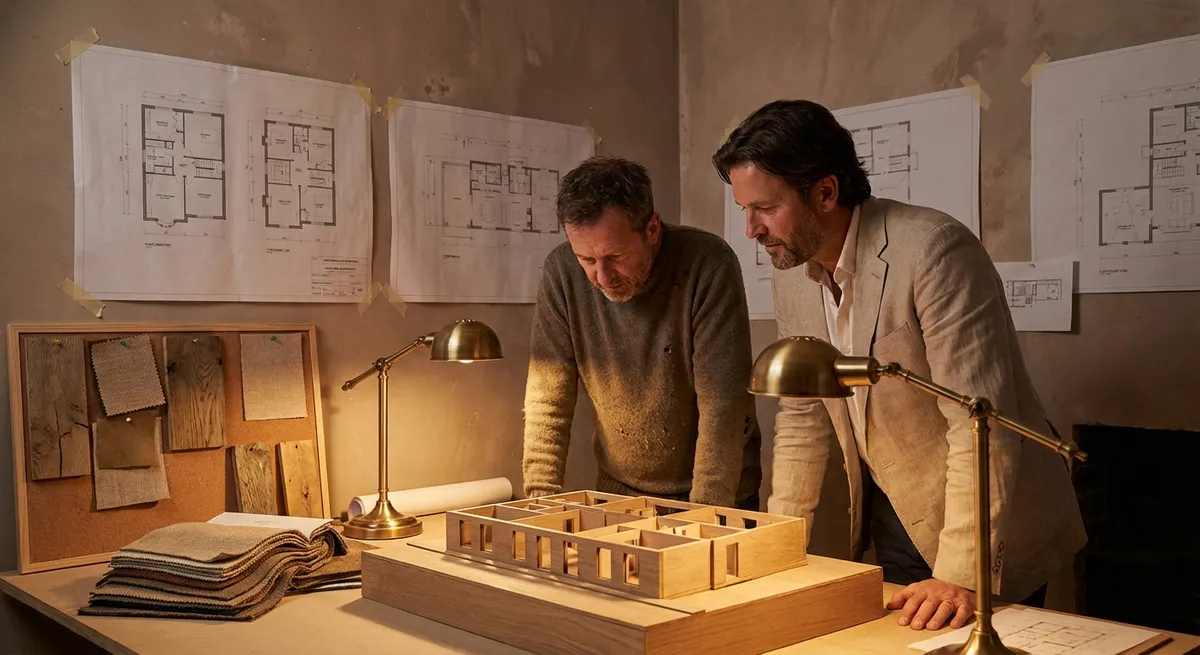
Renovation at its highest level is less about demolition and more about direction. The most successful projects do not begin with moodboards or materials; they begin with a precise, unhurried plan that orchestrates every decision to serve a larger vision of how you want to live. For homeowners seeking an elevated result—not merely a refreshed kitchen, but a redefined way of inhabiting their space—project planning becomes an art form in its own right.
This is the realm where a renovation is choreographed, not improvised; where time, budget, design, and craftsmanship are aligned with the same discipline you might expect from a well-run boutique hotel or gallery. What follows is a planning framework anchored by five exclusive, often overlooked insights—subtle levers that quietly transform a renovation from competent to exceptional.
Begin with a Lifestyle Brief, Not a Design Concept
Most projects start too far downstream: with aesthetics, fixtures, and floorplans. A truly elevated renovation begins with a lifestyle brief—a document that captures how you want your life to feel in the renovated home, before a single drawing is produced.
Instead of listing “must-have” finishes, articulate patterns of use: early-morning rituals, how you entertain, how you decompress, where you work, where you avoid clutter at all costs. Consider the sensory dimension: preferred levels of quiet, natural light, privacy, and tactile comfort. Are you hosting multi-generational gatherings or intimate dinners? Do you want your kitchen to perform like a professional workspace or read as a seamless extension of living areas?
This lifestyle brief becomes a strategic filter. When trade-offs arise (and they will), your team can ask: “Does this support the way the client intends to live?” It prevents the common scenario where a space looks impressive yet feels subtly misaligned with its occupants. The lifestyle brief is also a powerful tool when interviewing designers and contractors—you are not asking them merely to “build a new bathroom,” but to interpret and support a defined way of living.
Build a Decision Architecture Before You Build a Schedule
Project timelines often fail not because work takes longer than expected, but because decisions do. A premium renovation requires a structured “decision architecture”: a deliberate sequence of what must be decided, by whom, and by when, long before you see the first dust sheet.
Rather than a single Gantt chart for construction, request two integrated schedules: one for build activities and one for decisions and approvals. Map all high-impact decisions—layout, mechanical systems, window and door specs, key finishes, built-ins, lighting plans—against lead times and dependencies. For example, stone slab selections may influence cabinetry dimensions, which in turn affect electrical locations; rushing these in the field almost always diminishes the final result.
Within this decision architecture, define escalation rules. Which decisions can be made by your designer or project manager within a set budget threshold? Which require your review, and what is the maximum time you’ll allow yourself? This structure preserves momentum without sacrificing intentionality. The outcome is not just fewer delays, but a renovation in which major choices are made thoughtfully, not under the pressure of an arriving installer.
Treat Invisible Infrastructure as a Design Asset, Not a Line Item
At the planning stage, infrastructure—electrical, HVAC, plumbing, insulation, smart-home wiring—often gets treated as a necessary expense to be minimized. Discerning homeowners treat it as a quiet design asset, one that profoundly shapes comfort, acoustics, and long-term flexibility.
From the outset, invite your design and build teams to propose an “infrastructure concept” alongside the aesthetic concept. This might include noise-controlled ventilation, zoned heating and cooling, advanced water filtration, future-proofed wiring for evolving technology, or subtle acoustic treatment. Decide early whether you are designing for today’s needs or for a 15–20 year horizon of use; that choice will influence everything from structural allowances to low-voltage runs for integrated lighting or motorized shading.
This shift in thinking changes how you interpret budget conversations. Instead of asking, “How do we keep mechanical costs down?” you might ask, “What level of calm, air quality, and adaptability do we want, and what systems architecture supports that ambition?” The visible finishes are what guests admire; the invisible infrastructure is what you feel every day at 6 a.m. and 11 p.m. Planning for it with intention is one of the most sophisticated moves you can make.
Design the Project’s Communication Culture as Carefully as the Floorplan
The single most determining factor in renovation satisfaction is not usually design or even cost—it is communication. Yet most projects treat communication as a byproduct, rather than as something to be architected from the outset.
Before work begins, define the project’s communication culture in writing. Decide on a central channel (a shared project management platform, not scattered text threads), establish update rhythms (for example, weekly written reports with photos, upcoming decisions, change orders, and risk notes), and assign a single point of contact empowered to coordinate among trades. Clarify the format of on-site meetings, how disagreements are handled, and how changes are documented and priced.
Consider commissioning a “project charter” at the beginning—a short, formal document capturing the project’s overarching intent, non-negotiables, and standards of conduct among all parties. This becomes the north star when tensions rise or decisions need revisiting. A well-designed communication culture does more than avoid misunderstandings; it allows the level of craftsmanship and detail you’re seeking to actually be executed, because questions, clarifications, and refinements have an elegant, predictable place to live.
Curate Moments of Pause into the Planning Process
Premium results often emerge not from doing more, but from allowing space to reconsider. Yet most renovation schedules leave no room for strategic pause; decisions cascade until the project locks itself into a path that may no longer reflect your best thinking.
During planning, intentionally build in “review windows” at key milestones: after schematic design, after detailed design, after initial pricing, and before major orders are placed. These are not generic check-ins; they are pre-planned opportunities to step back and interrogate the project against your original lifestyle brief and investment strategy. Does the plan still reflect how you actually intend to live, work, host, and rest? Have early design ideas been superseded by better insights as you’ve sat with the drawings?
Treat these pauses as selectively as you would a limited-edition purchase: infrequent, deliberate, and consequential. You might use them to simplify a layout, elevate one or two key materials, reallocate budget from decorative to structural enhancements, or refine circulation so that daily living feels more fluid. By curating these moments of reflection into the project structure itself, you give the renovation room to become sharper and more coherent instead of merely more expensive.
Conclusion
An exceptional renovation is not the result of a single bold gesture; it is the cumulative effect of hundreds of intentional choices, guided by a plan that thinks further ahead and more deeply than most projects ever do. When you begin with a lifestyle brief, structure your decision-making, treat infrastructure as a design asset, architect your project’s communication, and protect a few well-timed pauses, you create conditions in which excellence is not accidental—it is inevitable.
In the end, the true luxury is not just the marble, the millwork, or the lighting. It is the calm, precise confidence that your home has been shaped to anticipate you—your rituals, your standards, your pace—by a planning process as considered as the space it creates.
Sources
- U.S. Department of Energy – Energy-Efficient Home Design - Authoritative guidance on planning building systems and envelope performance that informs infrastructure decisions.
- Harvard Joint Center for Housing Studies – Improving America’s Housing - Research on renovation trends, spending patterns, and homeowner behavior that underpins strategic planning considerations.
- American Institute of Architects (AIA) – Working with an Architect - Professional recommendations on defining scope, communication structures, and project workflows with design teams.
- National Association of Home Builders (NAHB) – How to Hire a Contractor - Practical criteria for selecting and managing contractors, relevant to building a project’s communication and decision framework.
- Cornell University – Lighting, Comfort, and Productivity in Buildings - Research-backed insights on environmental comfort that inform lifestyle briefs and infrastructure planning.
Key Takeaway
The most important thing to remember from this article is that this information can change how you think about Project Planning.