Renovation at its most refined is not about spectacle; it is about poise. The most successful projects rarely announce themselves loudly—they feel inevitable, as though the home could never have been any other way. For homeowners seeking a renovation that balances aesthetic grace with strategic depth, the key lies in decisions that are as intelligent as they are beautiful. The following five insights reveal how to think like a sophisticated steward of your home, not merely a consumer of finishes.
Designing for the Gaps You Don’t See
Elegant renovations begin by addressing what is missing, not what is merely outdated. Rather than starting with paint colors or fixtures, start with the “gaps” in how the home performs: spaces that never feel comfortable, circulation that feels awkward, rooms that never get used, and views that are blocked or underappreciated.
Map a single day and a single week in your home: where you drop items when you enter, where clutter collects without fail, which rooms feel “dead” by evening, where family members naturally gravitate. The most effective design interventions often involve subtle reallocation—narrowing an over-wide hallway to gain storage, borrowing a sliver of space from a guest room to enlarge a primary closet, or aligning doorways to create quiet sightlines and light corridors.
This approach yields renovations that feel surprisingly transformative even when the changes on paper look modest. When you address circulation, function, and daily rituals first, every later design decision—materials, lighting, furniture—gains a context that makes the home feel intuitively right rather than merely updated.
The Layered Lighting Mindset: Beyond “Bright Enough”
Most homes are lit for visibility, not experience. A sophisticated renovation treats light as a layered composition rather than a binary on/off condition. The aim is not maximum brightness but the ability to orchestrate different moods with precision.
Think in four layers: ambient (general), task (functional), accent (sculptural), and concealed (indirect). Recessed downlights alone flatten a room; pairing them with wall washers to graze textured surfaces, under-cabinet strips for clean task lighting, and cove or toe-kick lighting for soft glow creates depth and visual calm. Dimmer switches are not luxuries but control tools—being able to shift a room from “morning focus” to “evening unwind” with a touch is a quiet form of luxury.
Plan lighting around use scenarios rather than room labels. A dining area might need high CRI (color-accurate) pendants for entertaining, but also subtle, low-level wall lighting for late-night conversations. A bathroom benefits from vertical sconces at face level for flattering illumination, paired with overhead lighting on a separate circuit for cleaning. When light is treated as a design system, the home acquires a refinement that is felt even when guests can’t articulate why it feels so composed.
Material Continuity as a Signature, Not a Constraint
Sophisticated interiors rarely shout in every room; they develop a restrained vocabulary of materials and repeat them with intention. This continuity creates a sense of unfolding coherence rather than episodic “theme rooms,” and it often makes a home feel more expansive and more expensive than the individual materials themselves.
Instead of asking, “What tile should we choose for this bathroom?” consider, “What is the material story of this home?” Perhaps it is honed stone, brushed metal, and warm oak; or limewashed plaster, blackened steel, and pale terrazzo. Once defined, this palette can be scaled, not reinvented: the same stone appears as a kitchen countertop, then as a shower threshold, then as a fireplace hearth; the same metal finish ties together door hardware, cabinet pulls, and lighting details.
The key is to vary application and proportion rather than constantly introducing new finishes. A single, well-chosen wood species used consistently across floors, millwork, and stair details often looks more tailored than a patchwork of “interesting” options. In this way, your renovation gains a recognizable signature—a subtle identity that feels curated rather than simply well-shopped.
Planning for the Second Life of Every Space
Homes that age gracefully do so because they were designed with future versions of the homeowner in mind. A premium renovation anticipates not just today’s lifestyle but the probable evolutions—aging in place, shifting work patterns, changing family composition, or resale to a discerning buyer.
This does not mean making every space generic; it means embedding adaptability. A “home office” with integrated storage proportioned to also function as a guest room, complete with concealed power and a wall niche sized for a future Murphy bed, will remain relevant as your needs change. A ground-floor shower with a curbless entry, linear drain, and elegant, non-institutional grab-bar-ready blocking behind the walls is simultaneously chic today and supportive decades from now.
Similarly, consider infrastructure for future technologies: discreet conduit runs for potential solar, EV charging, or low-voltage controls; structured wiring to key locations; and mechanical systems sized with eventual additions in mind. This type of foresight is rarely visible in listing photos, yet it is immediately evident to experienced buyers—and to you, each time your life shifts and your home flexes quietly with you.
Treating the Contractor Relationship as a Design Asset
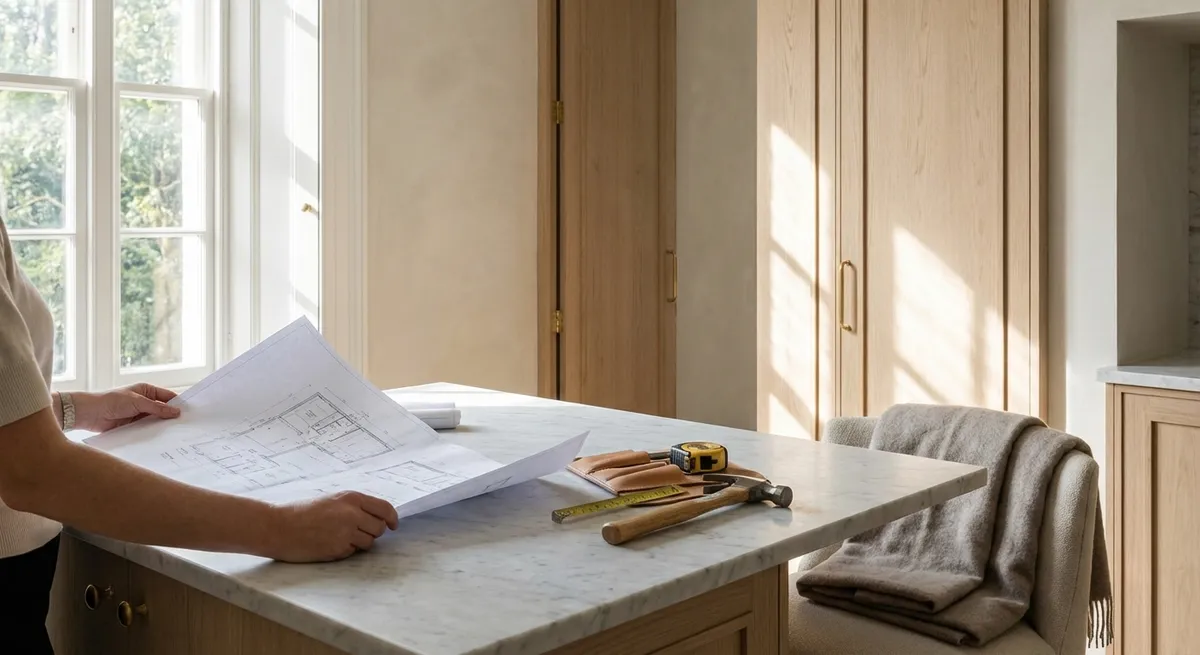
The most refined renovations are not solely the product of an architect or designer; they emerge from the alignment of vision and execution. Homeowners who achieve this understand that the relationship with a contractor (and key trades) is not transactional but strategic.
Rather than presenting a fully fixed vision and merely “shopping for bids,” treat early contractor conversations as intelligence-gathering. Ask where they typically see cost overruns, where they have improved on past designs, which details they are particularly proud of. The right builder or remodeler will have a mental library of solutions—smarter framing techniques, cleaner trim details, more durable waterproofing assemblies—that quietly elevate the project beyond what is on the drawings.
Document expectations with the same level of precision you apply to finishes: site cleanliness standards, communication frequency, decision timelines, mock-up requirements for critical details (e.g., tile layout terminations, cabinet reveals). This level of clarity respects everyone’s time and reduces the friction that often erodes design quality under pressure. In premium renovations, excellence is rarely accidental; it is a function of well-managed collaboration.
Conclusion
A truly cultivated renovation is less about acquiring impressive elements and more about orchestrating subtle, interlocking decisions. When you design for the invisible gaps, layer light with intention, commit to material continuity, future-proof each space, and treat your contractor as a strategic ally, your home evolves into something quietly extraordinary. It will not simply appear renovated; it will feel inevitable—an environment that meets you with composure, every day, for years to come.
Sources
- U.S. Department of Energy – Lighting Choices to Save You Money - Authoritative guidance on lighting types, efficiency, and layered strategies that inform sophisticated lighting design
- Harvard Graduate School of Design – Housing and Aging Research - Research on housing, aging in place, and how design can support long-term livability
- National Association of Home Builders – Remodeling Market Data - Industry insights on renovation trends, homeowner priorities, and value considerations
- American Institute of Architects (AIA) – Working with an Architect - Professional guidance on collaboration, project planning, and maximizing design outcomes
- This Old House – Contractor Selection and Management - Practical advice on evaluating and working with contractors, relevant to treating the builder as a strategic partner
Key Takeaway
The most important thing to remember from this article is that this information can change how you think about Home Renovation.