Renovation, at its most considered, is no longer about following trends—it is about curating a point of view. The most sophisticated homes being designed today share a quiet confidence: they balance advanced technology with tactile warmth, global influences with local integrity, and visual restraint with experiential richness. For homeowners planning significant renovations, understanding where design is genuinely evolving—not just circulating on social media—is the difference between a home that feels instantly dated and one that deepens in character over time.
Below are five exclusive, forward-leaning insights shaping cultivated renovations now—each less about “style” and more about how discerning homeowners are redefining what it means to live beautifully.
Insight 1: The Rise of Layered Minimalism—Not Less, but Better
The era of blank, echoing minimalism is receding. In its place: layered minimalism, where every element earns its presence through purpose, proportion, and texture.
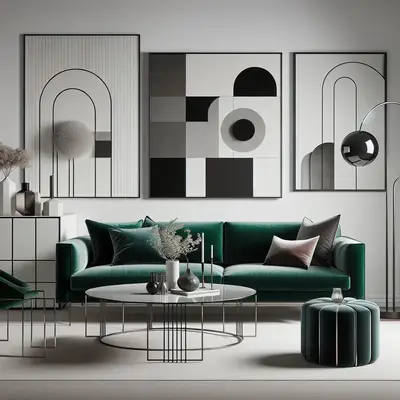
Instead of clutter-free meaning empty, the refined renovation now interprets restraint as a tightly edited composition. Walls remain calm, but surfaces reveal depth—limewash with subtle movement, honed stone with delicate veining, paneled millwork with shadow lines that quietly articulate a room. Furniture is fewer in number, yet richer in detail: a single bespoke console rather than three forgettable accent pieces, or a meticulously upholstered banquette instead of a scatter of occasional chairs.
This approach is particularly powerful in renovations because it encourages investment in fewer, higher-quality interventions. Think: one impeccable custom built-in that resolves storage, display, and lighting, instead of multiple modular units; or a kitchen whose visual language is anchored by a single continuous stone counter and backsplash, allowing hardware, lighting, and seating to whisper rather than shout. The goal is not visual austerity, but visual clarity—spaces that feel edited, intentional, and quietly luxurious.
Insight 2: Textural Intelligence—Designing for the Hand as Much as the Eye
The most successful contemporary renovations are being calibrated not only for what they look like, but for what they feel like under the hand, bare foot, or resting elbow. This is textural intelligence: the awareness that surface and touch materially shape the daily experience of a home.
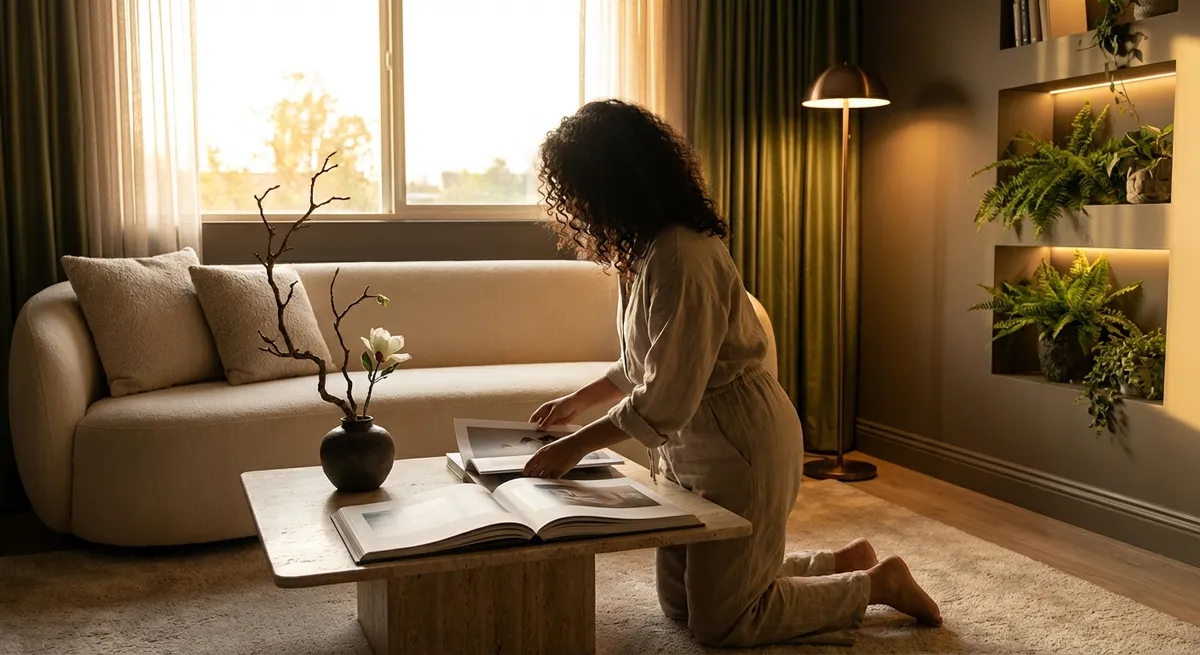
Consider the shift from high-gloss finishes to nuanced, tactile ones: brushed metals instead of mirror-polished chrome; open-pore wood that reveals its grain instead of sealed, plasticky sheens; bouclé and wool instead of flat, synthetic upholstery. Bathrooms embrace honed stone that feels soft underfoot, and kitchens incorporate rounded stone edges where hands naturally rest, avoiding the severe meeting of sharp corners and delicate gestures.
For renovators, this means selecting materials with both longevity and sensory depth. A quieter color palette can be transformed by contrast in texture—coarse linen against smooth plaster, ribbed tile beside satin paint. In circulation spaces, wide-plank wood or parquet patterns add a subtle rhythm to movement. The refinement lies not in ostentatious finishes, but in the way every surface invites interaction and steadily reveals its quality over time.
Insight 3: Tech Discretion—Hidden Intelligence in a Visually Calm Home
Smart homes have matured. The leading-edge renovation is no longer the one flaunting technology, but the one that conceals it elegantly. Tech discretion is now a hallmark of sophistication: the home works harder, while appearing more serene.
Lighting control systems, automated shades, and zoned climate become almost invisible—operated through minimal keypads, integrated apps, or voice where appropriate—but the design language remains consistent: no wall crowded with switches, no visible tangle of wires, no black rectangles disrupting carefully composed walls. Speakers are in-ceiling or integrated into millwork. TVs retract, rotate, or vanish entirely behind panels, art, or sliding walls.
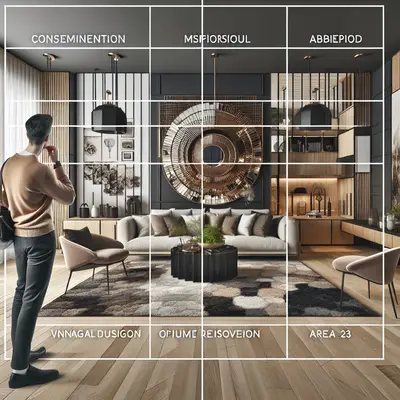
For homeowners planning renovations, the new standard is to integrate technology at the architectural and millwork level, not bolt it on afterward. During planning, think in terms of infrastructure: conduit routing, discreet access panels, hidden charging drawers, tech closets for routers and hubs. The refinement is twofold: you gain the comfort and efficiency of advanced systems, yet your rooms remain anchored in proportion, materiality, and light—rather than in gadgets vying for attention.
Insight 4: The Edited Monochrome Palette—Depth Without Disorder
Color is evolving away from the dizzying cycles of “it” shades and toward considered, edited monochrome schemes that prioritize nuance over novelty. The sophisticated home is less likely to be painted in a different color every room, and more likely to use carefully calibrated tonal variations to create continuity and calm.
This does not mean everything beige. Instead, think of a color family—a spectrum of warm greiges, or softened charcoals, or complex off-whites—applied with precision. Walls, ceilings, trim, and cabinetry can all sit within the same tonal world, but in varying depths and finishes: eggshell on walls, matte on ceilings, satin on trim, perhaps a slightly deeper shade on interior doors. The result is enveloping rather than monotonous.
In renovations, such palettes are especially powerful because they allow architectural interventions to stand out. A beautifully detailed staircase, a new opening between rooms, or an expanded window feels more pronounced when the color story is calm and disciplined. Accents—artwork, a single jewel-toned rug, a deeply colored stone—are used sparingly, gaining impact by contrast and intention, not volume. The interior becomes a curated backdrop rather than a battleground of competing hues.
Insight 5: From Rooms to Rituals—Designing Around How You Actually Live
The most transformative design trend is not aesthetic at all—it is behavioral. High-end renovations are increasingly designed around rituals rather than merely around rooms. The question is no longer “What goes in the dining room?” but “How and where do you actually gather, unwind, focus, and restore?”
This reframing leads to layouts and details that feel unusually attuned to real life. A “coffee corridor” with integrated storage, filtered water, and concealed appliances off the kitchen replaces cluttered counters. A reading niche is carved out near natural light, with a built-in seat, concealed charging, and warm, directional sconce lighting. A primary suite has a defined “evening sequence” built into its design: soft cove lighting, a wardrobe layout that anticipates your routine, and acoustic insulation that creates a genuinely restful retreat.
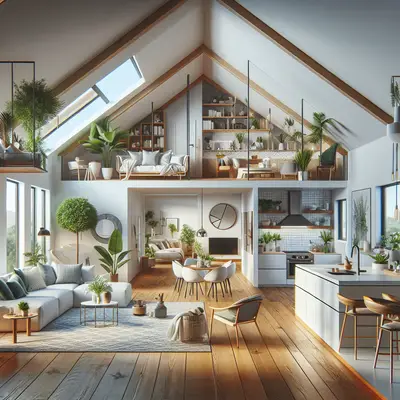
For homeowners planning renovations, this means mapping your rituals as carefully as your floor plan. Identify your essential daily and weekly moments—morning preparation, work-from-home, entertaining, exercise, unwinding—and then assign each ritual a dedicated spatial strategy. The most elegant homes today are not simply beautiful containers; they are highly attuned instruments for living, tuned as specifically to their owners as a bespoke garment or commissioned piece of furniture.
Conclusion
Renovation at a premium level is no longer about “keeping up” with design trends; it is about composing a home that feels inevitable—deeply aligned with how you live, yet sufficiently forward-looking to feel relevant a decade from now. Layered minimalism, textural intelligence, discreet technology, edited monochrome palettes, and ritual-based planning are less transient fashions than structural shifts in how cultivated homeowners think about space.
Approached with this lens, your renovation becomes more than a series of upgrades. It becomes a long-term design thesis for your life: visually restrained, sensorially rich, technologically fluent, and personally precise. In a world of constant visual noise, the truly sophisticated home will be the one that feels composed—quietly, confidently, and unmistakably your own.
Sources
- American Society of Interior Designers (ASID) 2024 Trends Outlook - Industry report outlining emerging directions in residential design, wellness, and technology integration
- Harvard Joint Center for Housing Studies – Improving America’s Housing - Research on renovation investment patterns and long-term homeowner priorities
- Architectural Digest – The New Rules of Minimalism - Editorial perspective on how contemporary minimalism is evolving toward warmer, layered approaches
- U.S. Department of Energy – Energy Saver: Smart Home Technologies - Overview of smart-home systems and considerations for integrating them into renovations
- MIT School of Architecture + Planning – Design and Human Behavior - Academic insight into how spatial and material choices shape daily routines and well-being
Key Takeaway
The most important thing to remember from this article is that this information can change how you think about Design Trends.