Renovation, at its most considered, is less about demolition than about editing. For the homeowner with a cultivated eye, the objective is not spectacle but resonance: spaces that feel tailored, quietly confident, and enduring. Today’s most compelling design directions are not trend-chasing; they are strategies for living well—measured, textural, and deeply personal.
Below are five exclusive, forward-looking insights shaping sophisticated renovations now, each offering a lens through which to refine not only how your home looks, but how it performs and feels.
1. Architectural Quietude: Designing for Visual Calm, Not Minimalism
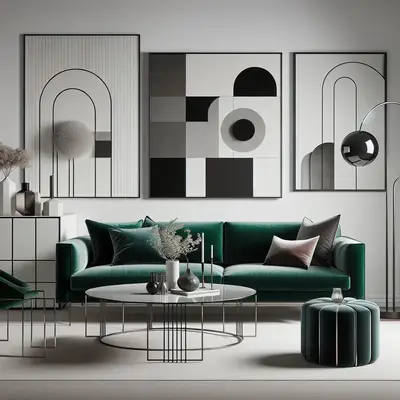
The most refined homes emerging today are not stark or aggressively minimal; they are visually calm. Architectural quietude means orchestrating fewer, stronger moves and allowing them room to breathe.
Instead of layering multiple focal points in a single room, the design narrative is distilled to one or two gestures—a monolithic stone fireplace, a perfectly proportioned portal opening, or a continuous plastered wall that unifies disparate zones. Door casings are slimmed or concealed, baseboards are simplified, and hardware lines are cleaner, but not characterless. The effect is not emptiness, but clarity.
This approach is particularly powerful in renovations of older properties. A composed edit—removing fussy trim in some areas while meticulously restoring it in others—creates a deliberate contrast that feels modern yet respectful. Lighting is crucial: integrated coves, shadow gaps, and careful wall-washer placement soften transitions and visually “declutter” the perimeter. In an architecturally quiet home, objects and art have the space to breathe, and the daily experience is one of lowered visual noise rather than aesthetic austerity.
2. Textural Depth over Pattern: Curating a Tactile Interior Landscape
Pattern comes and goes in cycles of popularity, but texture, when thoughtfully curated, feels timeless. The most convincingly luxurious renovations now rely less on conspicuous ornament and more on a layered tactile language.
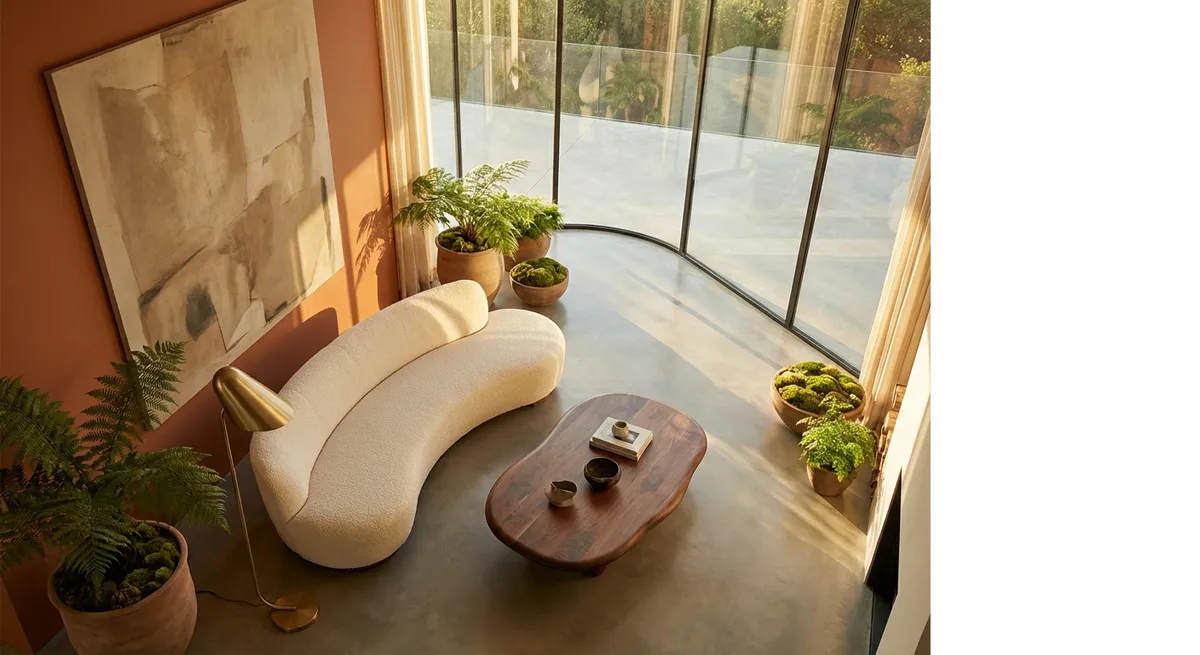
Think honed stone instead of polished, open-pored oak rather than high-gloss veneers, limewash or clay plaster in place of flat paint, wool bouclé and linen instead of synthetics. The objective is to create a gradient of texture—coarse to refined—so that each surface participates in the room’s overall tactility. A fluted stone vanity front next to a smooth slab countertop, for instance, can be more compelling than any busy patterned tile.
This textural focus also supports longevity. When the eye registers subtle shifts in surface rather than loud prints, spaces age more gracefully; minor scuffs become patina, not defects. For renovators, this is a strategic choice: investing selectively in tactile “hero” surfaces in key touchpoints—entry flooring, stair handrails, kitchen counters, bathroom basins—elevates the entire home without requiring every finish to be top-tier. The result is a space that feels quietly rich in the hand, not just in the photograph.
3. Integrated Warm Technology: Smart Homes without the Visual Noise
Technology is no longer optional, but how it is integrated separates a refined renovation from a merely upgraded one. The emerging standard is invisible intelligence: systems that are present, powerful, and largely unseen.
This means recessed or architectural speakers instead of scattered black boxes, low-profile sensors hidden within trim lines, and smart lighting scenes programmed to align with circadian rhythms rather than a simple on/off mentality. Wi-Fi, HVAC controls, security, and shading are being concealed behind unified control interfaces, banishing the “wall acne” of multiple switches and thermostats.
Beyond convenience, this integration supports energy performance and comfort: smart thermostats paired with zoned HVAC, automated shades that respond to solar gain, and occupancy-based lighting can materially reduce consumption. For the discerning homeowner, the brief is clear—technology should enhance the serenity of a space, not announce itself. During renovation planning, this calls for early coordination between design, electrical, and AV teams so that infrastructure is embedded into the architecture, rather than awkwardly added after finishes are installed.
4. The New Luxury Kitchen: Proportioned Restraint and Hospitality-First Design
The kitchen remains the heart of the home, but the expression of luxury within it is shifting. Instead of oversized islands and showpiece ranges in every project, we’re seeing an emphasis on proportion, flow, and hospitality—how the space actually behaves when entertaining or cooking daily.
Cabinetry is increasingly furniture-like, with reeded details, framed fronts, or subtly rounded profiles that soften the room’s geometry. Appliance concealment is strategic: refrigerators and dishwashers disappear behind paneling, while one or two sculptural elements—a professional-grade range or a stone-clad range hood—are allowed to be visible focal points. Work zones are calibrated with chef-like efficiency: dedicated prep sinks, under-counter refrigeration in the island, and carefully placed task lighting.
A particularly elevated move is the “back kitchen” or scullery, even in urban footprints: a secondary, more utilitarian zone for cleanup, small appliances, and bulk storage. This allows the primary kitchen to read more as a living space than a functional workshop. Materially, slightly unexpected combinations—brushed nickel with patinated brass, soapstone with oiled oak, terrazzo with smooth plaster—signal a curated, custom sensibility. The outcome is a kitchen that hosts beautifully and works quietly hard in the background.
5. Purposeful Hybrid Spaces: Rooms that Shift with Precision, Not Chaos
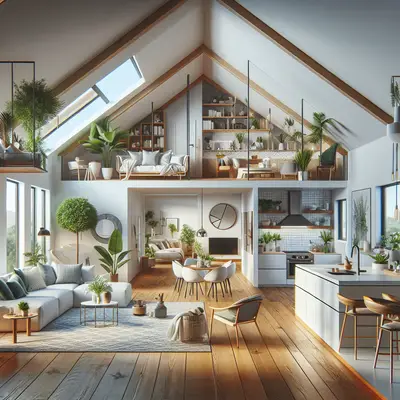
Flex spaces are now expected, but the most successful ones are not vague “multi-purpose rooms”; they are highly choreographed hybrids. The objective is changeability without clutter—spaces that adapt gracefully between work, leisure, and hosting.
This might be a library that transforms into an intimate dining room via concealed pocket doors, integrated dimmable picture lights, and a table that expands from console to full-scale. Or a guest room with a wall bed that, when closed, reads as a paneled feature wall, revealing a seamlessly integrated desk and storage niche for daily use. Built-in joinery is critical here: millwork that conceals office paraphernalia, toys, or workout gear allows the room to reset quickly.
Acoustic control is now a quiet hallmark of quality. Upholstered wall panels, heavier drapery, and area rugs with dense underlay mean that a Zoom call, a piano practice session, or a gathering for cocktails can coexist within the same home without friction. Power, data, and lighting are laid out with intentionality—outlets precisely where laptop cords or floor lamps are needed, not as an afterthought. True luxury in a hybrid space is not just that it can do many things; it’s that it can do them without ever feeling compromised.
Conclusion
Design trends, in their most sophisticated form, are less about what is “in” this year and more about the evolving understanding of how we want to live—calmly, tactually, intelligently, and with rooms that serve us beautifully across multiple roles.
For homeowners planning a renovation, the opportunity lies in moving beyond surface-level upgrades to a deeply strategic approach: a quieter architectural language, layered texture, invisible yet capable technology, kitchens that entertain with ease, and hybrid spaces that transition with grace. When these threads are woven together with intention, the result is a home that feels both current and enduring—a cultivated canvas that will remain resonant long after the passing of any single trend.
Sources
- Harvard Joint Center for Housing Studies – Improving America’s Housing 2023 - Data and analysis on renovation patterns and homeowner investment priorities
- American Institute of Architects (AIA) Home Design Trends Survey - Insights into emerging residential design preferences from leading architects
- U.S. Department of Energy – Energy Saver: Smart Home Technology - Overview of how integrated smart systems can improve comfort and efficiency in homes
- NYU Marron Institute – The Soundproof City - Discussion of acoustic comfort and why sound control is an increasing priority in design
- The New York Times – The New Luxury Kitchen, Demystified - Journalistic perspective on current directions in high-end kitchen design and functionality
Key Takeaway
The most important thing to remember from this article is that this information can change how you think about Design Trends.