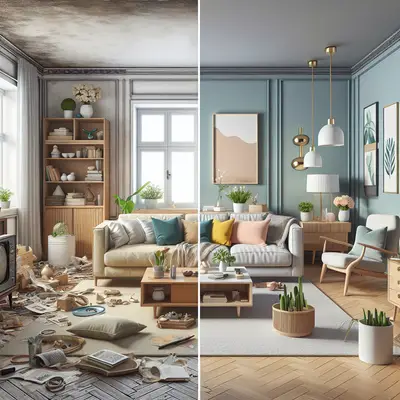
Renovation at its highest level is less about spectacle and more about orchestration—of light, volume, material, and time. The most satisfying homes don’t simply look expensive; they behave intelligently, aging with grace and accommodating life’s quiet evolutions. For the homeowner who expects more than a quick aesthetic refresh, the difference lies in subtle, often invisible decisions that shape how a space feels ten years from now, not just how it photographs today.
Below are five exclusive, deeply considered insights that sophisticated renovators routinely leverage—rarely discussed in glossy before-and-after spreads, yet quietly transformative in daily living and long-term value.
Designing for the Second Life of Every Room
Refined renovations anticipate that spaces will be asked to perform differently over time: a nursery that becomes a study, a formal dining room that transitions into a library, a guest suite that evolves into semi-independent living.
Designing for this “second life” starts long before finishes are selected. It involves asking, for every room: What is the elegant fallback function of this space if our lifestyle changes? Small, early decisions compound into major future flexibility:
- Place structural and plumbing cores so that a potential kitchenette, ensuite, or laundry stack could be added later without invasive work.
- Align doorways and circulation so that two adjacent rooms can one day be combined into a larger suite or separated into more private zones with minimal intervention.
- Conceal power, data, and low-voltage wiring in strategic, symmetrical locations so a bedroom can gracefully convert into a home office or media room without surface-level clutter.
- Specify built-ins that can either be reconfigured or removed without destroying walls—paneled systems, modular shelving, and integrated but non-structural storage.
This approach frames your renovation as a long-term narrative rather than a snapshot in time. When resale or repurposing becomes relevant, your home reads as nimble rather than dated or over-customized.
Calibrating Acoustics as a Design Material
Most renovation conversations orbit color, texture, and layout—while one of the purest signals of quality is often what you don’t hear. A quietly sophisticated home feels composed because sound is controlled, not accidental.
Instead of treating acoustics as an afterthought, consider them a foundational design material:
- Flooring strategy: Balance hard surfaces (stone, timber, concrete) with purposeful soft landings—wool area rugs, upholstered pieces, fabric wall panels in key echo-prone zones. The goal is a gentle hush, not a deadened environment.
- Wall assemblies: Where privacy is paramount—primary suites, powder rooms adjacent to public spaces, home offices—opt for upgraded insulation, resilient channels, and solid-core doors. These choices rarely photograph, but they are felt daily.
- Mechanical noise: Specify quieter HVAC equipment and ensure proper duct sizing and layout to avoid whistling, rattling, or overactive fans. A premium home is one in which climate control is experienced, not heard.
- Zoning of activity: Subtly separate “vocal” functions (kitchen, family room, play spaces) from “quiet” functions (study, bedrooms, retreat zones) through thoughtful adjacency rather than relying solely on doors.
Well-calibrated acoustics create a sense of calm that is difficult to quantify yet unmistakable; they transform a renovation from beautiful to genuinely restorative.
Curating Light in Layers, Not Just Fixtures
Luxury in a renovated home is often perceived most clearly when the sun goes down. The difference between a space that feels flat and one that feels atmospheric rarely comes from a single statement chandelier; it comes from layered, intentional lighting that supports both function and ritual.
Instead of defaulting to a grid of downlights, consider a three-part composition:
Architectural light
Recessed or cove lighting supports navigation and general visibility. Its role is to disappear—no hot spots, no glare, just even illumination. Dimmers are non-negotiable.
Task light
Under-cabinet strips, integrated wardrobe lighting, reading sconces, linear lighting at vanities, and pendants over work zones. These fixtures should serve the human body—avoiding shadows where precision is needed (cooking, grooming, reading).
Atmospheric and accent light
Picture lights over art, a low-glow lamp in a hallway niche, lighting within bookshelves, and small-scale floor or table lamps that allow you to “dial down” the room while preserving enough ambience for conversation.
Consider color temperature consistency (usually 2700K–3000K throughout a home for a warm, cohesive feel), and plan visible fixtures like jewelry: fewer pieces, higher quality, and placed where they contribute meaningfully rather than simply filling space.
When treated as choreography rather than hardware selection, lighting turns rooms into experiences—aligned with how you cook, read, unwind, and entertain.
Elevating Infrastructure to a First-Class Citizen
The most sophisticated renovations recognize that infrastructure—plumbing, electrical, HVAC, insulation—is not the unglamorous obligation to be minimized, but the invisible skeleton that supports every beautiful finish you see.
Upgrading infrastructure with intention can offer surprising returns:
- Thermal envelope: High-performance windows, proper insulation, and airtightness detailing create quieter, more comfortable rooms and reduce operating costs. These improvements also make future design decisions (like large panes of glass or open spaces) more forgiving.
- Power and data: Plan for a world where everything is connected, but nothing is visually chaotic. Centralized low-voltage hubs, concealed wire chases, and ample but discreet outlets in furniture-adjacent locations preserve clean lines.
- Plumbing foresight: Overspec key elements that are painful to change later—main supply sizes, shutoff locations, drain routing, and access panels. In critical wet zones (showers, laundry rooms), prioritize robust waterproofing assemblies over purely decorative surfaces.
- Mechanical zoning: Instead of a single blunt HVAC system, consider zoning aligned with how you actually live—bedroom wing, entertaining areas, lower levels. This not only improves comfort but also allows selective conditioning, which is both economical and sustainable.
While these decisions hide behind walls and ceilings, they directly influence how quietly doors close, how steady the temperature feels, how reliable your systems are—and whether you are renovating again in fifteen years or simply refining around an already excellent core.
Orchestrating Material Harmony Across the Entire Home
Many renovations treat each room as a distinct aesthetic statement; elevated renovations orchestrate the entire home as a single, coherent composition, even when spaces have different moods or functions.
The goal is to create a sense of continuity—where moving from kitchen to hall to bath feels like reading chapters of the same book, rather than switching genres:
- Define a restrained material vocabulary: Select a primary family of woods, stones, and metals that recur in varying proportions. For example, one oak tone, one main stone, and one dominant metal finish, supported by a small number of carefully chosen accents.
- Vary texture, not just color: A single stone can appear in honed, flamed, or polished finishes; a timber can be brushed, rift-sawn, or oiled instead of lacquered. This allows richness and variety without visual noise.
- Link thresholds: Pay close attention where materials meet: the line where tile transitions to wood, how a stair stringer meets the floor, the termination of wall paneling. These small junctions quietly communicate craftsmanship.
- Consider sight lines, not just floor plans: Stand in key locations and trace what the eye will see—through doorways, across shared axes, from sofa to kitchen. Aligning materials and colors along these visual paths creates a composed, gallery-like calm.
When material decisions are made at the scale of the entire home, rather than room-by-room, the result is a renovation that feels inherently “put together” without looking overdesigned. The luxury is in restraint, coherence, and the disciplined repetition of a few beautiful choices.
Conclusion
A truly refined renovation is not defined by the volume of marble or the size of the island; it is defined by the thoughtfulness of decisions you rarely see on a mood board. Designing for the second life of each room, tuning acoustics, curating layered light, prioritizing infrastructure, and orchestrating material harmony all contribute to a home that feels composed, enduring, and quietly confident.
For homeowners who view renovation as an investment in how they will live—rather than only how they will impress—these subtler strategies can be the difference between a project that ages out and one that matures in place, becoming more resonant and accommodating with every passing year.
Sources
- [U.S. Department of Energy – Energy Saver: Home Weatherization](https://www.energy.gov/energysaver/weatherize/air-sealing-your-home) - Authoritative guidance on improving the building envelope, insulation, and airtightness for comfort and efficiency
- [Harvard Joint Center for Housing Studies – Improving America’s Housing](https://www.jchs.harvard.edu/research-areas/reports/improving-americas-housing-2023) - Research report on renovation trends, investments, and long-term value considerations
- [American Society of Interior Designers (ASID) – Lighting & Wellness](https://www.asid.org/resources/resources/view/resource-center/lighting-affects-health-and-well-being) - Insights on layered lighting design and its impact on wellbeing in residential interiors
- [U.S. Environmental Protection Agency – Indoor Air Quality Basics](https://www.epa.gov/indoor-air-quality-iaq/inside-story-guide-indoor-air-quality) - Background on ventilation, mechanical systems, and how infrastructure influences comfort and health
- [National Institute of Building Sciences – Whole Building Design Guide: Acoustics](https://www.wbdg.org/design-disciplines/acoustics) - Technical overview of architectural acoustics and strategies for controlling sound in buildings
Key Takeaway
The most important thing to remember from this article is that this information can change how you think about Home Renovation.