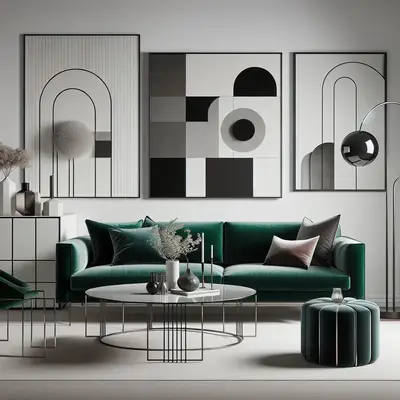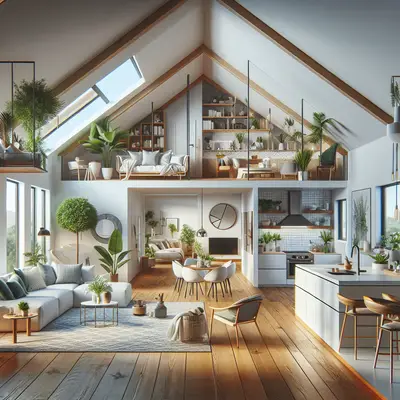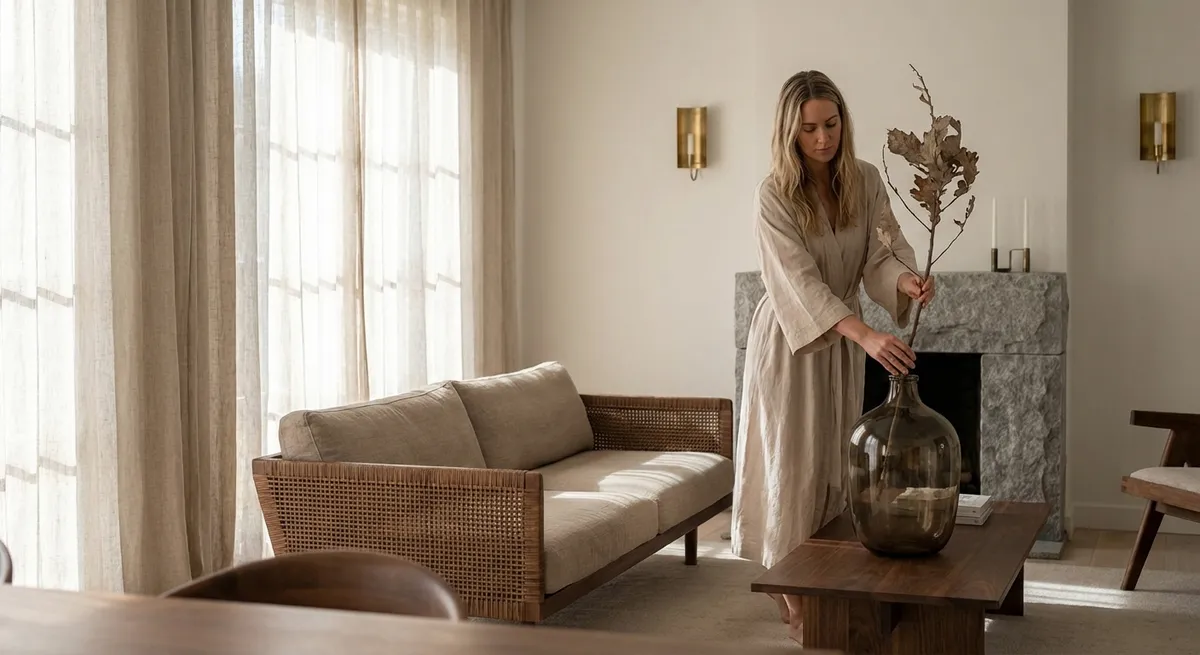
In the most thoughtfully renovated homes today, luxury is less about spectacle and more about orchestration—of light, texture, silence, and time. The truly elevated renovation no longer declares itself from the curb; it reveals itself in the way a drawer glides, a hallway glows at dusk, or a room shifts its mood with a gesture. For homeowners planning a significant renovation, understanding these emerging, quieter design nuances is the difference between a project that merely looks expensive and one that lives beautifully for decades.
Below are five exclusive, under-the-radar insights guiding the next chapter of refined residential design—each one an opportunity to elevate a renovation from impressive to unforgettable.
Insight 1: Designing for the “Second Look,” Not the First Impression
Most renovations are planned to impress in a single glance: the entry vignette, the show kitchen, the sculptural staircase. Sophisticated homes, however, are increasingly designed for the second look—the details that reveal themselves only after living in the space for weeks or months.
This philosophy changes decision-making. Instead of a statement pendant that dominates, consider layered, dimmable lighting that becomes more compelling the longer you inhabit the room. Instead of loud veining in stone, explore subtle, honed finishes whose beauty emerges in morning light. Cabinetry joinery, door hardware, switch plates, thresholds, and transitions between materials become focal points not for visitors but for the people who live there every day. Renovation budgets that pivot even 10–15% toward this “second look” detailing tend to yield homes that continue to feel fresh, rather than dated, as trends cycle out.
For homeowners, this means asking your designer not just, “What will this look like?” but “What will this feel like on a Wednesday night in February?” The answer to that question will often guide you toward quieter, more enduring choices.
Insight 2: The New Craftsmanship—Where Technology Disappears
In high-end renovations, technology is now expected—but not seen. The new benchmark isn’t how many devices your home can host; it’s how elegantly it can conceal them while still delivering extraordinary performance.
This manifests in frameless recessed lighting that disappears into the ceiling plane, integrated speakers that vanish behind plaster, and flush wall controls that sit in line with trim and paneling. Charging, networking, and audiovisual infrastructure are laid out with the precision of a lighting plan, then diffused discreetly throughout the home. Even ventilation and air quality solutions are now designed to be architecturally integrated rather than visually dominant.
For a renovation, this demands early planning. Rooms are no longer simply “wired”; they’re choreographed. Whether you’re implementing a full smart-home automation system or a more selective suite of enhancements, the refined approach is to treat technology as an invisible service layer—felt in the ease of use, the comfort of the space, and the quiet efficiency of systems, rather than announced on every wall.
Insight 3: Material Quietude—Luxury as Tactility, Not Logos
The most compelling design trends at the premium end of the market are moving away from conspicuous brand signaling and toward “material quietude”: a focus on how surfaces feel to the hand and eye rather than whose name is stamped on them.
Think brushed nickel or unlacquered brass that will gently patinate, rather than mirror-bright chrome. Honed stone with a velvety finish instead of high-gloss slabs that read as reflective rather than warm. Limewash, clay, and mineral-based paints that introduce depth and softness to walls rather than a single, flat color. Even engineered surfaces are now selected as much for their tactile authenticity and subtle texture as for durability.
This doesn’t mean compromising on quality; it means reframing it. During your renovation, spend as much time touching samples as viewing them. Ask how a material will age, not just how it photographs. Consider where your hands will naturally rest—on stair rails, counter edges, cabinet pulls—and specify finishes that feel inviting and reassuring. The most sophisticated homes always reward touch.
Insight 4: Spatial Editing—Fewer Rooms, Better Rooms
An increasingly prominent trend among discerning homeowners is the rejection of over-programmed layouts in favor of what might be called “spatial editing.” Instead of carving a floorplan into many highly specific rooms—each with a narrow purpose—there is a shift toward fewer, more generously proportioned spaces that flex gracefully between daily routines and exceptional moments.
This is not about open-plan living in the traditional sense, which often sacrifices intimacy. Rather, it’s about fewer but better-detailed rooms: a kitchen that can host both a quiet breakfast and serious entertaining with equal ease; a study that doubles as a serene guest room without feeling like a compromise; a secondary living area that can pivot from reading retreat to media space without technical clutter on display.
In renovation planning, this often translates to consolidating underused spaces (like a formal living room that sits empty) to invest more in the rooms where life actually unfolds. Doors, pocket openings, steel-framed interior windows, and thoughtful lighting can create nuanced separations without fragmenting the home. The outcome is a floorplan that feels deliberate, not just large.
Insight 5: Temporal Design—Planning for How the Home Changes Over a Day
The most refined design work increasingly thinks in four dimensions: not just height, width, and depth, but time. Instead of designing for a static photograph, architects and interior designers are mapping how light, temperature, activity, and privacy needs evolve from early morning to late evening—and allowing the home to respond.
This might look like ensuring east-facing spaces capture soft morning light where you actually spend time at the start of the day—breakfast nooks, home offices, or exercise spaces—while west-facing rooms are equipped with shading strategies and layered lighting for golden-hour entertaining. It may mean designing circulation paths that keep early risers and night owls from disturbing one another, or incorporating quiet “retreat zones” that feel cocooned even when the rest of the home is active.
For a renovation, this is a call to walk your plans through an entire hypothetical day. Where will you work, unwind, host, exercise, and read? How will seasonal shifts in daylight affect those rituals? Asking your team to model light and usage patterns over time will ensure the finished home feels intuitively in sync with your life, rather than asking you to adapt to its limitations.
Conclusion
In a landscape saturated with visible luxury, the most distinguished renovations are defined by what isn’t immediately obvious: the way a space evolves across the day, the feel of a handrail under bare skin, the quiet competence of hidden systems, the calm of a floorplan edited down to what truly matters. For homeowners contemplating a serious renovation, engaging with these nuanced trends is less about chasing fashion and more about future-proofing your comfort, privacy, and sense of ease.
By designing for the second look, hiding technology in plain sight, prioritizing tactile materials, editing your spatial program, and thinking in terms of time as much as space, you create more than a beautiful home. You create a residence that continues to reveal new layers of refinement long after the contractors have left and the photos have been taken.
Sources
- Harvard Joint Center for Housing Studies – Improving America’s Housing – Research on renovation patterns and homeowner priorities
- American Institute of Architects (AIA) – Home Design Trends Survey – Insights into emerging residential design trends from architects
- U.S. Department of Energy – Energy Saver: Smart Home Technology – Guidance on integrating efficient, unobtrusive home technologies
- Architectural Digest – The Latest Interior Design Trends – Editorial perspective on evolving aesthetics and material preferences
- MIT School of Architecture + Planning – Design and Computation – Research context on the intersection of design, technology, and user experience
Key Takeaway
The most important thing to remember from this article is that this information can change how you think about Design Trends.