Renovation at the upper end of the market has quietly shifted from spectacle to substance. The most considered homes today are not louder or larger—they are more attuned, more intentional, and more human. For homeowners preparing to renovate, the question is no longer simply “What’s in style?” but “What feels poised, enduring, and deeply livable?”
The following design currents are not fads; they are nuanced shifts in how discerning homeowners think about space, comfort, and value. Each insight is crafted to help you brief your designer, interrogate your architect’s proposals, and make decisions that will still feel relevant a decade from now.
Insight 1: Precision Warmth – The New Expression of Minimalism
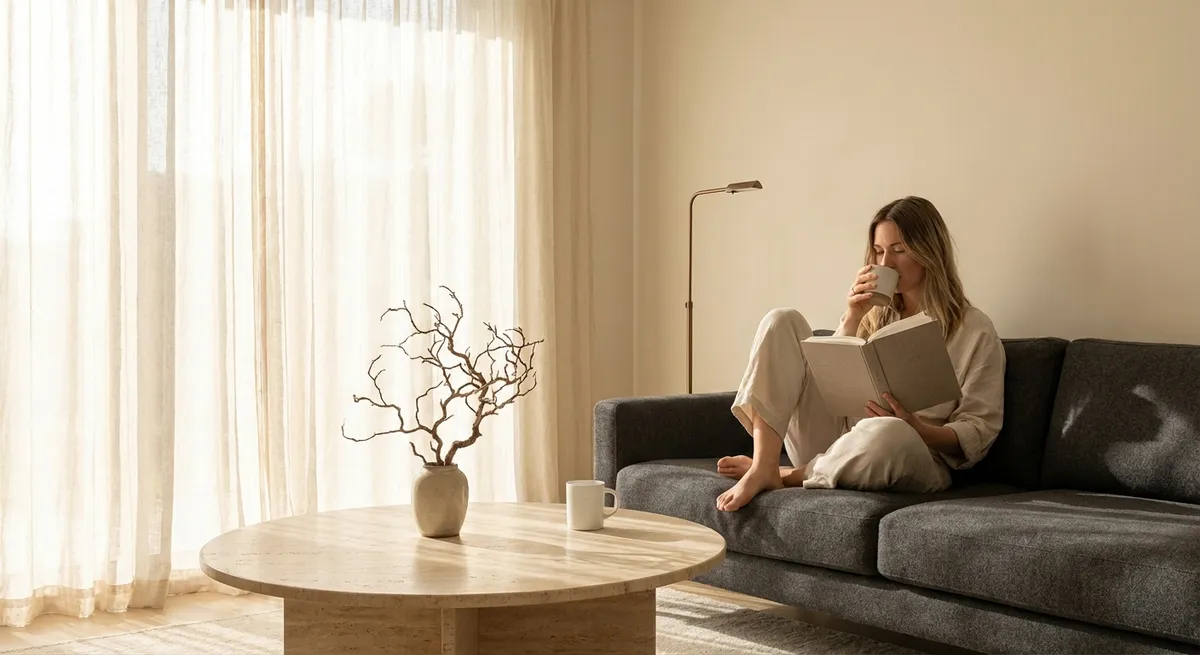
Minimalism has evolved from stark white boxes into something far more hospitable: precise, edited spaces warmed by texture, craftsmanship, and calibrated light. The emerging aesthetic is less “gallery” and more “quietly tailored hotel suite”—still restrained, but with depth.
Today’s refined minimalism favors:
- Subtle material contrast: honed stone against brushed metal, plaster against timber, boucle against linen. The palette is narrow, but the tactility is rich.
- Softened geometry: rounded edges on countertops, radiused corners on walls, and curved furniture frames avoid the severity of sharp right angles.
- Integrated lighting: concealed LED channels, wall washers, and backlit reveals replace visible fixtures where possible, creating a gentle, atmospheric glow.
- Very limited “visual noise”: fewer handles, fewer materials, less open shelving. Storage is deeply considered so that everyday life can be present without feeling chaotic.
For your renovation, this means scrutinizing every proposed surface and junction. Ask: Where can we remove ornament, and instead elevate proportion, joinery, and light? A restrained space becomes luxurious when every remaining element is executed to a higher standard.
Insight 2: Layered Monochrome – Color as Atmosphere, Not Accent
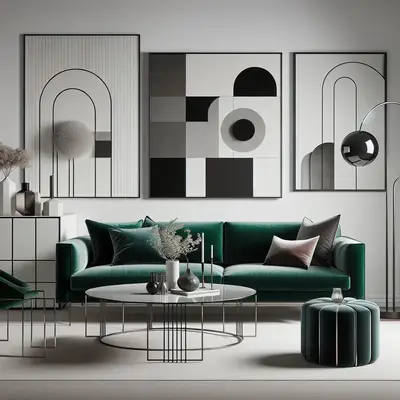
Instead of accent walls and contrasting trims, sophisticated interiors are embracing an enveloping, single-tone approach. The effect is cocooning, cinematic, and surprisingly flexible.
The most compelling monochrome rooms share key traits:
- One dominant hue, many temperatures: for example, warm taupe on walls, a cooler stone in the same family underfoot, and deeper tonal upholstery.
- Painted continuity: walls, ceilings, and even doors in a similar shade make a room feel taller and quieter, letting form and texture take the lead.
- Subdued contrast: black and stark white are softened in favor of deep espresso, charcoal, ivory, or mushroom. This eases visual strain and feels more timeless.
- Textile-driven interest: boucle, wool, mohair, silk, and linen introduce micro-variation within the same palette, creating visual movement without busy patterns.
When planning your renovation, consider design decisions in terms of “atmosphere” rather than “feature.” Choosing a tonal palette for each zone—the kitchen in warm stone and sand, the bedroom in layered creams, the study in deep tobacco or ink—can create a subtle narrative that ties the home together without overt themeing.
Insight 3: Architectural Comfort – Built-In Elements That Feel Bespoke
The most elevated homes lean heavily on architectural features that double as furniture: sculpted banquettes, paneled niches, fluted wall cladding, and headboards that become entire wall systems. Instead of stuffing rooms with loose pieces, spaces are planned like finely resolved compositions.
This current manifests in:
- Built-in seating: under windows, along circulation edges, and in dining zones, turning otherwise “dead” space into purposeful, elegant moments.
- Wall systems instead of standalone storage: full-height, discreet cabinetry that reads as architecture rather than joinery, with push-latch doors and minimal hardware.
- Integrated headboard walls: upholstered or timber-clad spans incorporating lighting, shelving, and charging, reducing clutter and cords.
- Threshold moments: framed openings, slim architraves, and subtly deepened door reveals that introduce a quiet sense of procession between rooms.
When briefing your architect or designer, ask them to identify where built-in solutions can replace freestanding ones. Be explicit about how you live—where you read, work on a laptop, take a call, or drop your bag. Thoughtful architectural comfort feels indulgent in daily use and harder for future buyers to replicate, which can quietly enhance long-term value.
Insight 4: Technology that Disappears – The Aesthetic of Hidden Intelligence
High-end homes are no longer defined by visible tech; they’re defined by the absence of it. The luxury is in a space that responds to you without constantly reminding you of its circuitry.
The most considered renovations now prioritize:
- Concealed infrastructure: in-wall speakers, recessed charging drawers, under-cabinet docking stations, and AV hidden behind acoustically transparent panels.
- Scene-based lighting: programmed “morning,” “evening,” and “entertaining” modes that adjust intensity and color temperature across rooms with one command.
- Soft automation instead of spectacle: blinds that track the sun, climate systems that learn occupancy patterns, and fixtures that default to energy-efficient modes.
- Minimal interfaces: fewer plastic switches, more discreet keypads or touchpoints, and apps that control multiple systems through a single hub.
As you plan, insist on a technology roadmap before construction: where the hubs live, how updates will be managed, what happens when systems age. Hidden technology requires more foresight than visible gadgets. Request conduit runs and accessible panels to avoid tearing into finished walls later. Elegance is not simply in what you hide; it is in how gracefully the hidden can be serviced.
Insight 5: The Refined Hybrid – Work, Wellness, and Hospitality at Home
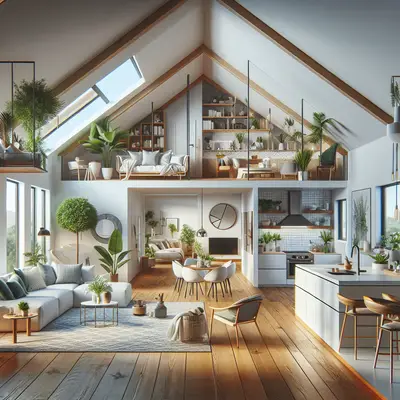
Our homes are now multi-hyphenate spaces, but the most successful renovations blend these roles with a soft hand. The new ambition is to create environments that feel as composed as a boutique hotel, as functional as a well-designed office, and as restorative as a spa—without any one of those identities shouting.
Three emerging priorities define this hybrid thinking:
- Work zones that can visually “disappear”: pocket doors over desk nooks, millwork panels that slide over shelving, and desks integrated into joinery so the room can transform from workspace to lounge.
- Wellness adjacency, not just a “home gym”: a compact, beautifully finished movement area off a terrace; a steam or sauna integrated into the bathroom; or a cold plunge tucked beside the pool. The materials and lighting here should echo the rest of the home, not feel utilitarian.
- Entertaining that respects intimacy: flexible dining and living configurations that work just as well for two people as they do for twelve. Consider banquettes plus chairs, movable side tables, and layered lighting instead of oversized statement dining tables you rarely fill.
When renovating, map your lifestyle across a typical week, not just a perfect weekend. Where do you actually take calls? Where do guests naturally gravitate? Where do you decompress alone? Use this behavioral map to guide the program: a smaller but perfectly lit study may serve you better than a large but generic “office,” while a compact, serene reading niche could add more daily joy than an expansive but rarely used media room.
Conclusion
Elegant renovation in this moment is less about overt gestures and more about orchestration: of light, of texture, of volume, of daily rituals. Precision warmth, tonal restraint, architectural comfort, invisible intelligence, and hybrid living are not passing trends—they are thoughtful responses to how sophisticated homeowners truly inhabit space.
As you shape your next project, treat each decision as part of a larger composition. Ask not only “Does this look beautiful today?” but “Will this still feel calm, intelligent, and relevant when the next wave of trends has come and gone?” Homes that answer yes to that question are the ones that quietly endure—and quietly impress.
Sources
- Harvard Joint Center for Housing Studies – Improving America's Housing – Research on renovation patterns and homeowner priorities, including quality and functionality trends.
- American Institute of Architects (AIA) – Home Design Trends Survey – Insights into emerging residential design features such as home offices, wellness spaces, and integrated technology.
- U.S. Department of Energy – Energy Saver: LED Lighting – Technical guidance on LED lighting, color temperature, and efficiency relevant to layered, architectural lighting design.
- MIT School of Architecture + Planning – Articles and research on contemporary architectural thinking, including minimalism, materiality, and spatial experience.
- Well Certified – WELL Building Standard Concepts – Framework for wellness-focused environments, informing design decisions around light, comfort, movement, and mental well-being in the home.
Key Takeaway
The most important thing to remember from this article is that this information can change how you think about Design Trends.