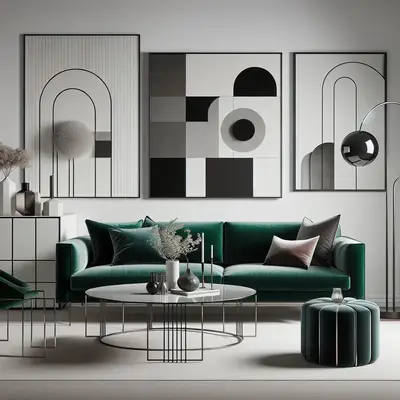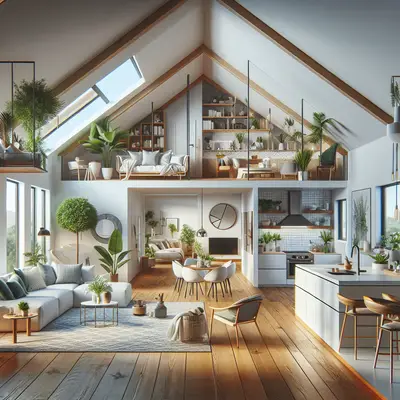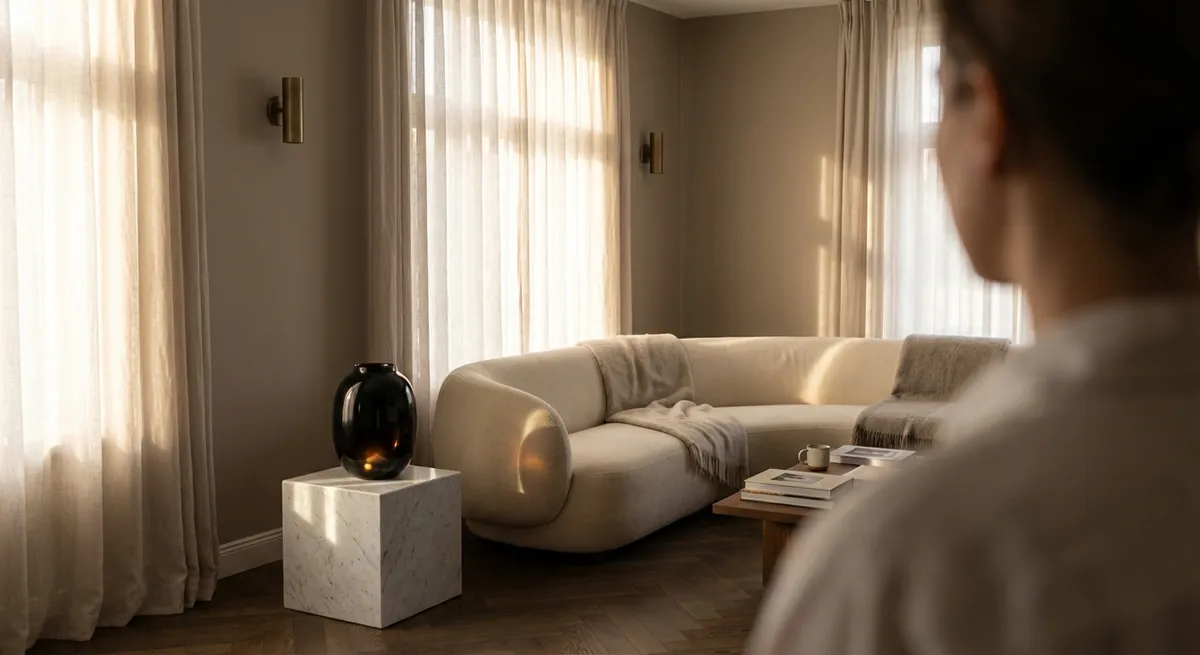
In the most considered homes, luxury rarely announces itself. It moves quietly—in the weight of a door handle, the fall of natural light across a limewashed wall, the nearly invisible join between stone and timber. For homeowners planning a renovation today, the most compelling design trends are less about spectacle and more about sensorial refinement. They favor longevity over novelty, tactility over logos, and a choreography of daily rituals over performative spaces.
This is not minimalism for its own sake; it is a deliberate editing of noise. Below, we explore five exclusive, emerging directions in design that discerning renovators are embracing—each one an invitation to create a home that feels composed, intelligent, and enduringly serene.
1. The Return of Material Honesty: Surfaces With Integrity
The most elevated renovations are moving away from imitation finishes and toward materials that age visibly—and beautifully. Rather than high-gloss synthetics, we are seeing a renewed commitment to stone, timber, plaster, and metal in their most authentic forms.
In kitchens and baths, honed stone and leathered finishes are supplanting the mirror-polish look. A honed marble countertop, for example, diffuses light softly and accepts patina as part of its story instead of something to be feared. Wide-plank wood flooring, finished in penetrating oils rather than thick varnishes, allows the grain to remain tactile underfoot. Even walls are becoming more sculptural through limewash, tadelakt, and hand-applied plasters that capture light in subtle gradients rather than bouncing it harshly around a space.
For homeowners, the key is to select fewer, better materials and allow them to repeat: the same limestone underfoot and on a fireplace hearth; the same brushed metal for door hardware, tapware, and cabinet pulls. This quiet continuity delivers a sense of calm while simplifying long-term maintenance and future updates. Material honesty is not about perfection—it is about choosing elements that become more compelling as they record use, rather than less.
2. Soft Architecture: Built-In Forms That Shape How You Live
One of the most nuanced trends in renovation is the rise of what might be called “soft architecture”: built-in elements that gently organize space and influence behavior without dominating the room visually. Instead of relying solely on furniture to define how a space functions, designers are using integrated forms to guide movement, sightlines, and rituals.
Think of a low, curved plinth that becomes seating, display, and room divider all at once, or a deep window seat built into a bay that transforms an otherwise overlooked corner into the most coveted place in the house. Fluted plaster panels that wrap a wall can conceal storage, doors, or media equipment within a refined architectural gesture. Even headboards are evolving into entire wall treatments—upholstered, paneled, or softly illuminated—to establish a sense of sanctuary in the bedroom.
For renovators, this approach requires decisions earlier in the process, as soft architecture typically involves collaboration between architect, designer, and millworker. The reward is a home that feels intentionally tailored, not furnished as an afterthought. By allowing the architecture to perform some of the “work” of furniture—defining zones, offering storage, directing views—you create spaces that feel inherently composed, even when minimally decorated.
3. Light as a Curated Layer: Beyond Brightness Into Atmosphere
Lighting design is evolving from simple illumination into an art of orchestrated atmosphere. The most sophisticated homes are no longer over-lit; instead, they are layered with carefully considered scenes that shift from task-focused clarity to evening intimacy at a touch.
Rather than relying on a grid of ceiling downlights, homeowners are investing in a hierarchy of fixtures: concealed linear lighting tucked into coves or under cabinetry; wall washers that graze textured plaster; picture lights that create focal points even when artwork is modest; and sculptural pendants that serve as visual anchors over dining tables or kitchen islands. Warm color temperatures are favored, often in the 2,700K to 3,000K range, for a more flattering and residential feel.
Smart controls have matured beyond novelty. The most elegant executions use discreet keypads pre-set with a handful of scenes—“Morning,” “Work,” “Evening,” “Entertain”—designed around how each household actually lives. This trend is not about technology for its own sake; it is about using technology to make nuanced lighting effortless. When executed well, light becomes another material in the space, softening edges, defining volumes, and syncing the home’s mood with the time of day.
4. Quiet Technology: Integrating Intelligence Without Visual Clutter
As homes become more technologically advanced, the most discerning renovators are pushing for invisibility rather than exhibition. Instead of prominent black screens and conspicuous devices, the new luxury is an environment where intelligence is deeply integrated yet scarcely seen.
Televisions disappear into paneling, artwork, or recessed niches. Speakers are embedded in ceilings, walls, or even behind plaster finishes, maintaining visual calm while delivering high-fidelity sound. Motorized blinds retreat fully into pockets, preserving clean window lines. Even climate systems are being reconsidered, with linear diffusers and discreet grilles replacing more industrial-looking vents.
For homeowners, the design challenge is to engage technology teams at the same time as the architect and designer, not as an afterthought. Decisions about wiring paths, equipment locations, and control systems must be coordinated with cabinetry, millwork, and lighting schemes. The result is a home where you can summon music, adjust light, or secure the property with quiet precision—without visible evidence of the systems that enable it.
The underlying trend is a shift in how we think about “smart homes”: away from displays and dashboards and toward an architecture that anticipates needs. Doors lock themselves, lights respond to presence and daylight levels, heating and cooling adapt to occupancy patterns—all in the background, leaving sightlines and surfaces elegantly unencumbered.
5. Rooms With a Ritual: Designing for the Way You Actually Live
Perhaps the most transformative design trend is conceptual rather than aesthetic: a move from designing rooms by label (living room, dining room, guest room) to designing for specific rituals and micro-moments. Rather than asking, “What furniture belongs here?” the more useful question is, “What do we want to do here, at what time of day, and how should it feel?”
This might mean a breakfast corner that receives morning light, anchored by a built-in banquette and a small table that encourages unhurried starts. Or a “landing zone” between entry and kitchen that elegantly handles keys, bags, deliveries, and devices so that clutter never reaches the main living space. In some homes, a formal dining room becomes a library-dining hybrid—book-lined, softly lit, and used daily instead of annually.
Ritual-led design often results in smaller, more intentional spaces that are used more frequently, rather than one oversized “great room” where all functions compete. It encourages strategic redundancy—two places to work, two ways to dine, multiple options for reading or resting—so the home can gently adapt to seasons, guests, or shifting routines. For renovators, this requires honest reflection about how you truly live now, not how you imagine you might live someday.
By shaping spaces around rituals, you create a home that not only photographs beautifully, but also supports daily life with a quiet sense of choreography. Over time, this becomes the deepest form of luxury: a house that seems to anticipate you.
Conclusion
The most compelling design trends in renovation today share a common thread: restraint with intention. They favor honest materials over spectacle, built-in forms over decorative excess, curated light over blanket brightness, integrated intelligence over gadgetry, and lived rituals over generic room labels.
For homeowners embarking on a renovation, the opportunity lies in aligning these trends with personal priorities. Ask not just what will impress guests, but what will still feel relevant, dignified, and quietly resonant a decade from now. When every choice—from stone finish to lighting scene, from integrated storage to invisible technology—is made with this long view in mind, the result is more than an updated house. It is a home that wears time well.
Sources
- Harvard Joint Center for Housing Studies – Improving America’s Housing 2023 - Data-driven insight into renovation patterns and homeowner priorities
- U.S. Department of Energy – Lighting Choices to Save You Money - Authoritative guidance on lighting types, color temperature, and efficiency
- American Society of Interior Designers (ASID) – 2023 Trends Outlook - Professional perspective on emerging interior design trends and client preferences
- National Kitchen & Bath Association (NKBA) – Design Trends Report - Industry research on material selections, technology integration, and spatial planning in kitchens and baths
- Parsons School of Design – Interior Design Program Overview - Educational framework illustrating current thinking around space, materiality, and human-centered design
Key Takeaway
The most important thing to remember from this article is that this information can change how you think about Design Trends.