The most compelling renovations today are less about spectacle and more about resonance—spaces that feel considered, composed, and quietly unforgettable. For the discerning homeowner, the question is no longer “What’s trending?” but “What will still feel intelligently relevant a decade from now?” This is where design shifts from surface-level style to a carefully orchestrated experience of light, material, sound, and rhythm.
Below are five exclusive, future-leaning insights that move beyond clichés and into the realm of truly elevated, enduring renovation strategy.
Insight 1: The Soft Power of Silence-First Design
High-end design is increasingly measured not by what you see, but by what you don’t hear. Acoustics, once an afterthought, are quietly becoming a primary design driver in sophisticated homes.
Beyond basic insulation, silence-first design incorporates layered strategies: acoustic plaster ceilings that diffuse sound without visual clutter; fabric-wrapped panels disguised as art; solid-core interior doors paired with discreet perimeter seals; and underlayment systems that turn timber, stone, or tile floors into hushed surfaces. Thoughtful placement of soft furnishings, wall treatments, and ceiling planes can subtly absorb and scatter noise, creating calmer, more private spaces.
In open-plan homes, acoustic zoning becomes a key tool: a sound-attenuated study cocoon adjacent to a lively kitchen; a media room treated for controlled reverberation without the visual heaviness of traditional theater design; bathrooms detailed with sound-dampened walls so late-night showers don’t disturb sleeping spaces.
A renovation that accounts for acoustics at the planning stage feels immediately more polished, more expensive, and more liveable—without needing to shout about it.
Insight 2: Light as Architecture, Not Accessory
Sophisticated homes treat lighting not as a decorative layer, but as invisible architecture. The most refined renovations choreograph light over the course of the day—both natural and artificial—instead of relying on a scattering of ceiling fixtures and decorative pendants.
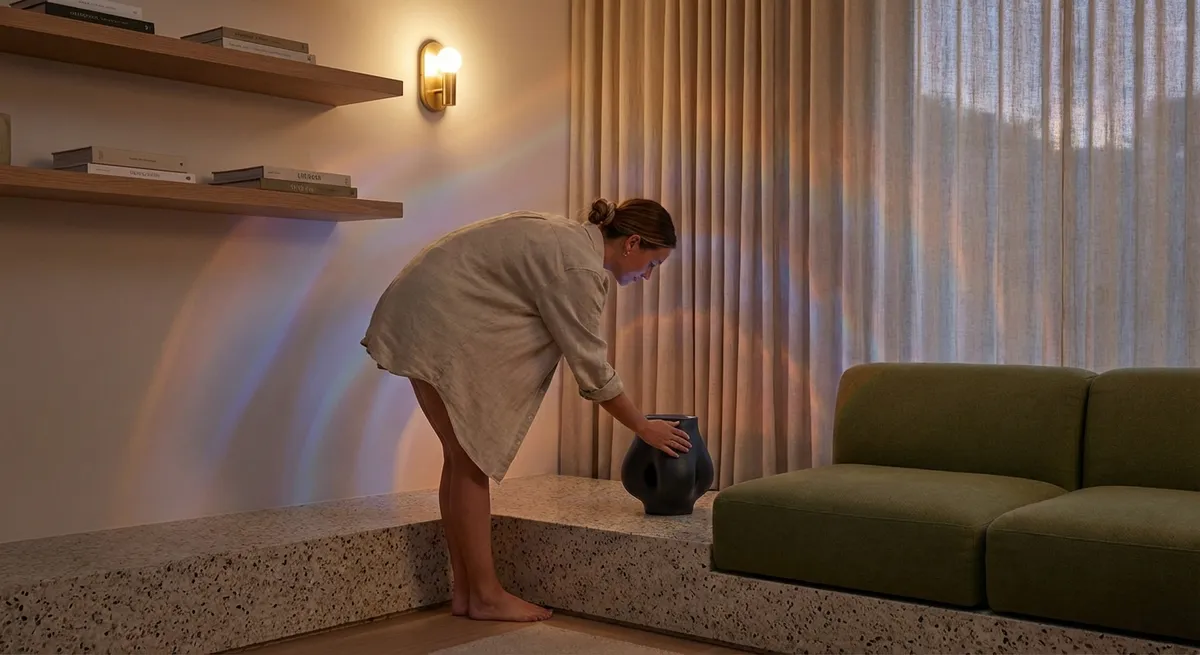
Architectural lighting today leans on three principles: restraint, precision, and adaptability. Recessed, trimless fixtures that disappear into the ceiling; linear grazers that wash stone, plaster, or textured walls; concealed LED channels under stair treads or within millwork that create a soft glow rather than direct glare. Dim-to-warm technology allows evening lighting to recede to a candle-like color temperature, making a space feel instantly more intimate and timeless.
Equally important is the handling of daylight. Renovations that widen window openings, refine sightlines, and apply strategic solar control (exterior shading, high-performance glazing, layered window treatments) elevate comfort and reduce energy demand. Thoughtful daylighting also includes controlling contrast—avoiding overly bright windows in dim rooms that strain the eye, and instead balancing reflected light off pale floors, ceilings, and adjacent surfaces.
The result is a home that feels effortlessly flattering at every hour, where no single fixture demands attention, yet the overall atmosphere feels meticulously curated.
Insight 3: Material Narratives That Age Beautifully
True luxury is not the perfection of day one, but the elegance of year ten. The most compelling renovations today lean into materials that develop character rather than resist time at all costs.
Instead of laminates and high-gloss finishes that reveal every fingerprint and scuff, the refined home intentionally specifies materials with a graceful aging arc: honed stone that softens with micro-wear; limewash and plaster that gain subtle depth as light shifts; timber that takes on a gentle patina; unlacquered metals that bloom into complex tones over time. These are not “imperfect” selections; they are materials chosen because their long-term evolution enhances the narrative of the home.
The key is disciplined editing. Pair one or two expressive materials with a supporting cast of calmer, tactile surfaces. For instance, a single slab of richly veined stone as a focal point surrounded by restrained joinery; a textured plaster fireplace wall offset by quiet oak floors; metalwork in a single finish repeated through door hardware, faucets, lighting, and railings for visual continuity.
Homeowners planning renovations should ask not only “How does this look in a sample photo?” but “How will this feel, visually and physically, after years of daily life?” That simple question separates transient trends from enduring sophistication.
Insight 4: Zoned Luxury: Designing for Rhythms, Not Just Rooms
Traditional renovation thinking starts with room labels: living room, dining room, office, guest room. Elevated design starts instead with rhythms: morning rituals, evening decompression, concentrated work, convivial gatherings, quiet retreat. The architecture then supports those behaviors with precision.
Zoned luxury means carving the home into experiential territories, not just functional ones. A coffee ritual zone with integrated storage, filtered water, and indirect morning light near the kitchen; a decompression corridor between entry and living space that subtly transitions acoustics and brightness; a work zone with controllable daylight, acoustic separation, and built-in backgrounds designed for video calls; a hospitality zone where circulation, lighting, and seating encourage conversation rather than distraction.
This way of thinking influences everything from power placement and storage to door swing and furniture scale. For example, a reading zone might include a built-in niche with concealed charging, a focused reading light, and a nearby shelf for current books; a dressing zone might pair flattering vertical lighting, dedicated seating, and a surface for watch or jewelry rituals.
The result is a home that feels like it anticipates you—supporting your day with quiet intelligence instead of forcing you to adapt to arbitrary room labels.
Insight 5: Integrated Tech That Disappears into the Architecture
In elevated renovations, technology is never the main event; it’s the silent infrastructure that makes the home feel more composed, comfortable, and secure. The mark of a sophisticated scheme is not how many devices are visible, but how few.
Smart systems are increasingly integrated at the architectural level: flush-inset wall controls that consolidate lighting, shading, and climate into one discreet interface; speakers integrated into ceilings, millwork, or even plaster to preserve visual calm; televisions concealed behind art, panels, or pocketed doors; network and equipment closets carefully planned to eliminate cable clutter.
Rather than chasing every new gadget, refined homeowners prioritize foundational upgrades: robust wired and wireless networking; pre-wiring for future needs; low-voltage infrastructure for lighting and shading; and centralized control systems that can be updated over time. Where screens must exist, they’re treated like appliances, not focal points, with dedicated placement that doesn’t dominate key sightlines.
The most luxurious outcome is not a home that proudly displays technology, but one where comfort is optimized—temperature stable, lighting intuitive, security unobtrusive—while the architecture and materials remain visually uninterrupted.
Conclusion
Renovation at the highest level is no longer about collecting trending finishes or copying aspirational imagery. It’s about orchestrating silence, light, material, behavior, and technology into a cohesive, quietly confident whole.
For homeowners planning their next project, the true opportunity lies in asking deeper questions: How should this house sound? How should light move here from dawn to dusk? Which materials will tell a richer story with time? What daily rituals deserve architectural respect? Which technologies will enhance, not clutter, the visual calm?
Answer those questions with precision, and your renovation will transcend trend—becoming a residence that feels serenely current today and assuredly relevant tomorrow.
Sources
- Harvard Joint Center for Housing Studies – Improving America’s Housing - Research and reports on residential remodeling trends and homeowner priorities
- American Institute of Architects (AIA) – Home Design Trends Survey - Insights from architects on emerging residential design features and client demands
- U.S. Department of Energy – Daylighting Basics - Guidance on daylighting strategies and their impact on comfort and energy use
- International WELL Building Institute – WELL Building Standard - Framework linking acoustics, lighting, materials, and well-being in the built environment
- MIT School of Architecture + Planning – Architectural Materials Research - Academic perspective on material performance, durability, and environmental impact
Key Takeaway
The most important thing to remember from this article is that this information can change how you think about Design Trends.