Renovation, at its best, is less about spectacle and more about precision. It is an exercise in editing rather than embellishment—paring back, clarifying, and choreographing a home so that it supports life with subtle excellence. For homeowners planning a renovation in today’s saturated design culture, the true luxury is not found in trends, but in decisions made with calm, deliberate intention. The following insights move beyond the usual advice and offer a more considered framework for creating a home that feels as composed as it looks.
Designing for the Day After: Planning Beyond the “Reveal”
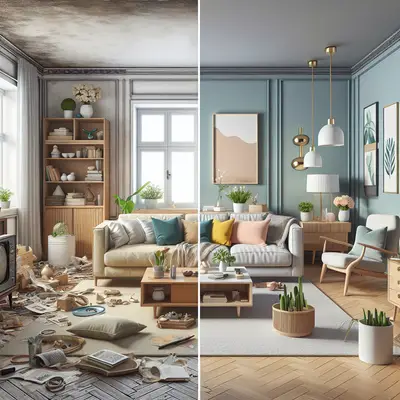
The typical renovation narrative fixates on the final reveal—the pristine room captured at its most photogenic moment. Yet the more sophisticated approach is to design for the day after: when groceries arrive, work calls begin, children scatter belongings, and life resumes its natural rhythm.
This mindset shifts every decision. A marble worktop, for instance, is no longer evaluated solely on its beauty, but on how gracefully it will age under coffee rings and citrus juice. Built-ins are not just sleek storage; they are a strategy for reducing visible clutter across years, not days. Thoughtful homeowners consider not only circulation paths for guests, but also routes for laundry baskets, cleaning tools, and deliveries.
The question becomes: How will this space behave when it is no longer being observed? Surfaces that accept patina, flooring that tolerates real use, and hardware that feels good in the hand thousands of times—these elements define long-term satisfaction. The refined renovation is judged not by the photo taken at completion, but by the ease of living it quietly enables a year later.
The Light Map: Treating Illumination as Architecture
Most renovation plans start with walls and finishes; the more discerning approach starts with light. Instead of treating lighting as a final layer of decoration, consider it a structural element that shapes mood, proportion, and even how materials are perceived.
Begin by mapping the natural light across the day: where the early sun lands, which rooms sink into afternoon shadow, and how reflections travel across floors and ceilings. This “light map” becomes a design instrument. Window enlargements, lowered sills, internal glass partitions, and mirrored reveals can all be deployed to guide and soften light rather than overpower it.
Artificial lighting should then be orchestrated in layers: discreet architectural lighting for general illumination, targeted task lighting where performance matters, and refined accent lighting to graze textures and anchor focal points. Dimmers, separate circuits, and warm color temperatures add nuance and prevent the harsh “all-on” effect that flattens even the most luxurious interior. In a well-renovated home, you do not notice the lighting as a feature; you feel it as an atmosphere.
Exclusive Insight #1: Before committing to any major layout change, spend an entire weekend observing how light inhabits the space hour by hour—and let those observations guide your floor plan more than any trend image.
Material Intelligence: Pairing Beauty with Behavioral Performance
Selecting materials is often treated as a purely aesthetic exercise, yet truly elevated renovations consider how materials behave over time—acoustically, thermally, and under daily touch. This is material intelligence: understanding that a home is experienced as much through sound, temperature, and tactility as through sight.
Timber, for instance, offers a natural acoustic softness that can quiet a room in a way stone never will. Limewash or matte mineral paints can lend depth and calm by diffusing light instead of reflecting it harshly. Natural fibers in rugs and textiles regulate humidity and temperature subtly, making spaces feel more grounded and less synthetic.
Rather than defaulting to the most dramatic finish, consider the quiet performance of each choice. How does this stone sound under heels? Does this tile amplify echoes? Will this handle feel cold or inviting on a winter morning? When materials are selected with behavioral criteria in mind, the home begins to feel effortlessly composed—even when no one can quite articulate why.
Exclusive Insight #2: Evaluate each major material on three dimensions—visual aging, acoustic effect, and tactile comfort—before cost or appearance; this lens naturally filters out options that will feel visually exhausting or physically uncomfortable in a few years.
The Silent Infrastructure: Systems as the True Luxury
While finishes attract attention, it is the unseen systems—mechanical, electrical, plumbing, insulation, and ventilation—that quietly determine whether a home feels genuinely elevated. The premium experience is not the showpiece kitchen alone; it is the consistent water pressure, the even temperature, the absence of drafts, and the barely perceptible hum (or lack thereof) of mechanical equipment.
Treat your renovation as an opportunity to refine this silent infrastructure. Upgrading insulation and air sealing not only improves comfort but also stabilizes internal temperatures, allowing materials to age more gracefully. Modern HVAC and ventilation systems can regulate humidity levels, protecting wood, fabrics, and finishes while making the air itself feel cleaner and more pleasant.
Electrical planning is equally critical. Under-specifying circuits or outlets can force inelegant future compromises—extension cords, overloading, or disruptive retrofits. Strategically placed power for motorized shades, artwork lighting, hidden charging drawers, and future technology reduces visual noise and preserves the architectural clarity of the space.
Exclusive Insight #3: Allocate a defined percentage of your renovation budget—often 20–30% in older homes—to invisible upgrades (insulation, ventilation, wiring, plumbing) and treat this as an investment in daily comfort rather than an optional “back-of-house” expense.
Calibrated Storage: Editing the Visual Field Without Erasing Personality
A refined home is not devoid of life; it is carefully edited. The goal is not minimalism for its own sake, but a form of visual discipline that allows meaningful objects to be seen and appreciated. Storage, therefore, should be calibrated—not merely abundant.
Deep, tall closets without internal organization quickly become chaotic. More sophisticated solutions prioritize depth, access, and visibility: shallow cabinets that prevent items from being lost in the back, integrated drawers in base units, and dedicated zones for the inevitable “daily scatter”—keys, bags, mail, devices. This approach acknowledges that clutter is not a failure of character but a predictable outcome of living.
Consider storage that respects the character of the home: concealed cabinetry that aligns with existing architectural rhythms, low credenzas built into unused niches, and window seats that double as discreet compartments. Open shelving should be treated sparingly and intentionally, reserved for objects that genuinely enrich the space, not as an invitation for unfiltered accumulation.
Exclusive Insight #4: During planning, list the specific categories of items you struggle to store (for example: sports equipment, guest linens, recycling, suitcases, seasonal tableware) and design bespoke storage responses to each; this preempts clutter more effectively than simply adding more generic cabinets.
Temporal Zoning: Designing for Multiple Speeds of Living
Homes today are asked to perform at multiple “speeds”: work, rest, hospitality, family time, solitude. A truly thoughtful renovation acknowledges this by introducing temporal zoning—the ability for spaces to transition gracefully between different modes of use throughout the day and week.
This does not always require additional square footage. Instead, it may involve movable partitions, double-duty furniture, and acoustic separation that allows one person to work while another unwinds nearby. A dining table might be lit and wired to function impeccably as a work surface by day, then transformed into a warm, intimate setting in the evening through lighting and storage that allows devices to disappear.
Bedrooms and bathrooms should feel deliberately slower in tempo—visually calmer, acoustically softened, and insulated from the higher-frequency activities of the home. Meanwhile, transitional zones such as halls, stair landings, or entry vestibules can be optimized as decompression spaces, subtly shifting you from public to private, from work to rest.
Exclusive Insight #5: When planning each room, define its “fast” and “slow” functions (for example, a living room as both a lively gathering space and a quiet reading spot) and incorporate at least one spatial or lighting feature that enables it to shift convincingly between those modes.
Conclusion
A truly elevated renovation is not a collage of desirable finishes, but a coherent, deeply intentional recalibration of how a home supports the lives within it. By designing for the day after the reveal, treating light as architecture, selecting materials for their behavior as much as their beauty, investing in silent infrastructure, calibrating storage, and zoning spaces for different tempos of living, homeowners can achieve a result that feels both quietly luxurious and enduringly intelligent.
The most successful projects are not the loudest; they are the ones that continue to feel right—visually, physically, and emotionally—long after the contractors have left and the cameras are gone. In that sustained sense of ease lies the real quotient of a refined renovation.
Sources
- U.S. Department of Energy – Energy Saver: Home Renovation & Remodeling - Authoritative guidance on improving home comfort and efficiency through insulation, HVAC, and building envelope upgrades.
- Harvard Joint Center for Housing Studies – Improving America's Housing - Research-based insights into renovation spending, priorities, and the long-term value of system and efficiency upgrades.
- American Society of Interior Designers (ASID) – Research & Reports - Professional findings on lighting, wellness, acoustics, and the impact of design decisions on quality of life.
- Mayo Clinic – Indoor Air Quality and Health - Discussion of how ventilation, materials, and systems choices affect indoor air quality and wellbeing.
- MIT School of Architecture + Planning – Architectural Materials and Design - Academic research exploring how material choices influence building performance, acoustics, and user experience.
Key Takeaway
The most important thing to remember from this article is that this information can change how you think about Home Renovation.