Renovating a home at a high level is no longer about chasing trends or simply upgrading finishes; it is about orchestrating a space that feels deliberate, enduring, and quietly exceptional. For homeowners who expect more than surface-level change, renovation becomes a form of craft—where every decision, from the mechanics behind the walls to the play of light across a stone threshold, is intentional.
Below are five exclusive insights designed for those who view their renovation not as a project, but as a long-term refinement of the way they live.
Designing the “Invisible First”: Systems That Shape the Experience
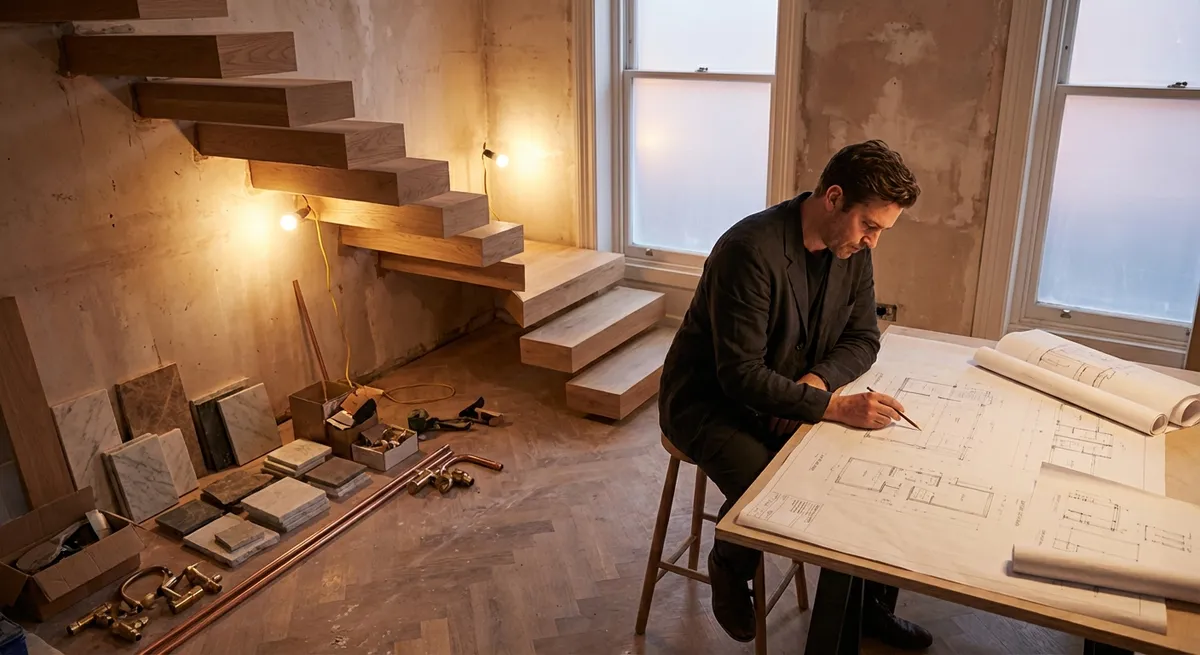
The most sophisticated renovations often begin with what will never be photographed. Electrical layouts, HVAC zoning, acoustic insulation, plumbing routes, and smart home wiring form the hidden infrastructure that defines comfort, calm, and long-term value.
Rather than starting with cabinetry or color palettes, anchor your early design conversations around mechanical and structural strategy. A thoughtfully zoned climate system can allow different wings of the home to feel tailored to how each space is used—cooler, crisper temperatures in a kitchen; softer warmth in a library or primary suite. Upgraded insulation and acoustic treatment between floors or rooms can transform the home’s soundscape from chaotic to composed, minimizing the ambient noise of modern life.
Smart wiring for future technology—such as EV chargers, whole-home surge protection, or a centralized low-voltage hub—protects you from expensive retrofits later. Even details like drain placement in showers, locations of shut-off valves, or the inclusion of service chases for future maintenance will quietly determine how effortless your home feels over the next decade. The refined renovation prioritizes the unseen backbone first, knowing that elegance at the surface requires stability beneath it.
Curating Natural Light as a Design Material
Luxury in a renovated home is often less about what you add and more about how you reveal what is already there—especially light. Natural light can sculpt architecture, elevate finishes, and calm the nervous system when orchestrated with intent. Beyond simply “making rooms brighter,” consider how light shifts over the day and how your home should respond.
East-facing rooms might be ideal for breakfast spaces or studies that benefit from gentle morning light. West-facing rooms, which receive more intense afternoon sun, may call for deeper overhangs, exterior shading devices, or layered window treatments that filter rather than block illumination. Incorporating transom windows, interior glass partitions, or carefully placed mirrors can pull light deeper into the home without resorting solely to artificial sources.
When planning window replacements or new openings, collaborate with your architect or designer to map the sun’s path relative to your daily rituals: where you read in the evening, where you prepare coffee, where you unwind at dusk. Thoughtful alignment of those routines with the home’s light patterns can make the space feel quietly tailored to you. In a premium renovation, natural light is treated as a primary design material, not an afterthought.
Material Strategy: Creating a Cohesive Language, Not a Collection of Upgrades
One hallmark of an elevated renovation is the sense that the home speaks in a single, refined visual language—even when multiple spaces, styles, or eras are in play. Rather than approaching each room as a standalone project, develop a deliberate material strategy that carries through the entire home.
Begin by selecting a small, tightly edited palette of foundational materials: a primary wood tone, a core metal finish, a stone or composite surface that recurs in subtle ways. From there, allow variations within that vocabulary rather than introducing entirely new elements from room to room. A brushed nickel or unlacquered brass might appear in door hardware, bath fixtures, and cabinet pulls—but in different expressions suited to each space. A consistent stone type might appear honed in the kitchen, flamed on an exterior step, and polished in a powder room, creating continuity without monotony.
This approach also extends to thresholds and transitions. The way floors meet at room boundaries, how stair edges are detailed, or how wall treatments end at openings can either fragment or unify a home. A sophisticated renovation obsesses over those junctions: the reveal where a baseboard meets a stone surround, the shadow line beneath cabinetry, the continuity of grout lines from one room to the next. When materials are orchestrated as a coherent language instead of scattered upgrades, the home feels composed rather than simply “redone.”
Designing for Future Selves: Flexible Luxury over Fixed Layouts
The truest form of premium planning acknowledges that the way you live today will evolve—and that your home should be ready to evolve with you without requiring another major overhaul. Instead of locking each room into a single, rigid purpose, a refined renovation builds in flexibility masked by elegance.
Consider layouts that allow a home office to convert into a guest suite with minimal disruption, perhaps via discreetly integrated storage for bedding, or pre-wired wall locations for a future television. A secondary living area might be framed and wired to later become a multigenerational suite, exercise room, or studio, with plumbing rough-ins quietly hidden behind walls. Wider hallways, minimal level changes, and bathroom layouts that can easily accommodate future grab bars or a curbless shower ensure that aging in place feels natural rather than clinical.
Even the selection of built-in versus freestanding pieces can play into this strategy. A fully built-in banquette might feel bespoke, but a more flexible seating arrangement could allow the room to adapt to different phases of life or changes in taste. The most sophisticated renovations embed these contingencies invisibly, so the home can adjust to career shifts, family expansions, or lifestyle changes without compromising its elegance.
Precision in Execution: Treating the Build as a Bespoke Process
At a premium level, the real differentiation often lies not in the idea but in its execution. Two homes may use the same materials, yet one feels truly elevated because of how rigorously the details have been carried through on site. Treating construction as a bespoke process—rather than a rushed checklist—transforms the final result.
This begins with assembling the right team: builder, architect, designer, and key trades who understand both the aesthetic ambition and the technical demands of the project. Detailed drawings, mockups, and full-size samples become essential tools rather than optional extras. For instance, testing grout colors in situ, reviewing actual lighting temperatures at night, or building a sample section of millwork can prevent misalignments that would otherwise diminish the overall effect.
Precise coordination also extends to sequencing. Protecting finished surfaces during ongoing work, scheduling trades so that craftsmanship is not compromised by speed, and insisting on proper curing, acclimation, and testing periods all contribute to the longevity of the result. Establishing clear quality benchmarks—tolerances for tile lippage, alignment of fixtures, or the smoothness of painted surfaces—ensures that everyone on site is working toward the same standard.
When execution is treated as carefully as design, the renovation acquires a level of quiet perfection: doors close with a satisfying weight, lighting reveals textures elegantly, and every corner feels considered. It is in this phase that a well-conceived vision is either diluted—or fully realized.
Conclusion
A truly elevated home renovation is not defined by visible expense, but by the depth of intention behind every choice: how systems support serenity, how light shapes daily rituals, how materials speak to one another, how rooms adapt to life’s changes, and how meticulously the work is carried out.
For homeowners who seek more than a cosmetic update, renovation becomes an ongoing dialogue between architecture and lifestyle. By embracing these insights—prioritizing the invisible, curating light, crafting a cohesive material language, designing for future selves, and demanding precision in execution—you transform the renovation from a disruptive event into a lasting refinement of how you live, entertain, and retreat.
Sources
- U.S. Department of Energy – Energy Saver: Heating & Cooling – Guidance on HVAC zoning, insulation, and strategies that improve comfort and efficiency.
- Harvard Joint Center for Housing Studies – Improving America’s Housing – Research on renovation trends, long-term value, and how homeowners invest in existing homes.
- American Institute of Architects (AIA) – Home Design Trends – Insights into evolving residential design priorities, including flexibility and aging in place.
- National Institute on Aging – Aging in Place – Considerations for designing homes that can gracefully support changing needs over time.
- The New York Times – “How to Let Light into a Dark Home” – Practical and design-focused approaches to enhancing natural light within existing spaces.
Key Takeaway
The most important thing to remember from this article is that this information can change how you think about Home Renovation.