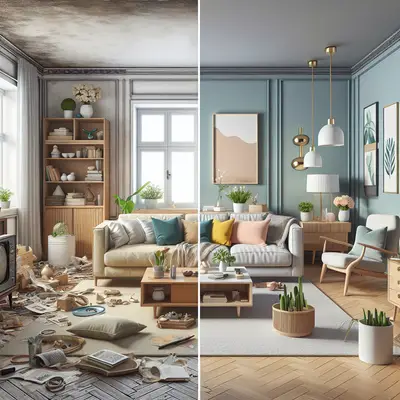
In the most successful renovations, the true luxury is not what you see first—it’s what you never have to think about again. Walls appear seamless, light feels inevitable, and daily life moves through the home with almost choreographed ease. For homeowners planning a renovation at a refined level, the conversation moves beyond fixtures and finishes into orchestration, longevity, and discretion. What follows are five exclusive, under-discussed insights that elevate a renovation from “beautiful” to quietly masterful—and keep it that way for decades.
Designing for the Invisible Day: How Your Home Should Work at 6 a.m. and 11 p.m.
The most sophisticated renovations are designed not for the open house, but for the unobserved day—the early morning rush, the late-night arrival, the quiet Sunday where the entire home is in use without strain.
Begin by mapping a full 24-hour cycle in your home: where you enter, what you set down, which doors you open with full hands, where you need silence, and where you need power and light. Instead of starting with rooms, start with moments: waking, working, entertaining, decompressing, hosting guests, returning from travel. A kitchen isn’t simply a “kitchen”; it’s early-coffee zone, homework station, cocktail prep space, delivery unpacking area, and frequently, an informal command center.
Once you have this temporal map, your layout choices become far sharper. Hallways widen or contract based on actual circulation. Secondary access points—like a discrete “service” entrance for deliveries or dog walkers—may make more sense than excessively grand main entries. Lighting becomes layered and localized: low-level guide lighting at night, task lighting where real work happens, and ambient lighting that flatters both people and materials. The most premium outcome is a home that feels as if it anticipated your next move before you did—and quietly removes friction at every turn.
Precision Space Planning: The Architecture of What You Don’t See
True renovation intelligence lies in the inches you never notice. Thoughtful reallocation of “non-rooms”—hallways, transitions, corners, and voids—can transform how a home performs without adding a single square foot.
High-functioning renovations obsess over depth, not just width. Cabinetry is designed to the specific dimensions of what you own and how you live: a drawer for tall bottles that actually fits them; a pull-out for small appliances you don’t want to see; a mudroom bench that accommodates the bags and outerwear you realistically have, not the idealized version. Consider partial walls, recesses, and built-in niches that reclaim dead space while keeping surfaces visually calm.
Vertical space is another overlooked frontier. Slight ceiling height variations can subtly delineate zones without adding doors or trims. Recessed storage within thicker interior walls, integrated headboard walls, and built-in banquettes all reclaim depth typically ignored. Your architect and designer should not merely place furniture in rooms; they should be architecting your storage, sightlines, and clearances with the precision of a well-run boutique hotel, where nothing feels cramped yet nothing is wasted.
Material Intelligence: Selecting Finishes for Graceful Aging, Not Just First Impressions
At a premium level, materials are chosen as much for how they will age as for how they look on installation day. The quietest luxury is a surface that never appears tired, only more intentional with time.
Begin with an honest assessment of your tolerance for patina. If you love the idea of wear telling a story, noble materials like unlacquered brass, natural stone, and solid wood can be extraordinary; they will soften, deepen, and develop character. If you prefer visual constancy, seek out next-generation engineered alternatives that mimic natural stone or wood while resisting stains, UV fading, or scratching. The key is alignment: a perfectionist who chooses heavily veined marble for a primary kitchen will live in permanent low-level frustration.
Beyond aesthetics, prioritize tactile quality. Handles, railings, stair treads, and countertop edges are daily touchpoints; their proportion, temperature, and finish matter enormously. Insist on samples large enough to view in your actual light at different times of day. Consider maintenance realistically: who will care for these materials, and with what products? The most refined renovations quietly integrate durable, low-maintenance bases (such as high-performance porcelain in high-traffic zones) layered with more delicate materials in limited, protected applications where they can shine without being punished.
Systems as Luxury: Engineering Comfort, Silence, and Control
In elevated renovations, mechanical, electrical, and technology systems are not afterthoughts—they are infrastructure-level luxuries. The comfort envelope of a home is defined as much by what you hear and feel as by what you see.
Acoustic control is a critical yet often undervalued domain. Upgraded insulation, solid-core interior doors, acoustically separated floors, and strategic placement of noisy spaces (laundry, mechanical rooms, home gyms) can dramatically improve the sense of calm. HVAC should be designed, not just specified: zoning that matches actual use patterns, ultra-quiet equipment, properly sized ducts, and thoughtfully placed vents mean a home that feels fresh and comfortable without drafts or noise.
Lighting and shading deserve equal rigor. A layered lighting plan—ambient, task, accent, and decorative—supported by high-quality dimming and scene controls can transform the mood of a space with a single touch. Motorized shades integrated with daylight, privacy needs, and solar gain make the house feel both intelligent and effortless. Structured wiring, robust Wi‑Fi planning, and centralized low-voltage systems allow you to add or change technology over time without tearing the house apart. When systems are well orchestrated, comfort feels natural, not tech-driven.
The Long Game: Renovating with Your Future Self in Mind
The most astute homeowners renovate not only for their current life, but for the next one—and the one beyond that. The goal is to create a framework that adapts gracefully as needs, tastes, and technologies evolve.
Instead of locking every square foot into a single use, design spaces with dual or even triple potential. A current playroom becomes a future study or wellness room with minimal intervention. A guest suite gains discreet plumbing access for a later conversion to a caretaker’s quarters or extended stay space. Wide doorways, generous clearances around key fixtures, and at least one step-free entrance can be integrated now without broadcasting “accessibility,” yet they future-proof the home elegantly.
From a structural and infrastructure standpoint, consider over-preparing discreetly where feasible: additional blocking in walls for future grab bars or built-ins, spare conduit for new wiring runs, and allowances in panel capacity for future EV chargers or electrification upgrades. Document everything meticulously with as-built plans and photographs before closing walls; this record becomes an asset, both for your own future projects and for any eventual buyer. The finest renovations are not fragile monuments to a moment in time—they are resilient, adaptable frameworks that remain desirable and functional through shifting seasons of life.
Conclusion
A truly elevated renovation is less about spectacle and more about orchestration. It is defined by the way light progresses through the day, how sound is managed, how storage absorbs the realities of living, and how systems disappear into comfort and ease. By designing for the invisible day, engineering precision into every inch, choosing materials with an eye toward graceful aging, treating systems as a form of luxury, and planning generously for the future, homeowners create residences that feel both intensely personal and enduringly relevant.
In the end, the renovation that quietly outperforms is the one that feels inevitable—as though the home could never have been any other way.
Sources
- [U.S. Department of Energy – Energy Saver: Heating & Cooling](https://www.energy.gov/energysaver/heating-cooling) - Guidance on high-performance HVAC systems, zoning, and comfort strategies
- [Harvard Joint Center for Housing Studies – Improving America’s Housing](https://www.jchs.harvard.edu/research/improving-americas-housing) - Research on renovation trends, long-term planning, and homeowner priorities
- [Mayo Clinic – Home Safety for Older Adults](https://www.mayoclinic.org/healthy-lifestyle/healthy-aging/in-depth/healthy-home/art-20046250) - Insights on subtle design choices that support aging in place and future-proofing
- [American Institute of Architects (AIA) – Residential Design Resources](https://www.aia.org/resources/6071212-residential-design) - Professional guidance on space planning, comfort, and building systems in residential projects
- [U.S. Environmental Protection Agency – Indoor Air Quality](https://www.epa.gov/indoor-air-quality-iaq) - Information on ventilation, filtration, and systems that improve indoor comfort and health
Key Takeaway
The most important thing to remember from this article is that this information can change how you think about Home Renovation.