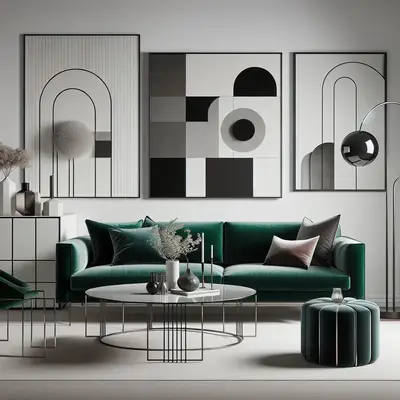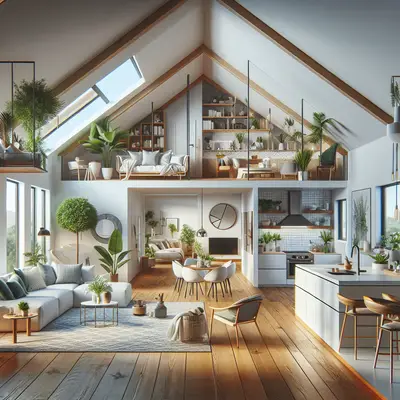
In the most considered homes, “being on trend” is almost beside the point. The true ambition is to create spaces that feel current today, but will still read as intelligent and composed a decade from now. For homeowners planning a renovation, that requires a different lens: less about what is circulating on social media this month, and more about what will sustain a sense of quiet relevance over time.
This is where the most refined design trends are headed—toward longevity, tactility, and a kind of discreet innovation that reveals itself only on closer inspection. Below, five exclusive insights shaping sophisticated renovations right now, each designed to help your home feel effortlessly of-the-moment while remaining elegantly unhurried by fashion.
1. From “Statement” to “Atmosphere”: The Shift to Layered Restraint
The era of the singular “wow” moment—the oversized chandelier, the feature wall, the hyper-contrasting kitchen—is quietly giving way to an emphasis on atmospheric depth. Designers are building rooms that unfold slowly, rewarded not by one loud flourish but by cumulative nuance.
Atmosphere-driven design leans into tonal palettes, layered textures, and calibrated light rather than dramatic color clashes or aggressive patterning. A sitting room may be composed almost entirely of neutrals, yet feel richly dimensional because linen, bouclé, brushed wool, oiled oak, and travertine all sit in subtle dialogue. The eye travels, but it isn’t jostled.
For homeowners, this approach has a strategic advantage: it ages exceptionally well. A room built on atmospheric restraint can accept new art, a different rug, or a change in window treatment without losing its integrity. If you are renovating, consider dialing back the “statement” gestures in favor of a more layered envelope—wall finishes, flooring, millwork, and lighting that create a refined backdrop where details, not drama, carry the room.
2. The New Neutral: Warm Minimalism With Material Intelligence
Minimalism is not disappearing; it is maturing. The cold, gallery-like minimalism of the early 2000s is being replaced by a warmer, more material-led quietude. The emphasis is on reduction, yes—but not at the expense of tactility or comfort.
Warm minimalism favors sand, mushroom, tobacco, and oat tones over stark white and hard black. Natural woods are left with visible grain. Stone is honed rather than polished to a mirror shine. Metals are brushed, patinated, or burnished instead of lacquered. Even hardware and fixtures follow this logic, with unlacquered brass, bronze, and brushed nickel gently weathering into the room rather than shouting over it.
The intelligence lies in how these materials are orchestrated across the home. A cohesive material language—repeating the same few woods, stones, and metals—creates a sense of continuity that feels expensive and intentional. When planning a renovation, treat your material palette like a wardrobe of essentials: tightly edited, impeccably sourced, and chosen for how beautifully they age, not how loudly they trend.
3. Concealed Function, Visible Craft: The “Invisible Luxury” Kitchen
The kitchen remains the most scrutinized room in a renovation, but its aesthetic priorities are evolving. The newest expression of luxury in kitchen design is not about showcasing every appliance or surface—it is about how much can be concealed without sacrificing performance.
This “invisible luxury” is achieved through integrated appliances, full-height millwork, pocket doors that slide to reveal or conceal working zones, and pantries that absorb visual clutter. Range hoods are architecturally integrated rather than treated as separate objects. Backsplashes may be stone slabs, but the real refinement is in the perfectly aligned veining and ultra-precise junctions.
What remains purposefully visible is craft: exquisite joinery, perfectly proportioned paneling, and hardware that feels weighty in the hand. Deep drawers that close with a soft, confident glide. Seamless stone edges that read more like sculpture than kitchen equipment. For homeowners, the key is to think beyond appearances: ask how each visible element contributes to tactile pleasure, and how each functional requirement can be gracefully absorbed into the architecture of the room.
4. Light as Architecture: Sculpting Space With Shadow and Glow
Truly elevated renovations now treat light not as an afterthought, but as a primary design medium. The most sophisticated homes use light to define mood, structure perception, and even guide the movement of people through a space.
This begins with daylight. Larger openings are nothing new, but the innovation lies in how apertures are framed and filtered—deep window reveals, sheer layered treatments, or screens that allow light to permeate while softening glare. Renovators are reconsidering window placement altogether, orienting views to greenery, sky, or architectural moments rather than simply maximizing glass.
Artificial light then completes the composition. Instead of one central fixture, rooms are receiving layered schemes: recessed ambient lighting, sculptural pendants for focal points, art lighting to emphasize specific pieces, and floor or table lamps for intimacy. Warm color temperatures and dimmable systems make it possible to shift a room from precise to poetic at the touch of a button.
When planning your renovation, treat your lighting plan as seriously as your floor plan. Ask how you want each space to feel at dawn, mid-day, and evening; then work backward into a layered scheme that allows for nuance. A beautifully designed room, poorly lit, is an opportunity lost.
5. Rooms With an Inner Life: Designing for Quiet, Private Rituals
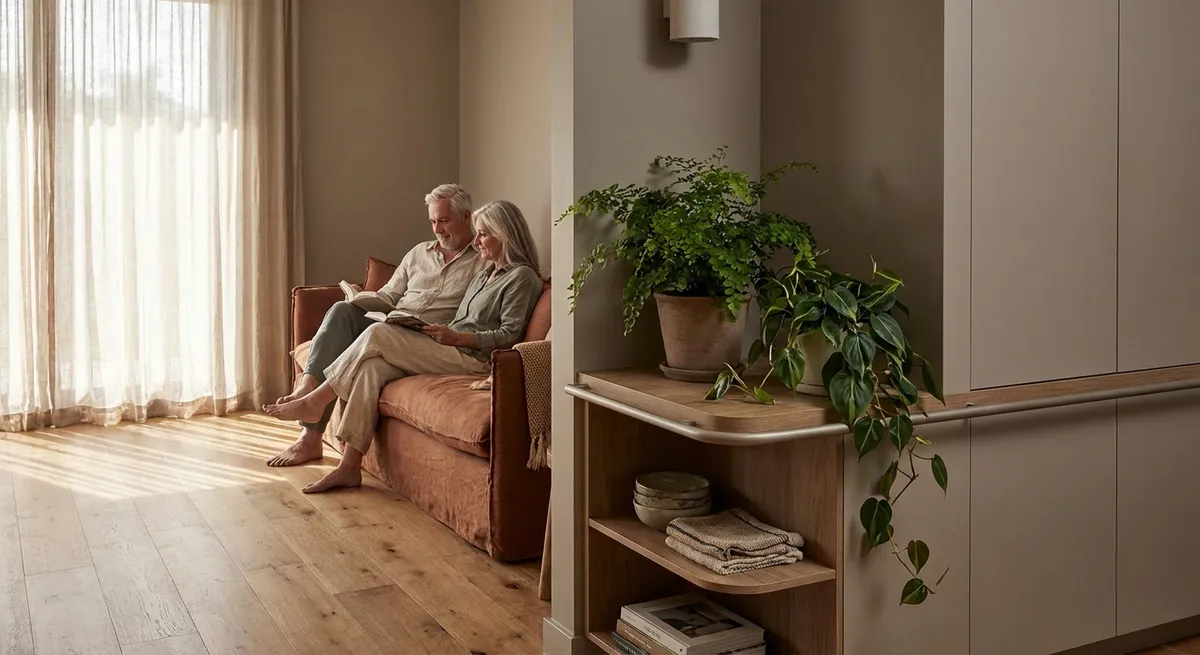
The most resonant trend in refined residential design is not about finishes at all—it is about use. Homes are increasingly being planned around private rituals: the small, quiet moments that give a space its soul. This is where design becomes deeply personal.
Instead of defaulting to generic “flex rooms,” homeowners are carving out spaces for specific daily rhythms: a reading niche cocooned by books and soft light, a bath suite with a bench and towel warmer designed for lingering, a window seat positioned for a particular afternoon sun. These are not grand gestures; they are edited, almost hidden luxuries that make the home feel intimately tuned to its occupants.
Architecturally, this might mean a modestly scaled room with exceptional detail rather than a large, under-furnished space. Or a deliberate pocket of calm adjacent to busier zones—a small writing desk off the kitchen, a cushioned ledge at the end of a hallway, a landing with a chair and a view. In your renovation planning, ask not only “What goes here?” but “What could we quietly enjoy here every day?” Trends will come and go; rituals, once supported, tend to endure.
Conclusion
Refined design trends today are not asking homeowners to chase novelty; they are inviting them to curate a sense of enduring ease. Layered restraint instead of spectacle, warm minimalism instead of clinical blankness, invisible functionality anchored by visible craft, light as architecture, and spaces devoted to personal ritual—these are the directions that distinguish homes with true staying power.
For your renovation, the question is less “What’s in?” and more “What will still feel intelligent, composed, and deeply comfortable in ten years?” When you choose with that horizon in mind, you are no longer simply following trends. You are designing a home that will remain quietly, convincingly current—long after the moment has passed.
Sources
- American Institute of Architects (AIA) – Home Design Trends Survey – Insights into evolving priorities in residential design, including layouts, features, and materials.
- Harvard Joint Center for Housing Studies – Improving America’s Housing – Research on renovation patterns, homeowner investment, and long-term design considerations.
- Architectural Digest – Kitchen Design Trends – Editorial perspective on current directions in high-end kitchen design and detailing.
- Dezeen – Residential Lighting Projects – Case studies showcasing how contemporary homes are using layered lighting and daylight as core design tools.
- The Royal Institute of British Architects (RIBA) – House Design Guidance – Professional guidance on planning, material selection, and creating long-lasting residential spaces.
Key Takeaway
The most important thing to remember from this article is that this information can change how you think about Design Trends.