The most interesting renovations today do not shout for attention; they inhabit a quieter, more considered register. For discerning homeowners, “on-trend” no longer means following a prescribed aesthetic, but orchestrating spaces that feel timeless, tailored, and deeply personal—while still acutely aware of where design is heading. The true luxury is not excess, but intentionality: knowing when to edit, when to invest, and when to let a single, exquisite detail carry the room.
Below are five exclusive, forward-leaning design insights for homeowners who expect more from their renovation than a new color palette or a rearranged floor plan.
Insight 1: The Return of Deliberate Rooms
Open-plan living is quietly ceding ground to a more nuanced spatial narrative. Homeowners are rediscovering the pleasure of rooms with purpose—spaces that feel composed, not just connected.
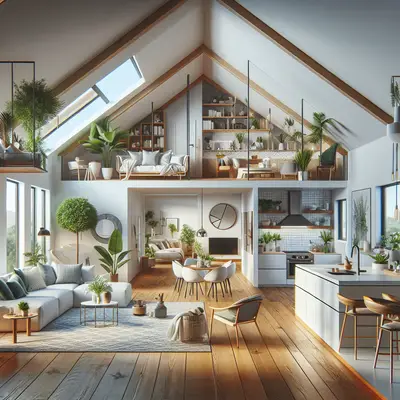
Instead of defaulting to a single, expansive “great room,” refined renovations are reintroducing thresholds, partial separations, and subtle zoning. Steel-framed glass partitions, wide cased openings, and changes in ceiling treatment or flooring pattern allow light and sight lines to flow, while still giving each area its own identity. A dining room that can be closed off for an intimate dinner, a small reading salon off the main living space, or a discreet work niche with acoustic buffering each contributes to a layered sense of living.
This shift does not reject openness; it redefines it. The most successful plans alternate compression and release—moments of enclosure followed by expansiveness—much like a well-composed piece of music. For homeowners, this means working with architects and designers to choreograph not just where walls go, but how each transition feels: what you see, what you hear, how the light changes as you move. The result is a home that accommodates modern life while protecting the rituals that make it feel elevated: uninterrupted reading, focused work, private conversation, or a lingering meal.
Insight 2: Materials with Quiet Depth, Not Loud Statements
The next wave of elevated renovation is less about “feature” materials and more about surfaces with a quiet, enduring depth. Rather than compete for attention, finishes are starting to converse with each other—visually, texturally, and over time.
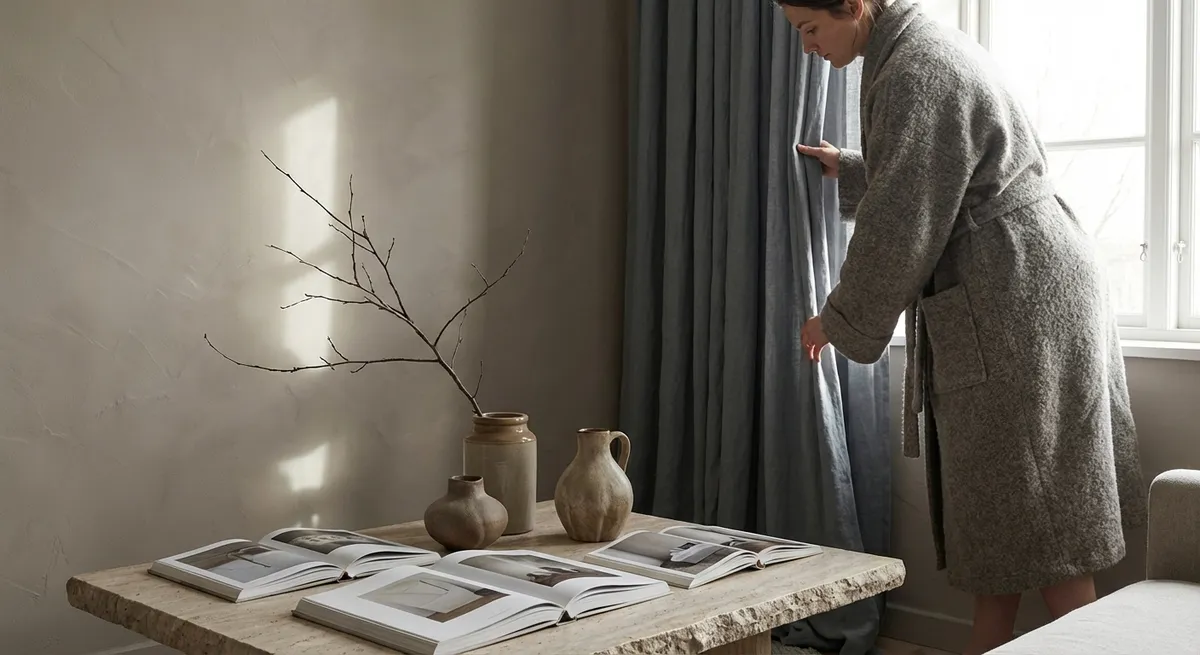
Homeowners are favoring natural and nature-adjacent materials that age gracefully: honed stone with subtle veining, rift-cut oak with a refined grain, limewashed plaster with soft tonal variation, brushed metals that develop a gentle patina. The luxury lies in the quality of the material and the precision of its application, not in overt pattern or gloss. A single slab of stone carried from countertop up the wall, a plaster finish that curves seamlessly into the ceiling, or a custom-milled wood profile repeated across cabinetry and doors can quietly anchor an entire scheme.
This approach demands considered restraint. Fewer materials, specified at a higher level, create a sense of cohesion and calm. When planning a renovation, it is worth curating a deliberately tight material palette and then exploring depth within it: shifts in finish (honed vs. leathered stone), scale (narrow vs. wide planks), or detail (micro-bevels, fluted or reeded profiles). The resulting interiors feel inherently luxurious without needing constant visual drama—spaces that photograph beautifully, but live even better.
Insight 3: Integrated Technology That Disappears, Not Dominates
In refined homes, technology is increasingly expected to be powerful yet visually recessive. The new benchmark is not how many devices you own, but how little you notice them.
This means planning for technology at the architectural stage, not as an afterthought. Speakers disappear into ceilings and walls, televisions recess into millwork or sit behind sliding panels, and wiring is carefully concealed to preserve the purity of lines and surfaces. Smart systems control lighting, climate, shading, and security with minimal visual footprint—often through discreet keypads, slim wall controls, or well-designed app interfaces rather than a wall cluttered with switches.
Crucially, “smart” is being redefined as intuitive and unobtrusive. Scenes that adjust lighting and shading to the time of day, pre-programmed climate zones that reflect how you actually use the house, and occupancy-based controls for rarely used spaces all elevate comfort without requiring constant fiddling. The most sophisticated renovations also consider resilience and future-proofing: easily accessible cable runs, flexible low-voltage infrastructure, and platforms that can be updated over time. For homeowners, this is the moment to insist on technology that serves the architecture, not the other way around.
Insight 4: Elevated Pragmatism in Kitchens and Baths
Kitchens and bathrooms remain the high-investment zones of any renovation, but the smartest projects are moving beyond “showpiece” aesthetics to what might be called elevated pragmatism—the intersection of elegance and serious performance.
In kitchens, this is evident in the rise of discreetly professional layouts: concealed or second prep zones, scullery or pantry kitchens tucked behind the main space, and thoughtful separation of guest-facing areas from working ones. Integrated appliances, custom paneling, and concealed storage maintain visual serenity, while the underlying infrastructure—ample task lighting, robust ventilation, dedicated appliance zones—handles the realities of daily use and entertaining. A quiet color story may be paired with exacting details: ultra-thin stone edges, perfectly aligned reveals, or hardware scaled and weighted to feel substantial in hand.
Bathrooms are following a similar trajectory. Instead of maximal spa theatrics, the focus is on tailored wellness: generous showers with considered lighting, thermostatic controls that remember individual preferences, and high-quality fittings that are as precise as they are beautiful. Heated floors, integrated niches designed to align with tile coursing, and well-planned ventilation and drainage all contribute to a sense of quiet luxury. Homeowners who invest in these hidden but felt details—water pressure, acoustics, ergonomics—end up with spaces that feel more like private suites than utilitarian rooms.
Insight 5: A Curated Personal Layer Above the “Base Build”
The most compelling homes today are built on a refined architectural and material base, then elevated by a curated layer of personal objects, art, and textiles—an intentional tension between restraint and character.
Instead of designing every corner to be “finished” on day one, sophisticated homeowners are leaving room for the home to evolve. This might mean reserving wall space for future art acquisitions, incorporating flexible shelving and plinths for rotating objects, or planning lighting that can adjust as collections and focal points shift. The underlying palette stays calm and coherent; personality arrives through pieces with provenance and meaning rather than generic décor.
This approach also makes a renovation more durable. As tastes and lifestyles change, the core of the home—its layout, materials, technical infrastructure—remains relevant, while the visible layer is easy to refresh. Investing upfront in gallery-level lighting, robust wall construction for heavy art, or custom millwork designed to display and conceal in equal measure gives homeowners the freedom to edit over time without disruptive overhauls. In essence, the house becomes a finely crafted backdrop for a life well lived, not a static monument to a single design moment.
Conclusion
Design trends at the highest level are moving away from surface-level novelty and toward a quieter, more intelligent form of luxury. Spaces are becoming more deliberate, materials more honest, technology more invisible, and personal expression more curated. For homeowners planning a renovation, the opportunity lies in treating the project not as a style exercise, but as a long-term composition—balancing enduring architecture with the flexibility to evolve.
The homes that will feel relevant a decade from now are not the ones that chased the loudest trend, but the ones that invested in depth: in how rooms relate, how materials age, how systems perform, and how the space supports the rituals and objects that matter most. That is where true, lasting refinement resides.
Sources
- American Institute of Architects (AIA) Home Design Trends Survey - Data and analysis on emerging patterns in residential layouts and room use
- National Kitchen & Bath Association (NKBA) Design Trends Research - Insights on evolving kitchen and bath planning, materials, and technology integration
- US Green Building Council – LEED for Homes - Guidelines on sustainable, high-performance residential design, including materials and systems
- Harvard Joint Center for Housing Studies – Remodeling Futures Program - Research on renovation investment patterns and homeowner priorities
- Smithsonian Magazine – “Why We Crave Cozy, Comfy Spaces” - Context on how spatial design and material choices influence comfort and well-being
Key Takeaway
The most important thing to remember from this article is that this information can change how you think about Design Trends.