Renovations at the highest level are no longer about spectacle; they are about discernment. The most compelling homes today feel intentional rather than impressive, composed rather than decorated. For homeowners planning a renovation, the opportunity is not simply to update finishes, but to choreograph an environment that anticipates how you will actually live—five, ten, even twenty years from now. The following design currents are not fleeting trends; they are directional shifts that reward those who plan with patience, subtlety, and a long view.
From Rooms to Realms: Designing by Mood, Not Function
Traditional floor plans divide life into labeled compartments—kitchen, living room, dining room. The most sophisticated renovations now begin from a different premise: design by mood and experience rather than use alone.
Instead of asking, “Where is the living room?” architects and designers are asking, “Where does unwinding happen?” That shift unlocks more fluid, atmospheric planning. A formal dining room, for example, may become a “slow gathering realm” with enveloping banquette seating, dimmable layers of light, and acoustic treatment that softens conversation. A home office might evolve into a “deep-focus enclave” with controlled daylight, tactile desk materials, and integrated cable management that eliminates visual noise.
For renovations, this approach reframes decisions around how spaces should feel—serene, expansive, grounded, intimate—before any tile or paint is chosen. It also encourages transitional zones: threshold spaces where one mood gently gives way to another through changes in ceiling height, material underfoot, or sound absorption. When you brief your designer, describe the emotional cadence of your ideal day at home; the resulting plan will be more attuned, and far less generic.
The Textural Palette: Elevating Surfaces as Quiet Luxury
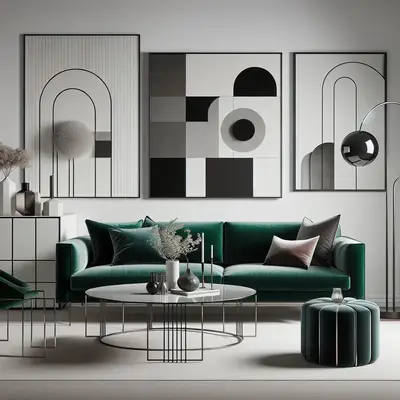
In refined interiors, texture has quietly replaced overt pattern as the new visual currency. Where once luxury was telegraphed through obvious statements—high-gloss finishes, bold veining, conspicuous branding—today’s cultivated spaces lean on nuance: the depth of a hand-troweled plaster wall, the softness of brushed limestone, the reassuring weight of a solid-bronze handle.
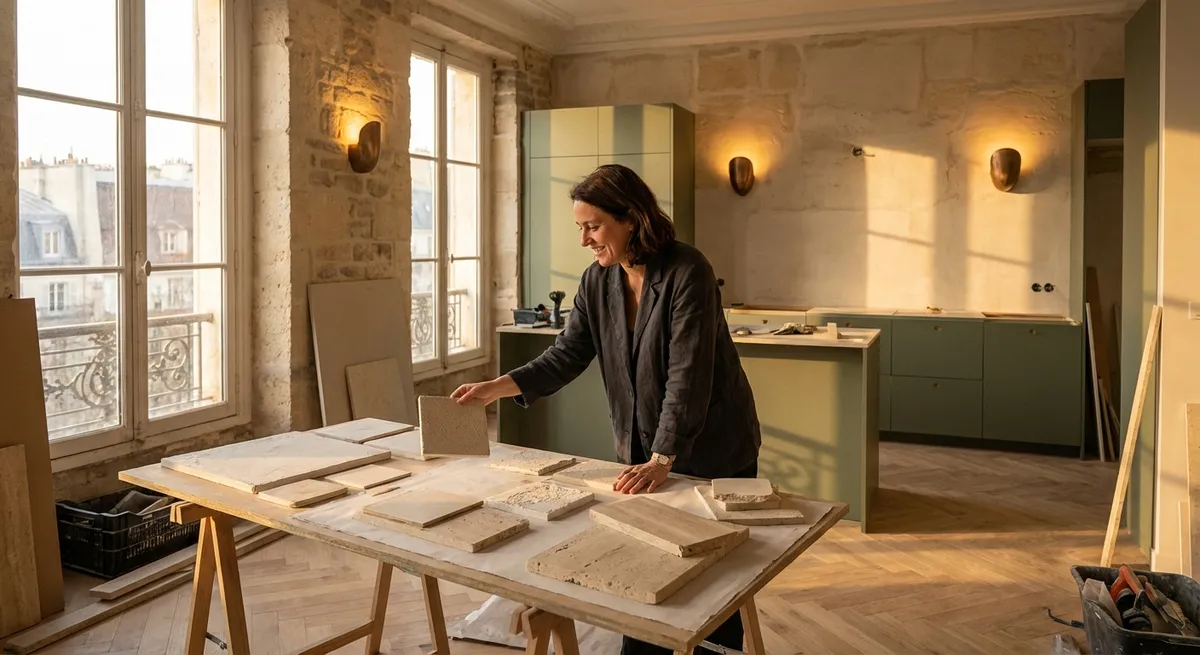
For renovators, this means thinking in terms of a “textural hierarchy.” Anchor elements—floors, primary walls, major millwork—should be calm and consistent, often in a restricted palette of 2–3 material families (for example: warm oak, honed limestone, and lacquer in a single tonal range). On top of that, introduce a very small number of elevated tactile moments: ribbed stone on a vanity front, fluted wood on a wardrobe, or a leather-wrapped handrail that warms under touch.
The result is a home that photographs quietly but feels exceptional in person. This is particularly important in high-use zones like kitchens and bathrooms, where premium touchpoints—solid knobs, soft-close hardware, integrated edge pulls—convey a level of consideration that standard specifications cannot. When budget must be edited, prioritize the materials you physically encounter daily: flooring, worktops, door hardware, faucets, and the chair you sit in most often. The ROI in lived experience is disproportionate.
Integrated Intelligence: Technology as Invisible Infrastructure
Smart homes have matured beyond gimmickry. The most sophisticated projects now treat technology as invisible infrastructure—omnipresent yet visually recessive. Screens shrink or disappear; interfaces are pared back; systems communicate quietly in the background.
In practical terms, this means planning early for concealed wiring, centralized control hubs, and robust networking as seriously as you plan for plumbing or structure. Renovations that integrate lighting, shading, climate control, and security into a single, well-designed system can dramatically improve comfort while preserving visual calm. Imagine a morning scene that lifts shades, shifts lighting to cooler temperatures, brings the house gently to a comfortable climate, and cues soft audio—all without a visible tangle of devices.
An important nuance for the cultivated homeowner: favor open, upgrade-friendly ecosystems over over-personalized, locked-down technology. Infrastructure—conduit, ventilation for equipment, discreet access panels—should be durable and generously planned, while actual devices (switches, speakers, sensors) are specified assuming they will be updated over time. Select hardware in timeless finishes and understated forms so replacements do not visually date the space. True luxury here is not the gadget itself but the serenity of an environment that quietly responds to you.
Purposeful Imperfection: Curating Authenticity into Refined Spaces
As mass-produced “luxury” has become ubiquitous, genuinely refined homes are leaning into calibrated irregularity: a reclaimed stone sill with softened edges, a handmade tile with slight variation, a patinated metal that will deepen over time. The goal is not rusticity but dimension—a sense that the home has a narrative rather than a showroom sheen.
For renovators, this calls for a deliberate balance between precision and softness. Cabinetry, door alignments, and architectural lines should remain impeccably true; this is what keeps a space feeling tailored. Onto that framework, overlay a handful of elements that wear time gracefully: oiled wood instead of thick polyurethane, unlacquered brass in a powder room, or a handwoven rug that accepts the imprint of daily traffic.
This approach also influences how you handle existing features. Rather than erasing every sign of age, identify one or two original elements worth honoring—a stair profile, a window proportion, a brick wall—and reframe them with more elevated surroundings. The contrast between precise new interventions and selectively preserved character gives the home authenticity that cannot be replicated with brand-new materials alone. The key is intention: every irregularity should feel considered, not careless.
Spatial Generosity: Investing in Volume, Light, and Sightlines
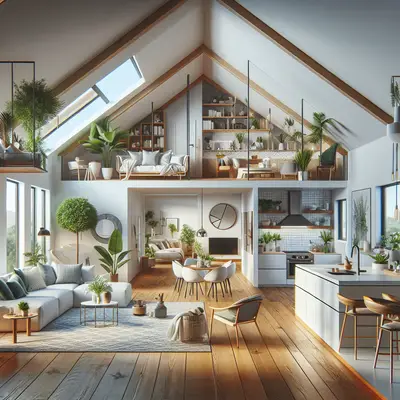
The most valuable luxury in renovation is increasingly immaterial: space, air, and light. Rather than simply adding square footage or layering on more detail, sophisticated projects invest in quality of volume—how ceiling heights shift, how daylight is choreographed, how views are edited and framed.
Before choosing finishes, scrutinize opportunities to refine the underlying geometry. Could a dropped ceiling be partially lifted to reveal an unexpected height? Might two small, low-value rooms be combined into a single, beautifully proportioned space with long, calm sightlines? Often, removing one poorly placed wall, realigning a doorway, or widening a circulation path yields more perceived luxury than any premium stone or appliance.
Daylight deserves the same careful strategy. Consider the direction of light throughout the day and how it interacts with your planned materials. Soft northern light can flatter cooler palettes and matte finishes; stronger western exposures may benefit from deeper window reveals, sheer layers, and more robust shading systems. When planning windows and openings, think in terms of “composed views”—what you see when you enter a room, when you sit, when you cook, when you wake. Editing out visual clutter beyond your property (for example, through planting, screens, or window placement) can make even modest spaces feel curated and retreat-like.
Conclusion
The most enduring renovations are not defined by the trend of the moment, but by the rigor of their underlying decisions. Designing by mood rather than merely by function, privileging texture and touch over spectacle, embedding quiet technology, embracing measured imperfection, and elevating volume and light—these are not passing fashions. They are shifts toward homes that feel calm, capable, and deeply personal.
For homeowners at the threshold of a renovation, the opportunity is profound: to move beyond cosmetic updates and instead choreograph a daily experience that will continue to unfold with grace over time. When every choice is filtered through how you want your life at home to feel, design becomes less about impressing others and more about a refined, private completeness—luxury at its most cultivated.
Sources
- [Harvard Joint Center for Housing Studies – Improving America’s Housing](https://www.jchs.harvard.edu/research-areas/remodeling) – Research on renovation trends, homeowner priorities, and long-term housing investment
- [American Institute of Architects (AIA) – Home Design Trends Survey](https://www.aia.org/resources/69946-home-design-trends-survey) – Insights into evolving residential design preferences, including layout, technology, and materials
- [U.S. Department of Energy – Daylighting Basics](https://www.energy.gov/energysaver/daylighting) – Guidance on using natural light effectively in residential design
- [National Kitchen & Bath Association (NKBA) Design Trends](https://nkba.org/insights/trendreports/) – Data-driven analysis of current and emerging kitchen and bath design directions
- [MIT School of Architecture and Planning – Design and Computation](https://architecture.mit.edu/discipline/design-and-computation) – Context on how technology and design thinking intersect in built environments
Key Takeaway
The most important thing to remember from this article is that this information can change how you think about Design Trends.