Renovation at the upper end of the market is no longer about spectacle; it is about discernment. The most compelling homes today feel composed rather than decorated—thoughtful responses to how their owners live, work, recharge, and entertain. For Renovate Quotient’s audience, design trends are less about chasing novelty and more about understanding where the quiet vanguard is headed, and how to invest intelligently in ideas that will age with grace rather than fade with fashion.
Below are five exclusive, forward-leaning insights shaping sophisticated renovations now—subtle shifts that can recalibrate not only the look of a residence, but its daily rhythm and long-term value.
1. The “Secondary Primary Suite”: Elevating Guest and Flex Quarters
In cultivated homes, hospitality has stepped into a more considered chapter. Rather than an afterthought guest room, discerning renovators are creating what designers are calling “secondary primary suites”—spaces with nearly the same dignity, privacy, and amenities as the main suite.
These suites typically feature an en suite bath, generous closet space, and sometimes a small sitting or work area. They serve multiple roles: a dignified retreat for extended-stay guests, a future caregiver’s quarters, an elegant option for aging parents, or even a private space for a returning adult child. Their location is strategic—often on a separate floor, across a breezeway, or aligned with a garden-facing wing to preserve both proximity and privacy.
Architecturally, the goal is parity without duplication. Materials may echo the primary suite—stone thresholds, upgraded hardware, layered window treatments—but with distinct finishes so the space feels intentional rather than leftover. In a resale scenario, such a suite reads as a tangible upgrade, aligning with demographic shifts toward multigenerational living and flexible household arrangements.
Designing this space during renovation—rather than retrofitting later—allows you to pre-wire for technology, refine acoustic separation, and integrate storage and millwork as if it were a core program element, not a concession. The result is a guest experience that feels considered, and a long-term asset that quietly bolsters valuation.
2. Material Continuity as Luxury: Editing, Not Accumulating
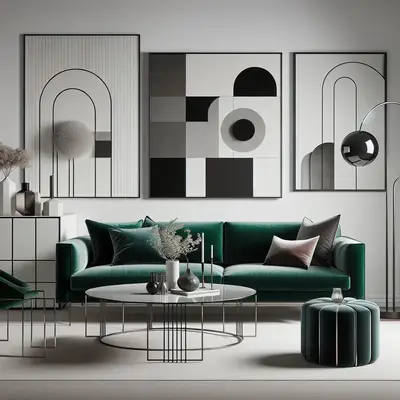
Where previous eras favored an accumulation of statement finishes, today’s most refined renovations are anchored by material continuity—a composed palette that flows calmly from room to room. The luxury is not in how many surfaces you can showcase, but in how intentionally you can repeat and layer a select few.
Think one primary wood species reiterated across flooring, millwork, and doors, each expressed with subtle variation in tone or texture. Or a single stone family—Calacatta, quartzite, or basalt—carried from kitchen counters to fireplace surrounds and powder room accents, calibrated in thickness and finish for each application. When done well, this strategy creates a subliminal sense of order: the home feels cohesive, resolved, and more spacious than its square footage suggests.
This approach demands discipline. It requires resisting the impulse to introduce new finishes in every room simply because they are available. The payoff is twofold: first, a visual calm that reads as considered and high-end; second, an easier maintenance and replacement story, as your material library is unified and predictable.
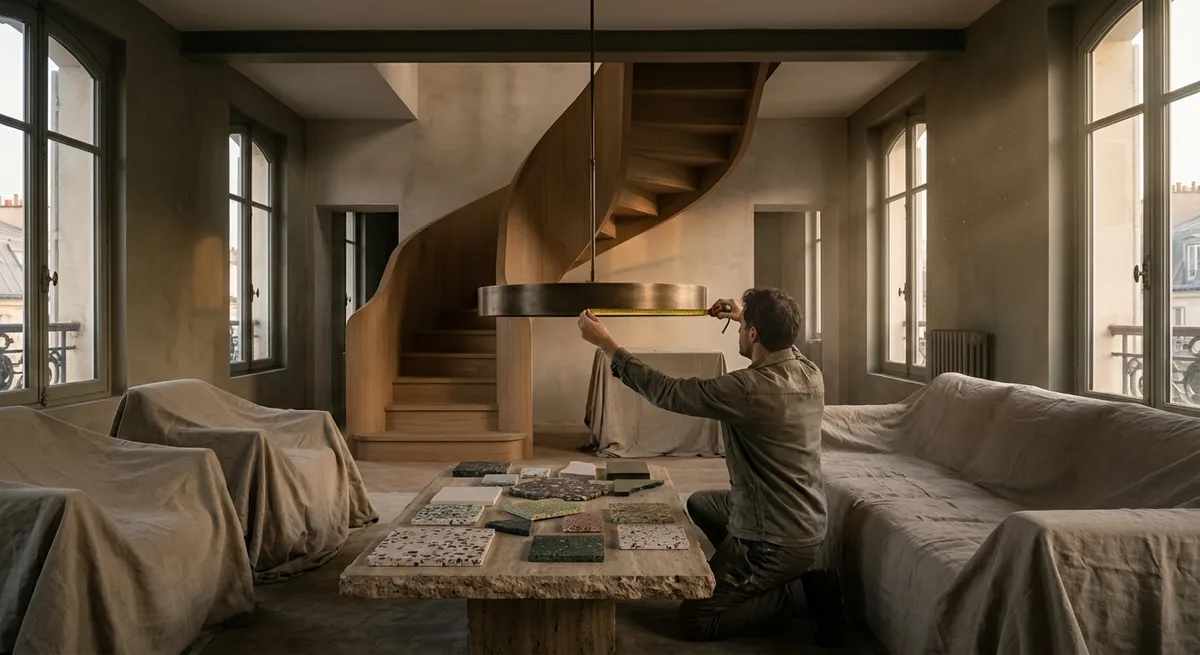
For renovations, the key move is to identify three to five “hero” materials and build the entire design language around them. Every new element—tile, metal, textile—must earn its place by either echoing or gently counterpointing the established palette. This form of editing is a marker of sophisticated taste and has a quiet, compounding effect on perceived value.
3. Purposeful Transitional Zones: Thresholds as Design Moments
In many homes, hallways, entries, and landings are treated as circulation space to be minimized. In elevated renovations, these “in-between” areas are being reimagined as purposeful transitional zones—moments that modulate pace, lighting, and mood as you move through the home.
A threshold can become a decompression chamber between a busy kitchen and a serene primary suite: a small vestibule with softened lighting, a console for keys and technology, and a framed view to a courtyard or art piece. A long corridor can become a gallery with integrated picture lighting, a bench niche, or a rhythm of wall paneling that turns a passage into an experience.
Thoughtful transitions also serve a functional role in contemporary living. A secondary entry can be elevated beyond the typical “mudroom” into a finely detailed arrival space, with concealed storage for outerwear, integrated charging for devices, and a discreet place to set deliveries. Similarly, a landing between floors can host a compact library, reading perch, or tea station, gently encouraging use rather than mere passage.
From a renovation standpoint, investing in transitional zones is often a high-yield move. These spaces require fewer materials and less mechanical complexity than kitchens or baths, yet they create powerful impressions of craftsmanship and intentionality. They also help delineate public, semi-private, and private zones in a way that feels intuitive to guests and deeply satisfying to the homeowner.
4. Performance-First Comfort: Invisible Systems, Visible Ease
The most sophisticated residences increasingly prioritize performance—thermal comfort, air quality, acoustics, and lighting—over overt gadgetry. Smart homes are shifting from conspicuous control panels to nearly invisible ecosystems that simply make the house feel better to live in.
In renovation planning, this translates into strategic investments in the envelope and systems: upgraded insulation, high-performance windows, radiant heating, and balanced ventilation with effective filtration. Paired with zoned climate control, these choices create rooms that are consistently comfortable without dramatic temperature swings or noise from overworked equipment.
Lighting is following a similar arc. Instead of a proliferation of decorative fixtures doing functional work, designers are leaning on layered, tunable lighting—recessed or cove sources for ambient light, tightly focused accent lighting for art and surfaces, and just a few statement pieces where they truly matter. Incorporating circadian-aware lighting controls during renovation can subtly support well-being by modulating color temperature throughout the day.
Critically, this performance-centric approach is not about visible tech theater. Controls are streamlined, interfaces minimal, and much of the intelligence is in the background. To a future buyer, this reads as “the house just works”—quietly, efficiently, and comfortably—an increasingly powerful differentiator, especially as energy performance and indoor air quality become more widely understood and regulated.
5. Singular Rooms with Defined Intent: The Return of the Dedicated Space
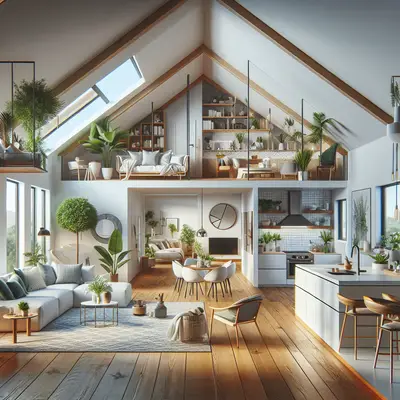
Open-concept living is evolving. While sightlines and flow remain desirable, discerning homeowners are reintroducing singular rooms with highly defined intent—spaces that feel purposeful rather than multi-purpose to the point of dilution.
This does not mean a nostalgic return to compartmentalized floor plans; instead, it’s about creating a few exquisitely considered rooms whose character is unmistakable. A listening salon with acoustically tuned walls, bespoke shelving, and concealed equipment. A writing room with controlled daylight, generous pin-up surfaces, and seating that invites long stretches of thought. A wellness suite combining a steam shower, cold plunge, and massage niche under one design language.
These rooms are less about resale checkbox functions (“home office,” “bonus room”) and more about articulating a lifestyle narrative. Yet, if planned with foresight—proper egress, discreet storage, and accessible utilities—they can adapt over time without losing their sense of singularity.
For renovators, the strategic move is to identify one or two such “signature rooms” that genuinely align with how you live, then design them with a level of detail that surpasses the rest of the house: tailored millwork, tactile finishes, considered acoustics, and curated furnishings. These spaces become anchors of memory and experience, often mentioned first when guests describe the home—and they signal, unmistakably, that the property belongs to someone who lives with intention.
Conclusion
The most compelling design trends for today’s refined renovation are not about spectacle, nor about following a checklist of fashionable features. They are about orchestrating a home that operates with composure and clarity: elevating secondary spaces to primary importance, editing material palettes with confidence, honoring transitional zones, prioritizing invisible comfort, and crafting a few singular rooms with unmistakable intent.
For homeowners at the Renovate Quotient level, these currents offer a framework for investing in ideas that will mature well, both in daily use and in future valuation. The aim is not to own a house that simply photographs beautifully—it is to inhabit a residence that feels resolved, purposeful, and quietly ahead of its time.
Sources
- Harvard Joint Center for Housing Studies – Improving America’s Housing 2023 - Data and analysis on renovation trends, spending patterns, and household needs
- U.S. Environmental Protection Agency – Indoor Air Quality - Guidance on indoor air quality considerations relevant to performance-focused renovations
- U.S. Department of Energy – Energy Saver: Home Envelope - Official information on improving home envelope performance, insulation, and comfort
- American Society of Interior Designers (ASID) – 2024 Trends Report - Professional insight into evolving design priorities, including wellness, materials, and lifestyle shifts
- The New York Times – The New Multigenerational Home - Reporting on multigenerational living and how it shapes space planning and guest/secondary suite design
Key Takeaway
The most important thing to remember from this article is that this information can change how you think about Design Trends.